CIS Compliance Checks — What HMRC Looks For
Nobody wants a letter from HMRC announcing a compliance check, but if you operate within the Construction Industry Scheme — particularly as a contractor — it is something you need to be prepared for. CIS compliance checks are a routine part of how HMRC ensures the scheme is working properly. They are not necessarily triggered by suspected wrongdoing; many are simply random selections. But that does not make them any less stressful if your records are not in order. In this guide, we will explain what HMRC looks for during a CIS compliance check, the most common issues they find, and how to make sure you come through it cleanly.
What Is a CIS Compliance Check?
A CIS compliance check is an examination of your CIS records and processes by HMRC. It can take several forms:
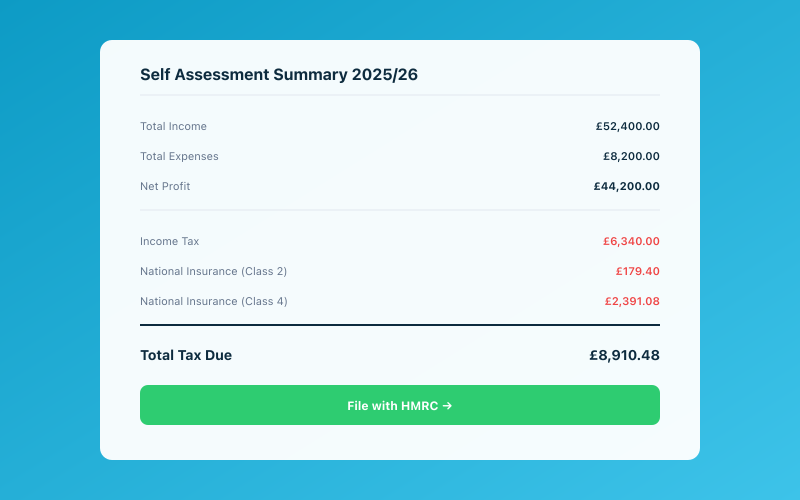 Your Accounted dashboard shows your real-time tax position
- A desk-based review, where HMRC writes to you asking for specific information or documents
- A visit to your business premises, where an HMRC officer reviews your records in person
- An aspect enquiry, focusing on one specific area of concern
- A full enquiry, examining all aspects of your CIS compliance
Most checks for small to medium-sized contractors are either desk-based or single-visit affairs. HMRC will usually write to you in advance, giving you notice of what they want to look at and when. You are entitled to have your accountant or tax adviser present during any meeting or visit.
The purpose of the check is to make sure you are meeting your obligations under CIS: verifying subcontractors correctly, deducting the right amount, filing monthly returns accurately and on time, and providing payment statements to subcontractors.
What HMRC Looks For
HMRC officers working on CIS compliance checks have a clear checklist of areas they examine. Understanding these in advance gives you the best chance of being prepared.
Subcontractor verification records. Every time you engage a new subcontractor, you must verify them with HMRC before making the first payment. HMRC will check that you have done this for every subcontractor you have used. They will look at the verification reference numbers, the dates of verification, and whether the deduction rates you applied match what HMRC told you to use. If a subcontractor was verified at 20% but you applied 0%, that is a serious issue.
Payment and deduction statements. Each time you pay a subcontractor, you must provide a written statement showing the gross payment, the amount for materials, the CIS deduction, and the net payment. HMRC will check that these have been issued and that the figures are correct. They may cross-reference your statements with the subcontractor's own records, so any discrepancies will be flagged.
Monthly CIS returns. You must file a monthly return with HMRC showing all payments to subcontractors in that period. HMRC will check that these have been filed on time, that all subcontractors are included, and that the figures match your payment records. Late or missing returns are a common problem that results in penalties.
Materials deductions. HMRC will scrutinise the materials figures you have used when calculating CIS deductions. They want to make sure the materials costs you excluded from the deduction calculation are genuine and reasonable. If materials figures look inflated, they may ask for supporting evidence — receipts, delivery notes, or purchase orders.
Employment status. This is a big one. HMRC will look at the nature of your relationship with your subcontractors to determine whether they are genuinely self-employed or whether they should be treated as employees. If HMRC decides someone is actually an employee, you could be liable for PAYE, employers' National Insurance, and potentially penalties and interest — which can be a very expensive outcome.
VAT and the domestic reverse charge. If you are VAT-registered, HMRC may also check that you are applying the domestic reverse charge correctly on relevant transactions. This means accounting for VAT on the services you receive from subcontractors rather than expecting them to charge you VAT. Our domestic reverse charge VAT guide explains the rules in detail.
Common Issues HMRC Finds
Based on HMRC's own published data and feedback from accountants who deal with CIS checks regularly, here are the issues that come up most often:
Failing to verify subcontractors. Some contractors skip the verification step, especially when they are busy and want to get someone on site quickly. This is one of the easiest things for HMRC to check and one of the most common findings. If you have not verified a subcontractor, you should have been deducting at the unregistered rate of 30%. If you deducted at 20% or 0% without verification, you are liable for the difference.
Late or missing monthly returns. Filing CIS returns is a monthly obligation, and every late return carries a £100 penalty for the first month, £200 for the second, and escalating charges after that. Some contractors forget to file nil returns in months when they have not used any subcontractors — but a nil return is still required if you are registered as a contractor.
Incorrect materials figures. Overstating materials to reduce the CIS deduction is a red flag for HMRC. They will compare the materials figures on your returns with what is typical for the type of work being done. If a labourer's invoice shows significant materials costs, that will attract attention.
Not providing payment statements. Some contractors pay subcontractors but do not issue the required payment and deduction statement. This creates problems for the subcontractor, who needs those statements to complete their own tax return.
Treating employees as subcontractors. This is the most expensive mistake. If someone works set hours, uses your tools, follows your direction, and cannot send a substitute, HMRC may argue they are an employee. The financial consequences can be severe — you may owe years of backdated PAYE and NI contributions.
How to Prepare for a Compliance Check
The best way to prepare for a compliance check is to keep your records in good order throughout the year, not just when HMRC comes knocking. Here is what you should have ready:
- A record of every subcontractor verification, including the HMRC verification reference number and the deduction rate confirmed
- Copies of all payment and deduction statements issued to subcontractors
- Your filed monthly CIS returns, with confirmation of submission dates
- Supporting evidence for materials figures — receipts, invoices from suppliers, delivery notes
- Written contracts or terms of engagement with subcontractors, confirming their self-employed status
- Records showing how you determined each worker's employment status
If you use bookkeeping software like Accounted, much of this record-keeping is handled automatically. Penny, the AI assistant, can help you categorise transactions correctly and flag any gaps in your records before they become a problem during a check.
Our CIS subcontractors deductions guide explains the deduction rules from the subcontractor's perspective, which is useful to understand even as a contractor.
Penalties for Non-Compliance
HMRC has a range of penalties it can impose for CIS failures:
- Late filing — £100 per month for up to 12 months, then a percentage of the tax due
- Late payment — interest charges plus penalties of up to 5% of the outstanding amount at 30 days, 6 months, and 12 months
- Incorrect returns — penalties based on the amount of tax understated and whether the error was careless (up to 30% of the tax), deliberate (up to 70%), or deliberate and concealed (up to 100%)
- Failure to verify subcontractors — potential liability for the difference between the correct deduction rate and the rate you actually applied
In serious cases, HMRC can also impose penalties for facilitating tax evasion, though this is reserved for cases involving deliberate fraud rather than honest mistakes.
The severity of any penalty depends on the behaviour involved and how cooperative you are during the check. If you have made a genuine error and disclose it promptly, HMRC will usually reduce the penalty significantly. If you are obstructive or try to conceal information, penalties will be at the higher end of the scale.
What to Do If HMRC Contacts You
Do not panic. Most CIS compliance checks result in minor adjustments or no changes at all. Here is what to do:
- Read the letter carefully and note exactly what HMRC is asking for and by when.
- Contact your accountant or tax adviser immediately. They can advise you on what to prepare and, if necessary, represent you during the check.
- Gather your records as specified in the letter. Be organised and thorough.
- Be cooperative and honest. If you know there are errors, it is almost always better to disclose them upfront. Voluntary disclosure typically results in lower penalties.
- Do not ignore the letter. Failing to respond will escalate the situation and can result in HMRC using their information powers to obtain records from your bank, your clients, or other third parties.
For more on the CIS scheme generally and how to make sure your processes are right, our CIS subcontractors guide and gross payment status guide are both worth reading.
Related Reading
View our pricing to see which plan includes full CIS management.
Accounted helps UK sole traders stay on top of their bookkeeping and tax. Start your free 30-day trial at getaccounted.co.uk
Accounted supports CIS — track deductions, verify subcontractors, and file returns directly to HMRC. See CIS support →
Tax & Compliance Specialists
Our tax specialists have decades of combined experience in UK sole trader and small business taxation, MTD compliance, and HMRC submissions. All content is reviewed against current HMRC guidance before publication and updated quarterly to reflect legislative changes.
Ready to try Accounted?
Join UK sole traders who are simplifying their bookkeeping and tax.
Start your 14-day free trial