HMRC Compliance Checks vs Full Investigations — The Difference
If HMRC contacts you about your tax affairs, one of the first things you'll want to know is: how serious is this? The answer depends largely on whether you're facing a routine compliance check or a full-blown investigation. They sound similar, but they're quite different in scope, intensity, and potential consequences.
Understanding the distinction helps you respond appropriately, manage your stress levels, and get the right kind of help. Let's break it down.
What Is a Compliance Check?
A compliance check is HMRC's way of verifying that you're paying the right amount of tax and meeting your obligations correctly. It's essentially a review — HMRC picks an area of your tax affairs and checks that everything adds up.
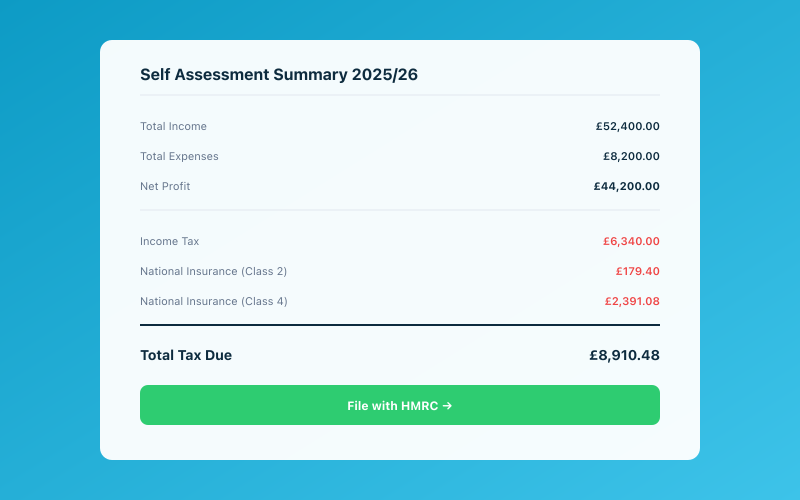 Your Accounted dashboard shows your real-time tax position
Compliance checks are relatively common. HMRC carries out hundreds of thousands each year, and most of them are resolved without any additional tax being owed. They're not accusations of wrongdoing; they're quality assurance.
A compliance check might focus on:
- A specific entry on your Self Assessment return (such as your expenses or a particular source of income)
- Your VAT returns
- Your PAYE or CIS obligations (if you employ people or work in construction)
- Your record-keeping practices
- Your eligibility for a particular tax relief or allowance
The scope is usually narrow. HMRC tells you exactly what they're looking at and what information they need. You provide it, they review it, and in most cases that's the end of it.
What Is a Full Investigation?
A full investigation — sometimes called a full enquiry or aspect enquiry expanded to full scope — is a much more comprehensive examination of your tax affairs. Rather than looking at one specific area, HMRC reviews your entire financial position for one or more tax years.
Full investigations are less common than compliance checks and are typically triggered by specific concerns. These might include significant discrepancies between your declared income and lifestyle, patterns of behaviour that suggest systematic underreporting, or information received from third parties (such as informants or data from HMRC's Connect system).
During a full investigation, HMRC may examine:
- All sources of income
- All business and personal bank accounts
- Your assets and liabilities
- Your living expenses (to see if they're consistent with your declared income)
- Capital gains and disposals
- Your record-keeping across the board
The scope is broad, and HMRC has the power to request extensive documentation and explanations.
Key Differences at a Glance
Let's put the main differences side by side:
Scope. Compliance checks focus on a specific area. Full investigations cover everything.
Trigger. Compliance checks can be random or triggered by minor anomalies. Full investigations are almost always targeted, triggered by significant red flags or intelligence.
Duration. Compliance checks typically take a few weeks to a few months. Full investigations can last twelve to eighteen months or longer. Our article on how long an HMRC investigation takes covers the timelines in more detail.
Intensity. Compliance checks are usually handled through correspondence — HMRC writes to you, you provide information, they review it. Full investigations may involve face-to-face meetings, visits to your premises, and extensive document requests.
Penalties. If a compliance check uncovers an error, the penalty is usually based on the specific underpayment found. In a full investigation, penalties can be much larger because the scope covers more tax and more years.
Professional help. Many people handle compliance checks themselves or with minimal help from their accountant. Full investigations are a different matter — professional representation is strongly recommended.
How to Tell Which One You're Facing
The letter HMRC sends you is your main clue. Here's what to look for:
Compliance check letters typically:
- Reference a specific area of your return or obligations
- Ask for specific documents or information
- Use relatively neutral language
- Come from a compliance officer or caseworker
Full investigation letters typically:
- Reference your "tax affairs" generally, rather than a specific item
- State that HMRC is opening an enquiry into your entire return under Section 9A of the Taxes Management Act 1970
- May reference a specific Code of Practice (COP8 for suspected avoidance, COP9 for suspected fraud)
- May mention meetings or visits
If you're unsure, the letter should include a contact name and number. Call and ask what type of check is being carried out. You're entitled to know.
For more guidance on handling HMRC correspondence, see our guide on what to do if you get a letter from HMRC.
What Happens During a Compliance Check
The typical compliance check process looks like this:
-
HMRC writes to you explaining what they're checking and what information they need. You'll usually have thirty days to respond.
-
You provide the requested information. This might include receipts, invoices, bank statements, or written explanations for specific entries on your return.
-
HMRC reviews the information. If everything checks out, they'll close the check and confirm in writing. If they have further questions, they'll write again.
-
Resolution. If HMRC finds an error, they'll tell you the additional tax owed and any penalty. If you agree, you pay and the check is closed. If you disagree, you can dispute their findings.
Most compliance checks involve two or three exchanges of correspondence and are concluded within a few months. The key to a smooth process is responding promptly and providing complete, accurate information.
What Happens During a Full Investigation
A full investigation is more involved:
-
Opening letter. HMRC formally opens an enquiry, specifying the tax year(s) under review. This is a legal notification — the enquiry clock starts ticking.
-
Extensive information requests. HMRC asks for a wide range of documents — business and personal bank statements, accounting records, tax calculations, asset registers, lifestyle information, and more. Multiple requests are common as the investigation progresses.
-
Analysis. HMRC compares your declared income with your bank records, third-party data, and lifestyle indicators. They're looking for unexplained gaps.
-
Meetings. HMRC may request one or more meetings. These can be at HMRC offices, your business premises, or your adviser's office. Meetings are used to discuss findings, ask questions, and explore discrepancies. You have the right to have an adviser present.
-
Settlement. If HMRC believes additional tax is owed, they'll enter into settlement discussions. This involves agreeing on the additional tax, interest, and penalties. Negotiations can go back and forth for weeks or months.
-
Closure. Once a settlement is reached (or HMRC is satisfied no additional tax is due), they issue a formal closure notice.
Can a Compliance Check Become a Full Investigation?
Yes, it can — and this is important to understand. If a compliance check uncovers issues that suggest wider problems, HMRC can expand the scope. What starts as a routine check on your motor expenses could become a full review of your accounts if HMRC finds that your mileage log doesn't match your bank records, which leads them to question your income figures.
This is why it's important to be accurate and thorough from the outset. Providing misleading or incomplete information during a compliance check can trigger exactly the kind of escalation you want to avoid.
It's also why keeping good records matters so much. If HMRC asks about your expenses and you can immediately provide clear, well-organised evidence, there's less reason for them to dig deeper. If your records are a mess, they might wonder what else is disorganised — or hidden.
Your Rights in Both Scenarios
Regardless of whether you're facing a compliance check or a full investigation, you have important rights:
- The right to be told what is being examined and why
- The right to representation — you can appoint an accountant, tax adviser, or solicitor to deal with HMRC on your behalf
- The right to appeal any penalties or additional assessments you disagree with
- The right to a reasonable timeframe to gather and provide information
- The right to apply for a closure notice if HMRC is taking an unreasonably long time
- The right to confidentiality — HMRC cannot disclose your tax affairs to third parties without your consent (with limited exceptions)
How to Prepare for Either Scenario
The best preparation is the same regardless of whether you face a compliance check or a full investigation: keep thorough, accurate, well-organised records throughout the year.
With Accounted, your bookkeeping is always up to date. Penny categorises your transactions, tracks your income and expenses, and maintains a clear digital trail. If HMRC asks for your records, you can produce them quickly and confidently — which makes any check or investigation far less stressful and far more likely to be resolved in your favour.
Good record-keeping also makes it obvious when you've made a genuine mistake versus when something looks deliberately misleading. An honest error supported by otherwise impeccable records is treated very differently from a pattern of inaccuracies against a backdrop of poor bookkeeping.
If you want to ensure your record-keeping is up to standard, our guide on how to keep business records for HMRC covers everything you need to know.
The Bottom Line
A compliance check is a routine part of doing business. It's HMRC doing its job, and in most cases it's resolved quickly and painlessly. A full investigation is more serious and more demanding, but it's still manageable — especially with good records and professional support.
The common thread in both scenarios is preparation. Sole traders who keep their books in order, file on time, and declare everything honestly have nothing to fear from either process. And if HMRC does come calling, they'll sail through it with minimal stress.
Related reading:
- HMRC Investigation — What to Expect
- Tax Investigation Triggers
- How to Keep Business Records for HMRC
Accounted helps UK sole traders stay on top of their bookkeeping and tax. Start your free 30-day trial at getaccounted.co.uk.
Related Reading
- How to Close Your Self Assessment Account with HMRC
- HMRC Payment Plans — Time to Pay Arrangements Explained
For step-by-step guidance, see our article on How to Amend a Self Assessment Tax Return.
For more on this topic, read Foreign Income on Self Assessment: UK Tax Rules.
For step-by-step guidance, see our article on How to Read Your HMRC Tax Calculation.
For step-by-step guidance, see our article on How to Reduce Your Self Assessment Tax Legally.
You may also find our Self Assessment for Company Directors: Guide helpful.
Related reading: Self Assessment Deadlines 2026: Every Date.
Related reading: Self Assessment Penalties: Late Filing and Payment.
Related reading: Self Assessment and Student Loan Repayments.
Related reading: Capital Gains on Self Assessment: What to Report.
For more on this topic, read Payment on Account: Why HMRC Bills You Twice.
You may also find our Register for Self Assessment Online: HMRC Guide helpful.
Related reading: Self Assessment for Landlords: Reporting Rental.
Related reading: Self Assessment for Multiple Income Sources.
Start your free trial and let Penny handle your bookkeeping automatically.
Accounted files your Self Assessment directly to HMRC, with your return pre-populated from your records. See Self Assessment filing →
Tax & Compliance Specialists
Our tax specialists have decades of combined experience in UK sole trader and small business taxation, MTD compliance, and HMRC submissions. All content is reviewed against current HMRC guidance before publication and updated quarterly to reflect legislative changes.
Ready to try Accounted?
Join UK sole traders who are simplifying their bookkeeping and tax.
Start your 14-day free trial