What to Do If You Get a Letter From HMRC
There's something uniquely unsettling about seeing "HM Revenue & Customs" on an envelope sitting on your doormat. Your stomach drops, your mind races, and you immediately assume the worst. But here's the thing — most letters from HMRC are not the disaster you're imagining. Many are routine, some are reminders, and even the serious ones are manageable if you handle them properly.
The absolute worst thing you can do is ignore it. So let's walk through what to do, step by step.
Don't Panic — But Don't Ignore It Either
First things first: open the letter. It sounds obvious, but you'd be surprised how many people leave HMRC correspondence unopened on the kitchen counter for weeks, dreading what's inside. The longer you leave it, the worse things get — particularly if there's a deadline for responding.
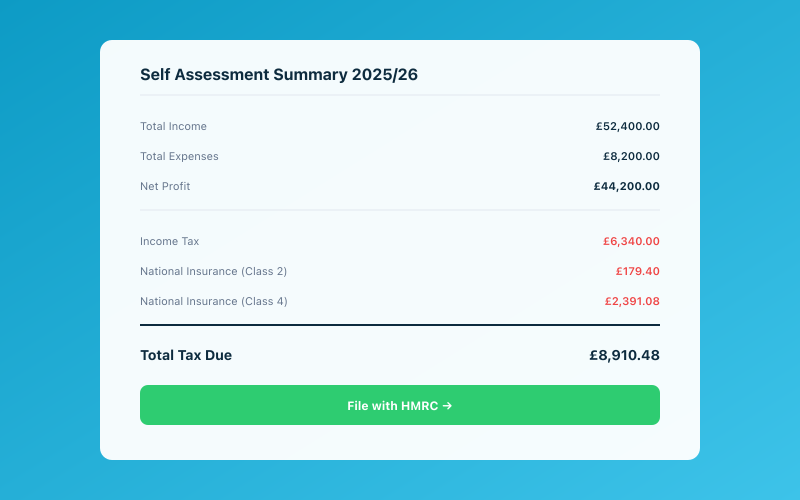 Your Accounted dashboard shows your real-time tax position
Most HMRC letters are not bad news. They might be:
- A reminder about an upcoming deadline
- A notice that you're due a refund
- A request to verify your identity
- An update to your tax code
- A statement of what you owe
- A notice about changes to tax rules
Even letters that are more serious — such as penalty notices or enquiry notifications — are far easier to deal with when you act promptly.
Identify What Type of Letter It Is
HMRC sends various types of correspondence, and knowing what you're dealing with helps you respond appropriately. Here are the most common:
Tax code notifications. These tell you what tax code HMRC has assigned to you. If you're employed alongside being self-employed, your tax code affects how much tax your employer deducts. Check the figures are correct — errors in tax codes are surprisingly common.
Self Assessment reminders. HMRC sends reminders as filing deadlines approach. These are just nudges — nothing to worry about. But do take them as your cue to get your return sorted if you haven't already.
Payment reminders. If you haven't paid a tax bill that's due, HMRC will send a reminder. These typically come shortly after the payment deadline. Pay as soon as possible to minimise interest charges, or set up a payment plan if you can't afford the full amount.
Penalty notices (SA370 or similar). These are more serious. A penalty notice means HMRC has charged you for filing late, paying late, or some other compliance failure. The letter will detail the amount and the reason. You can appeal the penalty if you have grounds.
Enquiry or compliance check letters. These notify you that HMRC is looking into your tax affairs. The letter will specify what they're investigating and what information they need from you. Don't panic — but do take it seriously. Read our guide on HMRC compliance checks vs full investigations to understand the different levels.
Simple Assessment letters (PA302). If HMRC has calculated your tax for you (common for people with straightforward affairs), they'll send a Simple Assessment letter telling you what you owe and when to pay.
Information requests. HMRC sometimes writes to ask for specific information or documents. These aren't necessarily linked to an investigation — they might be part of a general compliance exercise or a routine verification.
Check the Details Carefully
Once you've identified the type of letter, read it carefully and check:
Is it actually addressed to you? HMRC letters are sent to specific individuals. Make sure the name and UTR number match yours. Mistakes happen, and occasionally letters go to the wrong person.
Are the dates correct? Check which tax year the letter refers to. If HMRC is asking about the 2024/25 tax year but you only started trading in 2025/26, something's not right.
Are the figures accurate? If it's a payment reminder or penalty notice, verify the amounts. Cross-reference with your own records and any previous correspondence. If the numbers don't add up, that's something to raise with HMRC.
Is there a deadline? Many HMRC letters require a response within a specific timeframe — often thirty days. Note the deadline and make sure you respond in time. Missing a response deadline can escalate the situation.
Is there a reference number? Keep a note of any reference numbers on the letter. You'll need them if you contact HMRC by phone or reply in writing.
How to Respond
Your response depends entirely on what the letter says. Here's a quick guide:
If it's a routine reminder or notification: No response is usually needed, but check that the information is correct. If something looks wrong, contact HMRC to query it.
If it's a payment reminder: Pay the amount owed as soon as possible. If you can't pay in full, consider a Time to Pay arrangement. Don't just ignore it — unpaid tax attracts interest and penalties that compound over time.
If it's a penalty notice: Decide whether to pay or appeal. If you have a reasonable excuse for the failure, gather your evidence and submit an appeal within thirty days. If the penalty is legitimate and you don't have grounds for appeal, pay it promptly to avoid interest.
If it's an enquiry or investigation notification: This requires a more considered response. Don't rush to reply — take time to understand what's being asked and gather the relevant information. If the enquiry covers significant ground, consider getting professional advice from an accountant or tax adviser. Respond within the deadline given, and be accurate and complete in what you provide.
If it's an information request: Provide the requested information as completely and promptly as you can. If you need more time, contact HMRC to ask for an extension — they'll usually grant reasonable requests.
Keep a Record of Everything
From the moment you receive a letter from HMRC, keep a record of:
- The letter itself (scan it or photograph it if you want a digital copy)
- The date you received it
- Any deadline for responding
- Your response (keep a copy of anything you send)
- Details of any phone calls (date, time, who you spoke to, what was discussed, and any reference numbers given)
This paper trail protects you if there's ever a dispute about what was communicated and when. It's also essential if you end up appealing a penalty or challenging an assessment.
Accounted can help here too — storing your financial records digitally means you can quickly pull up the information HMRC requests without rummaging through boxes of paperwork. Penny keeps your transactions categorised and your records organised, so if HMRC asks for your mileage claims from two years ago, you can find them in seconds.
When to Get Professional Help
Not every HMRC letter requires professional advice, but some definitely do. Consider speaking to an accountant or tax adviser if:
- You've received notification of a formal enquiry or investigation
- The amounts involved are substantial (thousands of pounds)
- You don't understand what HMRC is asking for
- You think HMRC has made a significant error
- The letter references potential fraud or deliberate behaviour
- You're being asked to attend a meeting with HMRC officers
A good adviser can take the stress off your shoulders, communicate with HMRC on your behalf, and ensure you don't inadvertently say or provide something that makes your position worse.
If you're facing an enquiry, our guide on HMRC investigation — what to expect gives you a clear overview of the process and your rights.
Common HMRC Letters — And What They Actually Mean
Here are a few specific letters you might receive and what they mean in plain English:
SA316 — Notice to file. HMRC is telling you that you need to file a Self Assessment return for a specific tax year. If you don't think you need to, contact HMRC to explain why.
SA326D — Penalty for late filing. You've missed the Self Assessment deadline and are being charged £100. If you have a reasonable excuse, appeal.
SA370 — Final notice before penalty. A last-chance warning before a penalty is issued. Act immediately.
CF10 — National Insurance enquiry. HMRC is querying your National Insurance contributions. Check your records and respond.
Compliance check letter. Usually begins "I am writing to check..." and specifies the area under review. Respond fully and promptly.
Beware of Scams
One final but important point: not every letter that appears to come from HMRC is genuine. Scam letters, emails, and text messages claiming to be from HMRC are increasingly common. They often demand immediate payment, threaten arrest, or promise unexpected refunds.
Genuine HMRC letters will:
- Use your correct name and UTR or National Insurance number
- Never ask for payment via gift cards, cryptocurrency, or unusual methods
- Never threaten immediate arrest
- Direct you to gov.uk, not unfamiliar websites
If you're unsure whether a letter is genuine, call HMRC directly using the number on gov.uk — not the number on the letter itself.
The Bottom Line
A letter from HMRC is rarely as catastrophic as it feels in the moment. Open it, read it carefully, understand what's being asked, and respond within the deadline. Keep records of everything, and don't be afraid to ask for help if you need it.
And the best way to avoid unwelcome post from HMRC? Keep your records in order, file on time, and pay what you owe. Accounted and Penny make all of that straightforward — giving you one less thing to worry about.
Related reading:
Accounted helps UK sole traders stay on top of their bookkeeping and tax. Start your free 30-day trial at getaccounted.co.uk.
Related Reading
- Penalties for Late Self Assessment — The Complete Scale
- What Triggers an HMRC Enquiry — The Real Warning Signs
Start your free trial and let Penny handle your bookkeeping automatically.
Accounted files your Self Assessment directly to HMRC, with your return pre-populated from your records. See Self Assessment filing →
Tax & Compliance Specialists
Our tax specialists have decades of combined experience in UK sole trader and small business taxation, MTD compliance, and HMRC submissions. All content is reviewed against current HMRC guidance before publication and updated quarterly to reflect legislative changes.
Ready to try Accounted?
Join UK sole traders who are simplifying their bookkeeping and tax.
Start your 14-day free trial