What Triggers an HMRC Enquiry — The Real Warning Signs
Nobody wants a letter from HMRC landing on their doormat — especially one that says your tax affairs are being looked into. But HMRC enquiries are more common than you might think, and understanding what triggers them can help you stay on the right side of the taxman.
Let's be honest: the word "enquiry" sounds terrifying, but it doesn't always mean HMRC thinks you've done something wrong. Sometimes it's just a routine check. Other times, though, there are specific red flags that draw their attention. Here's what you need to know.
Random vs Targeted Enquiries
First things first — HMRC does carry out random enquiries. A small percentage of Self Assessment returns are selected purely at random each year, regardless of what's on them. Think of it as a quality control exercise. If you're selected randomly, it doesn't mean you've done anything wrong.
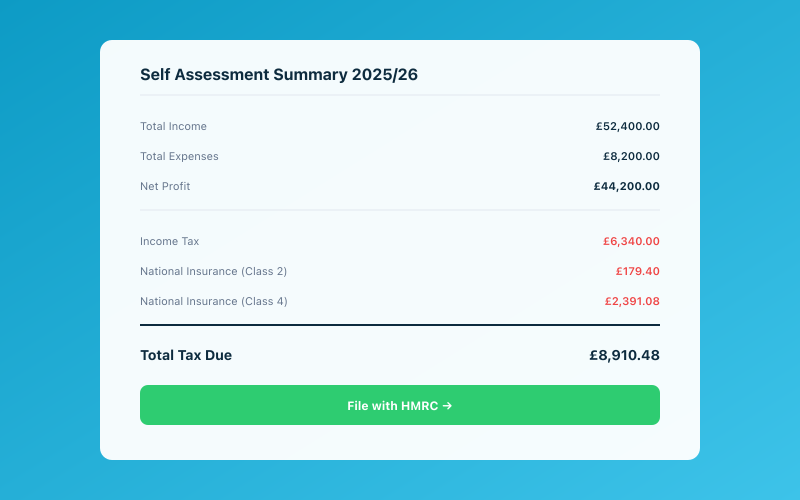 Your Accounted dashboard shows your real-time tax position
However, the majority of enquiries are targeted. HMRC uses sophisticated data analysis to identify returns that look unusual or suspicious. Their systems compare your figures against industry averages, cross-reference data from multiple sources, and flag anything that doesn't quite add up.
The key distinction matters because a random enquiry is typically less intensive. A targeted one, on the other hand, means HMRC has spotted something specific they want to explore further.
The Most Common Triggers
So what actually puts you on HMRC's radar? Here are the most common triggers that lead to an enquiry:
Figures that don't match up. HMRC receives information from banks, employers, pension providers, and other third parties. If the income you report on your return doesn't match what these sources tell HMRC, that's an immediate red flag. For example, if your bank shows significant deposits that don't correspond to the turnover you've declared, expect questions.
Low profit margins compared to your industry. HMRC knows what typical profit margins look like for different trades and professions. If you're a plumber reporting a 5% profit margin when the industry average is 30%, that's going to stand out. It doesn't necessarily mean you're doing anything wrong — perhaps you had a tough year — but it will attract attention.
Large or unusual expense claims. Claiming expenses is perfectly legitimate, but if your claims are disproportionately large compared to your income, or if certain categories seem unusually high, HMRC may want to take a closer look. Motor expenses, travel costs, and entertainment are particularly scrutinised.
Consistently declaring losses. If your business reports losses year after year, HMRC will wonder how you're actually surviving. A loss in your first year or two is understandable. Five consecutive years of losses? That raises questions about whether the business is genuine or whether income is being understated.
Late or amended returns. Filing late or frequently amending your returns can attract attention. The occasional amendment is fine — everyone makes mistakes — but a pattern of changes suggests your record-keeping might not be up to scratch. You can read more about what happens when you miss a deadline and how to avoid it.
Tips and informants. Yes, this really does happen. Disgruntled ex-partners, former employees, or business rivals sometimes report people to HMRC. The tax fraud hotline receives thousands of calls each year, and HMRC does follow up on credible reports.
How HMRC's Connect System Plays a Role
HMRC's Connect system is a powerful data-matching tool that cross-references information from an enormous range of sources. We're talking about bank accounts, property records, social media, online marketplaces, overseas data, and much more.
Connect can spot discrepancies that would be virtually impossible to detect manually. For instance, if you're posting photos of expensive holidays and new cars on social media whilst declaring a modest income, Connect might flag that inconsistency. It sounds a bit Big Brother, but it's remarkably effective at identifying potential tax evasion.
The system also monitors online selling platforms. If you're regularly selling on eBay, Etsy, or Amazon, HMRC can see those transactions. Since the 2024 rules requiring platforms to report seller data, this has become even more transparent.
If you want to understand more about how this technology works, have a look at our piece on HMRC's Connect system.
Lifestyle vs Declared Income
This is one that catches people out more often than you'd expect. HMRC's officers are trained to look at the bigger picture. If your declared income suggests you should be struggling to pay the rent, but your lifestyle says otherwise, that's a problem.
It's not just about social media either. Property purchases, vehicle registrations, school fees, and overseas travel are all data points that HMRC can access. If you buy a £500,000 property on a declared income of £25,000 a year, questions will follow.
This doesn't mean you need to live frugally to avoid an enquiry. It simply means your declared income should be consistent with your actual lifestyle. If you've received an inheritance or gift that explains a large purchase, make sure you can evidence that.
Cash-Heavy Businesses
If you run a business that deals primarily in cash — think market traders, taxi drivers, hairdressers, or takeaway shops — you're statistically more likely to face an enquiry. This isn't necessarily fair, but it reflects the reality that cash transactions are harder to trace and easier to underreport.
HMRC knows this, and they pay particular attention to cash-heavy businesses. If you're in this category, meticulous record-keeping is absolutely essential. Keep records of every transaction, bank cash regularly, and make sure your books balance.
Using a tool like Penny within Accounted can make this much easier. Rather than trying to reconcile everything at the end of the year, you can categorise transactions as you go, which means your records are always up to date and ready for scrutiny.
How to Protect Yourself
The best protection against an HMRC enquiry is straightforward: be honest, be thorough, and keep good records. Here's what that looks like in practice:
Declare all your income. This sounds obvious, but it's the single most important thing you can do. Don't forget about bank interest, rental income, cryptocurrency gains, or one-off freelance jobs. If you're juggling multiple income sources, make sure every penny is accounted for.
Keep detailed records. HMRC requires you to keep records for at least five years after the 31 January submission deadline for the relevant tax year. That includes invoices, receipts, bank statements, and mileage logs. Digital records are perfectly acceptable — and arguably better, since they're harder to lose. Check out our guide on how to keep business records for HMRC for the full breakdown.
Claim only legitimate expenses. Make sure every expense you claim is genuinely for business purposes and that you can evidence it. If an expense is partly personal and partly business, only claim the business portion. When in doubt, err on the side of caution.
File on time. Late filing is a trigger in itself, but it also leads to penalties that can snowball quickly. Set yourself reminders, and don't leave everything to the last minute in January.
Be consistent. Wild fluctuations in your income or expenses from year to year will attract attention. If there's a genuine reason for a big change — such as a large one-off contract or an unusually expensive piece of equipment — consider including a note in the additional information section of your return.
Use proper bookkeeping software. Good software doesn't just make your life easier; it also creates a clear audit trail that demonstrates you're taking your obligations seriously. Accounted is designed specifically for UK sole traders, and Penny can help you stay organised throughout the year rather than scrambling at year-end.
What If You're Already Worried?
If you think you might have made mistakes on previous returns, the worst thing you can do is ignore the problem and hope for the best. HMRC is far more lenient with people who come forward voluntarily than with those they have to chase.
You can make a voluntary disclosure to HMRC to correct past errors. The penalties for voluntary disclosure are significantly lower than those imposed after an investigation, and it demonstrates good faith.
If you've already received a letter from HMRC, don't panic — but don't ignore it either. Read our guide on what to do if you get a letter from HMRC for step-by-step advice.
The bottom line is this: HMRC enquiries aren't always as scary as they sound, but they're much easier to deal with when your records are in order. Stay organised, be honest, and you'll have nothing to worry about.
Related reading:
Accounted helps UK sole traders stay on top of their bookkeeping and tax. Start your free 30-day trial at getaccounted.co.uk.
Related Reading
For step-by-step guidance, see our article on How to Amend a Self Assessment Tax Return.
For more on this topic, read Foreign Income on Self Assessment: UK Tax Rules.
For step-by-step guidance, see our article on How to Read Your HMRC Tax Calculation.
For step-by-step guidance, see our article on How to Reduce Your Self Assessment Tax Legally.
You may also find our Self Assessment for Company Directors: Guide helpful.
Related reading: Self Assessment Deadlines 2026: Every Date.
Related reading: Self Assessment Penalties: Late Filing and Payment.
Related reading: Self Assessment and Student Loan Repayments.
Related reading: Capital Gains on Self Assessment: What to Report.
For more on this topic, read Payment on Account: Why HMRC Bills You Twice.
You may also find our Register for Self Assessment Online: HMRC Guide helpful.
Related reading: Self Assessment for Landlords: Reporting Rental.
Start your free trial and let Penny handle your bookkeeping automatically.
Accounted files your Self Assessment directly to HMRC, with your return pre-populated from your records. See Self Assessment filing →
Tax & Compliance Specialists
Our tax specialists have decades of combined experience in UK sole trader and small business taxation, MTD compliance, and HMRC submissions. All content is reviewed against current HMRC guidance before publication and updated quarterly to reflect legislative changes.
Ready to try Accounted?
Join UK sole traders who are simplifying their bookkeeping and tax.
Start your 14-day free trial