How to Appeal an HMRC Penalty
Getting a penalty notice from HMRC is never pleasant. But before you reach for the cheque book and pay up, it's worth knowing that you can appeal — and in many cases, you should. Not every penalty is correctly applied, and even when it is, there are legitimate grounds for having it overturned.
Thousands of penalties are successfully appealed every year, so it's not a hopeless cause. Here's a practical guide to the process.
When Can You Appeal?
You can appeal an HMRC penalty if you believe:
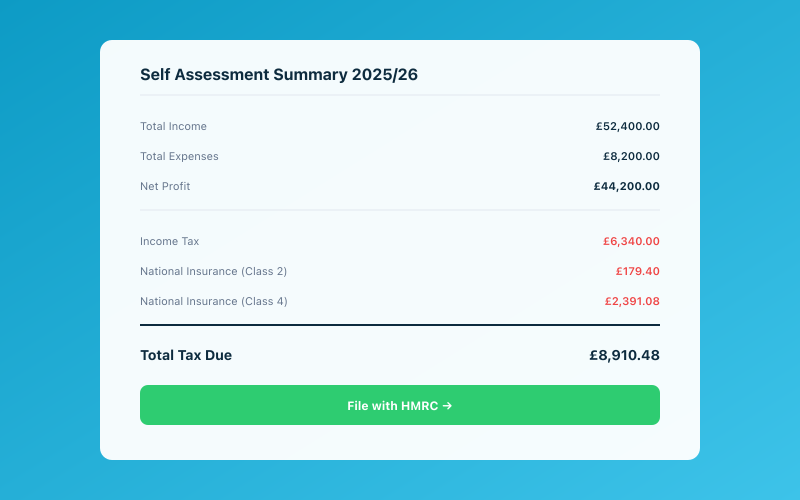 Your Accounted dashboard shows your real-time tax position
- You had a reasonable excuse for the failure (more on this below)
- The penalty was incorrectly calculated
- HMRC made an error — for example, they didn't receive a return you filed on time
- You didn't actually have a filing or payment obligation in the first place
- There are special circumstances that HMRC should take into account
It's important to note that you can't appeal simply because you disagree with the amount of tax you owe. Penalties and tax assessments are separate things. If you think the underlying tax calculation is wrong, that requires a different process (amending your return or disputing the assessment). For penalty appeals, the focus is on whether the penalty itself is justified.
What Counts as a Reasonable Excuse?
This is the most common ground for appeal, and it's where things get a bit nuanced. HMRC accepts that sometimes life throws you a curveball that genuinely prevents you from meeting a deadline. But the excuse has to be something beyond your control, not simply poor planning or forgetfulness.
Excuses HMRC will typically accept:
- Serious illness or hospitalisation (yours, or a close family member's if you were caring for them)
- Bereavement of a close relative around the deadline
- Fire, flood, or natural disaster that destroyed your records or prevented access to them
- Unexpected postal delays (for paper returns) — though you'd need evidence
- HMRC's own IT systems being unavailable near the deadline
- A partner or adviser failed to file on your behalf despite you providing everything they needed in good time
- You received incorrect advice from HMRC itself
Excuses HMRC will typically reject:
- "I forgot" or "I didn't know I needed to file"
- "I was too busy"
- "My accountant didn't remind me" (unless you can show you gave them everything in good time)
- "I didn't have the money to pay" (this isn't an excuse for late filing, though it's treated more sympathetically for late payment)
- "I found the process confusing"
- "My computer broke" (unless you can show it happened very close to the deadline and you had no alternative)
The key test HMRC applies is: did the reasonable excuse exist throughout the period of default, and did you file or pay as soon as reasonably possible once the excuse ended? If your serious illness lasted two weeks but you then waited another three months to file, HMRC will question why you didn't act sooner once you recovered.
The Appeal Process — Step by Step
Here's how to actually go about appealing:
Step 1: Decide How to Appeal
You have two options for making your initial appeal:
Online: Log in to your HMRC online account and use the appeal option within the penalties section. This is the quickest method for Self Assessment penalties.
By post: Write to HMRC at the address shown on your penalty notice. Include your name, UTR number, the penalty reference number, and a clear explanation of why you're appealing.
Whichever method you choose, you need to appeal within thirty days of the date on the penalty notice. You can appeal after thirty days, but you'll need to explain why you didn't appeal sooner — and HMRC may not accept a late appeal without good reason.
Step 2: Gather Your Evidence
A successful appeal is backed up by evidence, not just words. Depending on your grounds, this might include:
- Medical certificates or hospital discharge summaries
- Death certificates or funeral notices
- Insurance claims or reports related to fire, flood, or theft
- Screenshots or correspondence showing HMRC system outages
- Postal tracking information
- Correspondence with your accountant showing you provided information in good time
- Any other documentation that supports your case
Keep copies of everything you send to HMRC. If you're posting documents, use recorded delivery so you have proof they were received.
Step 3: Wait for HMRC's Decision
HMRC aims to respond to penalty appeals within forty-five days, though it can take longer during busy periods (especially January to March). You'll receive a letter or message confirming whether your appeal has been:
- Upheld: The penalty is cancelled. No further action needed.
- Partially upheld: Perhaps the penalty is reduced but not eliminated.
- Rejected: HMRC doesn't accept your grounds for appeal.
Step 4: If Your Appeal Is Rejected
If HMRC rejects your appeal, you have two further options:
Request a review. You can ask HMRC to have a different officer review the decision. This is essentially a second opinion from within HMRC. Reviews are usually completed within forty-five days. Sometimes a fresh pair of eyes will reach a different conclusion, particularly if you can provide additional evidence.
Appeal to the First-tier Tribunal. If the internal review doesn't go your way (or you'd rather skip it), you can appeal to an independent tax tribunal. This is a more formal process, but it's free to apply and you don't need a solicitor — many people represent themselves successfully.
You have thirty days from the review decision to appeal to the tribunal. If you go straight to the tribunal without requesting a review, you have thirty days from HMRC's original rejection.
How to Write a Strong Appeal
The quality of your appeal makes a real difference. Here are some tips:
Be specific. Don't just say "I was ill." Say "I was admitted to hospital on 15 January with pneumonia and was not discharged until 5 February. I filed my return on 12 February, as soon as I was well enough to do so." Specific dates and details are much more convincing.
Include evidence. Attach supporting documents wherever possible. A medical certificate carries far more weight than a general statement about being unwell.
Show you acted promptly. Demonstrate that you filed or paid as soon as the excuse ended. If there was a gap between the excuse ending and you taking action, explain why.
Be honest. Don't exaggerate or fabricate. HMRC officers review thousands of appeals and can spot inconsistencies. If your excuse is genuine, present it straightforwardly.
Keep it professional. Being angry or confrontational won't help your case. Stick to the facts, be polite, and focus on why the penalty is unjust.
Special Circumstances
Even if you don't have a classic reasonable excuse, HMRC has the power to reduce penalties based on "special circumstances." This is a broader concept that allows HMRC to consider the wider context.
Special circumstances might include situations where the penalty is disproportionate to the offence, or where there are unusual factors that don't quite fit the reasonable excuse criteria but still make the penalty unfair.
This ground is applied less frequently than reasonable excuse, but it's worth mentioning in your appeal if relevant. HMRC officers have discretion here, and compelling circumstances can make a difference.
Avoiding Penalties in the First Place
Of course, the best appeal is one you never have to make. Here's how to stay on the right side of HMRC's deadlines:
Set calendar reminders. Put the key dates — 31 October for paper returns, 31 January for online returns and payment — in your calendar with reminders several weeks ahead.
File early. You can file your Self Assessment return as soon as the tax year ends on 5 April. Filing in May or June means you know what you owe months before the payment deadline, giving you plenty of time to save up or arrange a payment plan.
Keep records throughout the year. If your bookkeeping is up to date, filing your return is quick and straightforward. If you're starting from a shoebox of receipts on 29 January, mistakes and missed deadlines are almost inevitable. Accounted and Penny help you keep on top of things throughout the year, so filing is never a scramble.
Don't ignore problems. If you know you're going to miss a deadline, don't just hope for the best. File as soon as you can, pay what you can, and correct any mistakes promptly. A small delay with a proactive response is far less costly than months of inaction.
The Bottom Line
HMRC penalties aren't set in stone. If you have a genuine reason for being late, or if a penalty was applied incorrectly, you have every right to challenge it — and a reasonable chance of success.
Act quickly, gather your evidence, be honest and specific, and don't be afraid to escalate to a tribunal if HMRC's internal processes don't go your way. The system exists to be fair, and it generally is — as long as you engage with it.
Related reading:
- What Happens If You Miss the Tax Return Deadline
- Self Assessment Mistakes to Avoid
- How to Correct a Mistake on Your Self Assessment
Accounted helps UK sole traders stay on top of their bookkeeping and tax. Start your free 30-day trial at getaccounted.co.uk.
Related Reading
- How to Calculate Your Class 4 National Insurance Accurately
- HMRC's Connect System — How They Catch Tax Evaders
Start your free trial and let Penny handle your bookkeeping automatically.
Accounted files your Self Assessment directly to HMRC, with your return pre-populated from your records. See Self Assessment filing →
Tax & Compliance Specialists
Our tax specialists have decades of combined experience in UK sole trader and small business taxation, MTD compliance, and HMRC submissions. All content is reviewed against current HMRC guidance before publication and updated quarterly to reflect legislative changes.
Ready to try Accounted?
Join UK sole traders who are simplifying their bookkeeping and tax.
Start your 14-day free trial