How to Correct a Mistake on Your Self Assessment Return
Nobody's perfect — and that includes filling in tax returns. Whether you accidentally entered the wrong figure, forgot to claim an expense, or mixed up your income totals, mistakes on Self Assessment returns are more common than you might think. The good news is that HMRC knows this happens, and they've built a process for putting things right.
In this guide, we'll walk you through exactly how to correct a mistake on your Self Assessment return, when you can do it, and what happens if HMRC spots the error before you do.
Common Mistakes on Self Assessment Returns
Before we dive into the fix, let's look at the sorts of errors that crop up most often. Knowing what to watch for can help you catch problems early — or avoid them altogether.
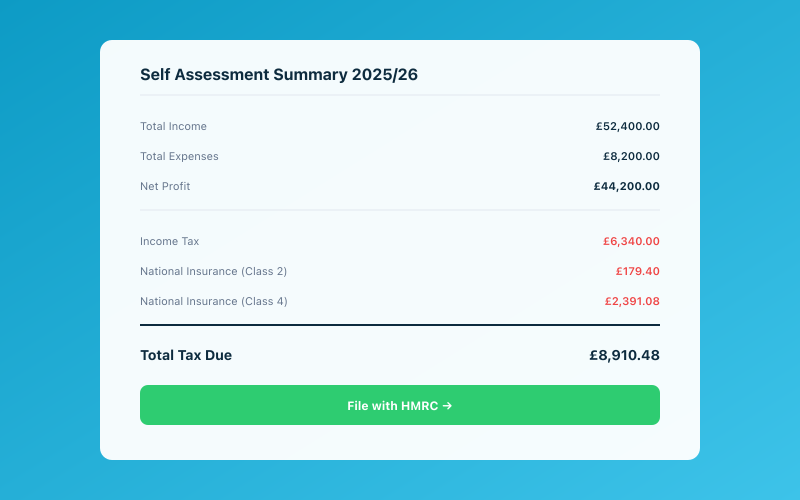 Your Accounted dashboard shows your real-time tax position
Incorrect Income Figures
One of the most frequent issues is entering the wrong income amount. This might happen because you mixed up gross and net figures, forgot about a secondary income source, or simply misread a number from your records. If you're juggling multiple income sources, it's especially easy to overlook something.
Missing Allowable Expenses
Many sole traders leave money on the table by forgetting to claim legitimate expenses. If you've already submitted your return and then realise you missed a batch of receipts or forgot about your home office costs, you'll want to amend your return to claim those back. Have a look at our guide on common Self Assessment mistakes for a full breakdown of what people tend to miss.
Wrong Tax Codes or Personal Details
Sometimes the mistake isn't about money at all. You might have entered the wrong UTR number, selected the wrong employment status, or ticked the wrong box somewhere in the return. These kinds of errors can cause confusion down the line, so they're worth correcting promptly.
Forgetting to Declare Income
If you had a side hustle, freelance gig, or rental income that you didn't include, HMRC will expect you to declare it. Failing to do so — even by accident — can result in penalties, so it's important to put things right as soon as you notice.
How to Amend Your Self Assessment Return
The process for correcting a mistake depends on how you originally filed and how long ago you submitted the return.
Amending Online Returns
If you filed your Self Assessment online (which most people do these days), you can amend it through your HMRC online account. Here's how:
- Log in to your Government Gateway account at gov.uk.
- Go to your Self Assessment section.
- Select the tax return you need to change.
- Click on "Amend your return."
- Make the necessary corrections to the relevant sections.
- Review the changes and submit the amended return.
HMRC will recalculate your tax liability automatically. If you've overpaid, you'll be due a refund. If you've underpaid, you'll need to pay the difference — and the sooner you do, the less likely you are to face interest charges.
Amending Paper Returns
If you filed a paper return, you'll need to write to HMRC explaining the correction. Include your UTR number, the tax year in question, the specific figures that need changing, and the correct amounts. Post it to the Self Assessment office that handles your account — the address will be on any correspondence you've received from HMRC.
The 12-Month Amendment Window
Here's the key thing to remember: you have 12 months from the filing deadline to amend your return. For the 2024/25 tax year, the online filing deadline is 31 January 2026, which means you can amend that return up until 31 January 2027.
If you miss this window, you can't amend the return yourself. Instead, you'll need to write to HMRC and ask them to make the correction on your behalf, which can take considerably longer. For a full rundown of key dates, check our Self Assessment deadlines guide.
What Happens When HMRC Spots the Mistake
Sometimes HMRC will notice an error before you do. They run automated checks on returns, and if something doesn't add up — say your declared income doesn't match what your employer or bank reported — they'll get in touch.
Compliance Checks
HMRC may open what's called a "compliance check" if they think there's an issue with your return. This isn't necessarily an investigation; it could be a simple query. They'll write to you asking for clarification or evidence to support the figures you've submitted.
If it turns out you made a genuine mistake, they'll usually correct the return and let you know how much extra tax (if any) you owe. In most cases, if you've been honest and cooperative, HMRC won't impose a penalty for a simple error.
Penalties for Errors
That said, HMRC does have the power to charge penalties for inaccurate returns. The amount depends on why the mistake happened:
- Careless errors (you didn't take reasonable care): penalties of up to 30% of the extra tax due.
- Deliberate errors (you knew it was wrong): penalties of up to 70% of the extra tax due.
- Deliberate and concealed errors (you tried to hide it): penalties of up to 100% of the extra tax due.
For genuine, accidental mistakes that you correct yourself, HMRC is generally understanding. The key is to act quickly and honestly.
What If You've Underpaid or Overpaid Tax?
Once your return is corrected, HMRC will recalculate what you owe.
If You've Underpaid
You'll receive a revised tax calculation showing the additional amount due. HMRC will give you a deadline to pay, and interest may be charged from the original due date. If the underpayment is significant, it's worth contacting HMRC to discuss a payment plan — they're often more flexible than people expect.
For the 2025/26 tax year, remember that the personal allowance remains at £12,570, with the basic rate of 20% applying to taxable income between £12,571 and £50,270. If your correction pushes you into the higher rate bracket (40%), that could have a noticeable impact on your bill. Our guide on how to pay your Self Assessment bill covers your options.
If You've Overpaid
If the correction means you've paid too much tax, HMRC will issue a refund. You can choose to have this paid directly into your bank account (the fastest option) or applied as a credit against future tax liabilities. Refunds typically take five to six weeks to process, though sometimes they arrive sooner.
How to Avoid Mistakes in the First Place
Prevention is always better than cure. Here are some practical steps to reduce the chances of errors creeping in.
Keep Accurate Records Throughout the Year
Don't leave everything to the last minute. If you're tracking income and expenses as you go — rather than scrambling through a shoebox of receipts in January — you're far less likely to make mistakes. Tools like Penny, the AI bookkeeper in Accounted, can help by automatically categorising transactions and flagging anything that looks unusual.
Double-Check Before You Submit
It sounds obvious, but take the time to review every section of your return before hitting submit. Cross-reference your figures against your bank statements, invoices, and expense records. A ten-minute check could save you hours of hassle later.
Use Software to Do the Heavy Lifting
Modern bookkeeping software can pull in your bank transactions, calculate your tax liability, and pre-fill much of your return. This drastically reduces the scope for human error. If you're still doing everything manually or on spreadsheets, it might be time to consider a more streamlined approach.
Don't Guess — Ask
If you're unsure whether something counts as income or whether you can claim a particular expense, don't guess. Check HMRC's guidance, ask an accountant, or look it up. An incorrect assumption can lead to an incorrect return.
What About Mistakes on Older Returns?
If you discover a mistake on a return from more than 12 months ago (outside the amendment window), you'll need to contact HMRC directly. Write to them or call the Self Assessment helpline to explain the situation.
HMRC can go back up to four years to correct errors in most cases. If the error was careless, they can go back six years. For deliberate errors, they can go back up to 20 years. So even if the mistake is old, it's still better to come clean than to hope HMRC never notices.
Voluntary Disclosure
If you've discovered a significant error — perhaps you failed to declare a whole income source — you can make a voluntary disclosure to HMRC. This shows good faith and can significantly reduce any penalties. HMRC has a specific process for this, and being upfront about the issue will always work in your favour.
Key Takeaways
Correcting a mistake on your Self Assessment return isn't the end of the world. Here's a quick summary:
- You have 12 months from the filing deadline to amend your return online.
- Log in to your Government Gateway account and use the "Amend your return" option.
- If you've missed the amendment window, contact HMRC directly.
- Genuine mistakes corrected promptly are unlikely to attract penalties.
- Keeping good records throughout the year is the best way to avoid errors.
- If HMRC contacts you about an error, respond quickly and honestly.
The most important thing is not to panic. Mistakes happen, and HMRC has dealt with millions of them. As long as you take reasonable care and correct issues as soon as you spot them, you'll be fine.
Related reading:
- Common Self Assessment Mistakes to Avoid
- Self Assessment Deadlines for 2025/26
- How to Pay Your Self Assessment Bill
Accounted helps UK sole traders stay on top of their bookkeeping and tax. Start your free 30-day trial at getaccounted.co.uk
Related Reading
- How to Calculate Your Class 4 National Insurance Accurately
- HMRC Payment Plans — Time to Pay Arrangements Explained
Start your free trial and let Penny handle your bookkeeping automatically.
Accounted files your Self Assessment directly to HMRC, with your return pre-populated from your records. See Self Assessment filing →
Tax & Compliance Specialists
Our tax specialists have decades of combined experience in UK sole trader and small business taxation, MTD compliance, and HMRC submissions. All content is reviewed against current HMRC guidance before publication and updated quarterly to reflect legislative changes.
Ready to try Accounted?
Join UK sole traders who are simplifying their bookkeeping and tax.
Start your 14-day free trial