How Long Does an HMRC Investigation Take?
If HMRC has opened an investigation into your tax affairs, one of your first questions is almost certainly going to be: "How long is this going to take?" It's a perfectly reasonable question, and unfortunately, the answer is: it depends.
That's not a cop-out — it genuinely varies enormously depending on the type of investigation, the complexity of your affairs, how quickly you respond, and how cooperative you are. But we can give you some realistic timeframes so you know roughly what to expect.
The Different Types of Investigation
Before we talk timelines, it's important to understand that HMRC uses different approaches depending on what they're looking into. The type of investigation directly affects how long it takes.
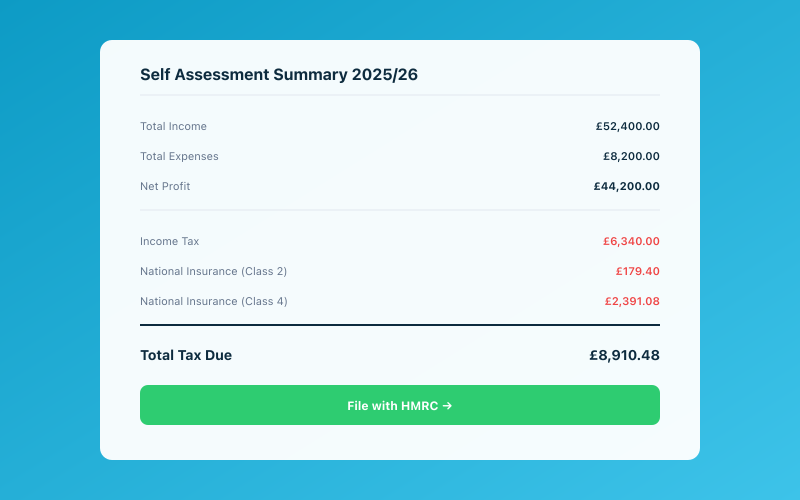 Your Accounted dashboard shows your real-time tax position
Aspect enquiry. This is the most common type and focuses on one specific area of your tax return — perhaps your expenses, a particular source of income, or a single transaction. Because the scope is limited, these tend to be resolved relatively quickly.
Full enquiry. This covers your entire tax return and all your financial affairs. As you'd expect, these take considerably longer because HMRC is looking at everything, not just one aspect.
Compliance check. Technically, this is slightly different from a formal enquiry. It's more of a review to make sure you're meeting your obligations correctly. These are often less intensive than full enquiries but can still be time-consuming.
If you're unsure which type you're facing, our guide on HMRC compliance checks vs full investigations explains the differences in detail.
Realistic Timelines
Let's get into the numbers. Bear in mind these are typical ranges, not guarantees — every case is different.
Aspect enquiries usually take between three and six months from start to finish. If you respond promptly to HMRC's requests and the issue is straightforward, it could be wrapped up in as little as six to eight weeks. If there are complications or delays, it might stretch to nine months or so.
Full enquiries typically last between twelve and eighteen months. Some are resolved within six months if everything is in order and you cooperate fully. Others can drag on for two years or more, particularly if HMRC discovers additional issues during the investigation or if your records are incomplete.
Criminal investigations — which are rare but serious — can take several years. These involve HMRC's Fraud Investigation Service and often include multiple agencies. If you're facing a criminal investigation, you absolutely need professional legal representation.
Code of Practice 8 (COP8) investigations are used for suspected serious tax avoidance and typically last between twelve and twenty-four months. Code of Practice 9 (COP9) investigations are for suspected tax fraud and involve the Contractual Disclosure Facility; these can take two years or longer.
What Happens During the Investigation
Understanding the process helps you understand the timeline. Here's roughly what happens:
Opening letter. HMRC writes to tell you they're opening an enquiry. This letter will specify the tax year under review and what information they want from you. You'll usually be given thirty days to respond.
Information gathering. HMRC requests documents and information. This might include bank statements, invoices, receipts, contracts, and explanations for specific entries on your return. They may make multiple requests as the investigation progresses.
Review and analysis. HMRC examines the information you've provided, compares it with data they hold, and identifies any discrepancies or areas of concern. This can take weeks or months depending on the complexity.
Meetings. In some cases, HMRC will request a meeting — either at their offices, your premises, or your accountant's office. These meetings are used to discuss findings and ask further questions. They're not interrogations, but they can feel quite intense.
Settlement discussions. If HMRC believes additional tax is owed, they'll enter into settlement discussions. This is where you (or your adviser) negotiate the final figures, including any penalties and interest.
Closure. Once everything is agreed, HMRC issues a closure notice. If no additional tax is due, the investigation is simply closed. If you owe money, you'll receive an assessment detailing the amount.
Factors That Speed Things Up
Several things can help resolve an investigation more quickly:
Respond promptly. Every time HMRC sends a request and you take weeks to respond, the investigation is delayed — sometimes by months, because your case goes back into the queue. Aim to respond within the deadline given, or sooner if possible.
Provide complete information. If HMRC asks for bank statements and you only send some of them, they'll have to ask again. Each round of back-and-forth adds time. Try to provide everything they ask for in one go.
Keep organised records. If your records are well-organised and easy to follow, HMRC can review them more quickly. This is where good bookkeeping habits really pay off. Using Accounted throughout the year means your records are already in order if you ever face an enquiry — Penny helps you categorise and track everything as you go, so there's no frantic scrambling.
Get professional help early. An experienced accountant or tax adviser knows what HMRC is looking for and can present your information in the most efficient way. They can also handle much of the correspondence, reducing the emotional stress on you. Read our guide on HMRC investigation — what to expect for a fuller picture.
Be cooperative. HMRC officers have discretion in how they handle cases. Being cooperative, polite, and transparent tends to lead to better outcomes and faster resolution. Being obstructive or evasive does the opposite.
Factors That Slow Things Down
On the flip side, certain things can drag an investigation out:
Incomplete or messy records. If HMRC has to piece together your finances from fragments of information, the investigation will take significantly longer. Missing records also raise suspicion, which may prompt HMRC to dig deeper.
Discovering additional issues. If an aspect enquiry uncovers problems in other areas, HMRC may widen the scope. What started as a quick check on your mileage claims might turn into a full review of your expenses if they find inconsistencies.
Multiple tax years. If HMRC decides to look at additional years — which they can do if they find evidence of carelessness or deliberate understatement — the investigation becomes much more extensive. They can go back four years for innocent errors, six years for carelessness, and twenty years for deliberate evasion.
Disputes over figures. If you and HMRC disagree on how much tax is owed, settlement negotiations can go back and forth for months. In some cases, the dispute ends up going to a tax tribunal, which adds a year or more to the process.
HMRC's own workload. Let's be fair — HMRC doesn't always move quickly either. Staff shortages, budget constraints, and seasonal pressures (especially around Self Assessment deadlines) mean that your case might sit in a queue for weeks between exchanges.
Your Rights During an Investigation
It's worth knowing that you have rights throughout this process:
You're entitled to know what type of enquiry has been opened and which tax year it covers. You can ask HMRC to explain why they've selected your return. You have the right to appoint someone — an accountant or tax adviser — to deal with HMRC on your behalf.
If HMRC is taking an unreasonably long time and you believe the investigation should be concluded, you can apply to the First-tier Tribunal for a closure notice. This forces HMRC to either close the enquiry or explain why it needs to continue.
You also have the right to appeal any penalties imposed as a result of the investigation.
How to Cope With the Wait
An HMRC investigation is stressful, and the uncertainty about how long it will last makes it worse. Here are some practical tips:
Stay organised. Keep a file (physical or digital) with all correspondence and documents related to the investigation. Note down dates, deadlines, and actions taken.
Don't ignore it. Sticking your head in the sand won't make it go away — it will make things worse. Respond to every communication, even if it's just to acknowledge receipt and say you need more time.
Keep trading as normal. Unless your investigation involves serious fraud allegations, there's no reason to stop working. Continue keeping good records and filing your returns on time.
Look after yourself. The stress of an investigation can affect your mental health. Talk to someone — whether that's a professional adviser, a friend, or a counsellor. You're not alone in this.
The Bottom Line
Most HMRC investigations for sole traders and small businesses are resolved within three to twelve months. The key to getting through it as quickly and painlessly as possible is to keep good records, respond promptly, and get professional help if you need it.
If you're using Accounted to manage your bookkeeping, you're already in a stronger position than most. Your transactions are categorised, your records are digital, and Penny keeps everything up to date — which means you've got a clear audit trail if HMRC ever comes calling.
Related reading:
- HMRC Compliance Checks vs Full Investigations — The Difference
- What to Do If You Get a Letter From HMRC
- Self Assessment Mistakes to Avoid
Accounted helps UK sole traders stay on top of their bookkeeping and tax. Start your free 30-day trial at getaccounted.co.uk.
Related Reading
- Overlap Relief — Claiming Back Tax You've Overpaid
- January Self Assessment Rush — How to Avoid the Panic
For step-by-step guidance, see our article on How to Amend a Self Assessment Tax Return.
For more on this topic, read Foreign Income on Self Assessment: UK Tax Rules.
For step-by-step guidance, see our article on How to Read Your HMRC Tax Calculation.
For step-by-step guidance, see our article on How to Reduce Your Self Assessment Tax Legally.
You may also find our Self Assessment for Company Directors: Guide helpful.
Related reading: Self Assessment Deadlines 2026: Every Date.
Related reading: Self Assessment Penalties: Late Filing and Payment.
Related reading: Self Assessment and Student Loan Repayments.
Start your free trial and let Penny handle your bookkeeping automatically.
Accounted files your Self Assessment directly to HMRC, with your return pre-populated from your records. See Self Assessment filing →
Tax & Compliance Specialists
Our tax specialists have decades of combined experience in UK sole trader and small business taxation, MTD compliance, and HMRC submissions. All content is reviewed against current HMRC guidance before publication and updated quarterly to reflect legislative changes.
Ready to try Accounted?
Join UK sole traders who are simplifying their bookkeeping and tax.
Start your 14-day free trial