Why Accountancy Practices Are Switching to Accounted in 2026
The accountancy profession is under more pressure in 2026 than at any point in recent memory. Making Tax Digital for Income Tax is launching in April, adding quarterly reporting obligations for thousands of clients. Staff shortages continue to bite, with experienced bookkeepers and senior accountants in short supply. And clients, increasingly tech-savvy, expect modern digital experiences rather than email chains and manual data entry.
Against this backdrop, a growing number of accountancy practices are re-evaluating their technology stack. Many are concluding that the platforms they have relied on for years are no longer fit for purpose. Here is why practices are switching to Accounted, and what the maths looks like when they do.
The Problem with the Status Quo
Xero and QuickBooks: Great Products, Wrong Direction
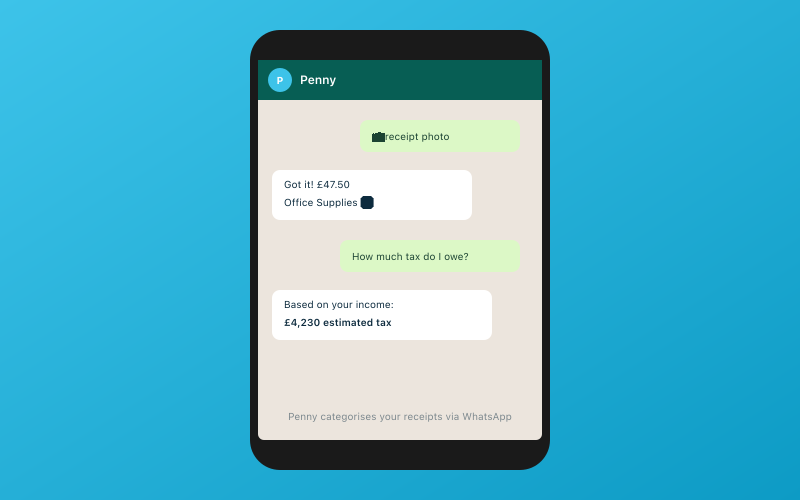 Chat with Penny on WhatsApp — your AI bookkeeper
Xero and QuickBooks are solid general-purpose accounting platforms. They were designed primarily for small businesses managing their own finances, with accountant access added on top. This means the accountant workflow is always secondary to the client workflow, and practice management features are either limited or require paid add-ons.
Xero's Practice Manager, for example, is a separate paid product. Receipt scanning requires Hubdoc, another add-on. Advanced reporting may require third-party integrations. By the time you have assembled all the tools you need to run a practice efficiently, you are managing multiple subscriptions, multiple logins, and data flowing between systems that were not designed to work together seamlessly.
The Review Bottleneck
The fundamental problem with traditional bookkeeping platforms for accountants is the review process. When a client's records arrive for review, the accountant must check every transaction categorisation, verify that VAT has been treated correctly, ensure nothing has been missed, and prepare workpapers documenting their review. This is time-consuming, repetitive, and does not scale well.
If you have fifty clients submitting quarterly MTD updates, that is two hundred quarterly reviews per year, on top of annual accounts and tax returns. Each review takes hours if you are checking every line item. The maths simply does not work with traditional software unless you are hiring more staff — and finding good staff is harder than ever.
How Accounted Is Different for Practices
Exception-First Workflow
Accounted fundamentally changes the review process with an exception-first workflow. Penny, the AI bookkeeper, categorises every transaction and assigns a confidence score. When an accountant opens a client's records for review, they do not see a list of every transaction. They see only the exceptions — the items where Penny's confidence is below your firm's threshold, the categorisations that look unusual, and the items that need professional judgement.
In practice, this means that for a well-maintained client, 80-90% of transactions flow through without needing accountant review. Your time goes to the 10-20% that actually need attention. This is not about cutting corners. Every transaction has been categorised and checked by AI. You are applying your expertise where it adds value, not rubber-stamping obvious entries.
Free Accountant Portal
Accounted's accountant portal is included at no additional cost. There is no per-client fee for accountant access, no separate practice management subscription, and no paid add-ons for features that should be standard. When your client uses Accounted, you get full access to their records, workpapers, review tools, and submission capabilities through a single portal.
Compare this with platforms that charge per client for accountant access, require separate subscriptions for practice management, and add fees for receipt scanning or advanced features. The cost saving is significant, particularly as your client base grows.
Practice Management Built In
Accounted includes practice management features as standard. You can track client deadlines, manage workload across your team, set up automated reminders, and monitor the status of all clients from a single dashboard. Workpapers are generated as part of the review process, documenting what was reviewed, what was changed, and what was approved. Bulk operations let you process common tasks across multiple clients simultaneously.
This is not a bolted-on afterthought. It is designed for the reality of running a modern practice where MTD compliance creates four times the submission workload and where efficiency is the difference between profitability and burnout.
What Clients Think
The accountant-side benefits would be meaningless if clients did not engage with the platform. The reality is that client engagement is one of Accounted's strongest advantages.
WhatsApp Receipt Scanning
Most of your clients already use WhatsApp every day. Accounted lets them send a photo of a receipt via WhatsApp, and Penny processes it immediately — extracting the supplier, amount, date, and VAT, categorising the expense, and matching it to the corresponding bank transaction. There is no app to download, no login to remember, and no learning curve.
This is transformative for record quality. Instead of receiving a carrier bag of receipts in January, you receive digital records that have been captured and categorised throughout the year. The difference in data quality at year-end is dramatic.
Confidence Scoring Builds Trust
Clients can see Penny's confidence scores on their own transactions. This teaches them about categorisation and helps them understand why certain items are flagged for review. Over time, clients get better at providing the information Penny needs, which reduces the number of exceptions and makes the review process even faster.
Seasonal Tax Nudges
Penny sends clients personalised nudges at key moments in the tax year. Reminders about pension contribution deadlines, payments on account, VAT thresholds approaching, and year-end planning opportunities. This means your clients are better informed and more proactive, which reduces the volume of reactive queries your practice handles.
The Practice Growth Maths
Consider the economics of switching. Here is a worked example for a practice with 100 self-employed or landlord clients.
Review Time Under Traditional Software
With traditional software, a thorough quarterly review of a client's records takes approximately two to three hours per client. Across 100 clients, that is 200 to 300 hours per quarter, or 800 to 1,200 hours per year. At a charge-out rate of £60 per hour, that is £48,000 to £72,000 of fee-earning capacity consumed by routine review work.
Review Time with Accounted
With Accounted's exception-first workflow, the same review takes approximately 30 to 45 minutes per client, because you are only reviewing the exceptions. That is 50 to 75 hours per quarter, or 200 to 300 hours per year. The time saving is 600 to 900 hours per year.
What You Do with the Saved Time
Six hundred hours at £60 per hour is £36,000 in capacity. You can use that to take on more clients without hiring, offer advisory services that command higher fees, improve your work-life balance during peak periods, or some combination of all three. And as the MTD threshold drops to £30,000 in 2027, your client base for quarterly submissions will grow, making efficiency gains even more valuable.
Software Costs
Accounted starts from £14 per month per client, with the accountant portal included free. For 100 clients, that is competitive with or below what you are currently paying for a combination of bookkeeping software, practice management, receipt scanning, and workpaper tools. The total cost of ownership is typically lower because you are replacing multiple paid tools with a single platform.
Migration Is Simpler Than You Think
Practices often delay switching because migration seems disruptive. With Accounted, the process is straightforward. Client data can be imported from Xero, QuickBooks, FreeAgent, and CSV exports. Bank feeds are connected through Open Banking, and historical transactions can be imported to provide continuity. Penny begins categorising new transactions immediately, and the confidence scoring improves rapidly as it learns each client's patterns.
Most practices migrate clients in batches, starting with newer or simpler clients and building to more complex ones. The full migration of a 100-client practice typically takes four to six weeks, with support from the Accounted onboarding team throughout.
Why 2026 Is the Right Time to Switch
The launch of MTD for Income Tax in April 2026 creates a natural transition point. Clients need to move to compatible software anyway. Practices need to establish quarterly review workflows. Doing both at once, by moving clients to Accounted and adopting the exception-first workflow, means you handle the MTD transition and improve your efficiency simultaneously.
Waiting until MTD is live and then trying to switch software mid-cycle is significantly more disruptive. The window before April is the optimal time to make the move.
Start your free trial of Accounted today. The accountant portal is free, and you can migrate your first few clients in under an hour. See the exception-first workflow in action and decide for yourself whether the maths works for your practice.
Related Reading
Start your free trial and see how Accounted simplifies your bookkeeping.
Editorial & Research
The Accounted editorial team covers software comparisons, technology, and the tools UK sole traders need to run their businesses efficiently. All software comparisons are based on independent research and publicly available pricing.
Ready to try Accounted?
Join UK sole traders who are simplifying their bookkeeping and tax.
Start your 14-day free trial