Why Accountants Are Frustrated with Xero's Pricing Model
Xero has been a dominant force in UK cloud accounting for over a decade. Many accountancy practices built their workflows around it, migrated hundreds of clients onto it, and became certified Xero partners. For years, it was the obvious choice: clean interface, strong bank feeds, good API, and a pricing model that worked.
But something has shifted. Across forums, social media groups, and conversations between practice owners, a consistent frustration is emerging. Xero's pricing model has evolved in ways that increasingly squeeze the practices that rely on it. And many accountants are starting to look elsewhere.
The Per-Client Cost Problem
Xero charges per subscription, and each client typically needs their own subscription. The three main tiers in the UK are currently Starter, Standard, and Premium, with prices that have increased multiple times in recent years.
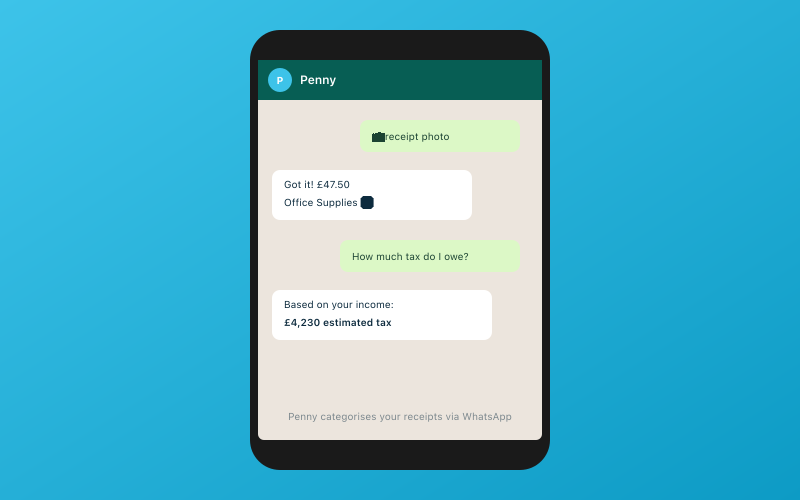 Chat with Penny on WhatsApp — your AI bookkeeper
For a practice with 200 clients, even modest per-client pricing adds up fast. If the average client is on the Standard plan, the combined annual cost across the practice's client base can easily reach five or six figures. That cost is either absorbed by the practice (reducing margins) or passed on to the client (making the practice less competitive).
The Discount That Keeps Shrinking
Xero offers partner discounts to accountancy practices, but these discounts have been progressively reduced. Practices that originally received significant wholesale pricing have seen their effective per-client cost increase year on year, sometimes without any corresponding improvement in the product for their specific use case.
The frustration isn't just about the price level. It's about the trajectory. When you've built your practice around a platform and trained your team on it, switching costs are significant. A pricing model that becomes incrementally more expensive each year feels like it's taking advantage of that lock-in.
Paid Add-Ons for Core Practice Features
What used to be included in the base product has increasingly been split into paid add-ons. Accountancy practices have been particularly affected.
Xero Workpapers
Xero Workpapers, which allows practices to prepare year-end accounts, trial balances, and working papers within the Xero ecosystem, was once positioned as a core part of the accountant experience. It's a useful tool, but it comes at an additional cost and requires the practice to subscribe separately.
For practices that use workpapers heavily, this is an extra line item that didn't exist before. For those who don't find it sufficiently powerful, it's a reminder that Xero's investment has been directed towards features that generate additional revenue rather than improving the base product.
Xero Practice Manager
Practice management, including workflow tracking, time recording, job management, and billing, is handled by Xero Practice Manager (XPM). This is a separate product with its own pricing, originally inherited from Xero's acquisition of WorkflowMax.
Many practices need both the accounting software and the practice management software. Paying for them separately, from the same vendor, feels like being nickel-and-dimed. Competitors who include practice management in their core offering have a straightforward advantage here.
The Hubdoc Situation
Xero acquired Hubdoc, a receipt and document management tool, in 2018. Initially, Hubdoc was included free with Xero subscriptions, which was a genuine value-add that practices appreciated.
Over time, Hubdoc has been more tightly integrated into Xero, which is positive from a workflow perspective. But the broader strategy of acquiring tools and bundling them into the ecosystem raises a concern: each acquisition creates another touchpoint where pricing can be adjusted, features can be gated, or alternatives can be made harder to use.
Practices that want to use a different receipt management tool may find the integration less seamless than with Hubdoc, effectively pressuring them into staying within the Xero ecosystem even where better alternatives exist.
The Price Increase Pattern
Xero has implemented multiple price increases in the UK market over recent years. Each individual increase might seem modest, perhaps 10% to 15%, but the cumulative effect over three to five years is substantial.
For a practice owner, these increases are particularly frustrating because:
- They're hard to predict: You can't budget confidently for next year's software costs when the pricing may change without much notice
- They often come without proportional feature improvements: Price increases justified by "continued investment in the platform" don't always translate into features that help accountants
- They disproportionately affect practices: A sole trader with one Xero subscription absorbs one price increase. A practice with 300 subscriptions absorbs 300 price increases.
The Ecosystem Lock-In
Perhaps the deepest source of frustration is the feeling of being locked in. When you've spent years migrating clients to Xero, training your team on Xero, building workflows around Xero's bank feed format and reconciliation approach, and integrating third-party apps through Xero's API, switching is enormously expensive.
Xero, like any platform company, knows this. The investment you've made in their ecosystem is itself a moat. Every price increase or feature gate is calibrated against the switching cost. As long as the annoyance is less than the pain of migrating, most practices stay.
This creates a slow erosion of goodwill. Practices don't leave suddenly. They grumble, absorb the cost, grumble more, and eventually reach a tipping point. The practices reaching that tipping point in 2026 are the ones who've been grumbling for three or four years.
What Breaking Free Actually Involves
Migrating away from Xero means:
- Exporting data for every client (chart of accounts, transactions, invoices, contacts)
- Setting up new bank feeds for every client
- Reconciling opening balances in the new system
- Retraining your team on different software
- Communicating the change to clients and getting them set up
- Updating any third-party integrations
It's a significant project. But for practices where the total cost of Xero ownership has become a material percentage of their revenue, the maths eventually works.
What Accountants Actually Want
When you listen to practice owners talk about what they need from their software, the same themes come up repeatedly:
- Predictable, fair pricing: A model that doesn't punish you for growing. Fixed pricing or at least pricing that scales sensibly with client numbers.
- Everything included: Bookkeeping, workpapers, practice management, receipt capture, and client communication in one platform at one price. No add-on fatigue.
- Investment in the accountant experience: Not just the end-client experience. Practices need tools that make compliance faster, review easier, and advisory more accessible.
- Genuine partnership: A vendor that treats practices as partners in growth, not as a captive revenue stream.
- Easy migration: If you're going to ask practices to switch, make the migration as painless as possible.
How Accounted Approaches Pricing Differently
Accounted was designed from the ground up with accountancy practices in mind, and the pricing model reflects that.
There are no per-client fees for accountancy practices. You pay for Accounted as a practice tool, and you can add as many clients as you need. Bookkeeping, receipt processing, bank feeds, MTD submissions, client communication through Penny (Accounted's AI bookkeeper), and the practice dashboard are all included.
This means your software costs don't scale linearly with your client base. Adding your 201st client costs the same as adding your 101st: nothing extra. The growth equation changes fundamentally when your biggest variable cost (software) becomes a fixed cost.
There are no separate charges for workpapers, practice management features, or receipt capture. Everything is in one platform, accessible from one dashboard, at one price.
Consider Your Options
If Xero's pricing is squeezing your margins, you're not alone, and you're not stuck. The switching cost is real, but so is the ongoing cost of staying. Accounted offers guided migration from Xero with data import tools that bring across your chart of accounts, contacts, and transaction history. Start your free trial today, migrate a few clients, and see for yourself whether the grass really is greener.
Related Reading
-
Accounted vs Xero vs QuickBooks: Which Is Best for UK Sole Traders?
-
Why Accountancy Practices Are Switching to Accounted in 2026
Start your free trial and see how Accounted simplifies your bookkeeping.
Editorial & Research
The Accounted editorial team covers software comparisons, technology, and the tools UK sole traders need to run their businesses efficiently. All software comparisons are based on independent research and publicly available pricing.
Ready to try Accounted?
Join UK sole traders who are simplifying their bookkeeping and tax.
Start your 14-day free trial