Best Accounting Software for Accountancy Practices in 2026
Choosing practice software is one of the most consequential decisions an accountancy firm makes. It affects how you onboard clients, how your team spends their time, how you price your services, and ultimately how profitable your practice is. Switch costs are high and the decision tends to stick for years.
This guide compares the main options available to UK accountancy practices in 2026, focusing on what matters day to day: multi-client management, workflow efficiency, staff permissions, billing, and the quality of the client-facing product you are putting in front of your sole traders and small business clients.
What Practices Actually Need
The key requirements are:
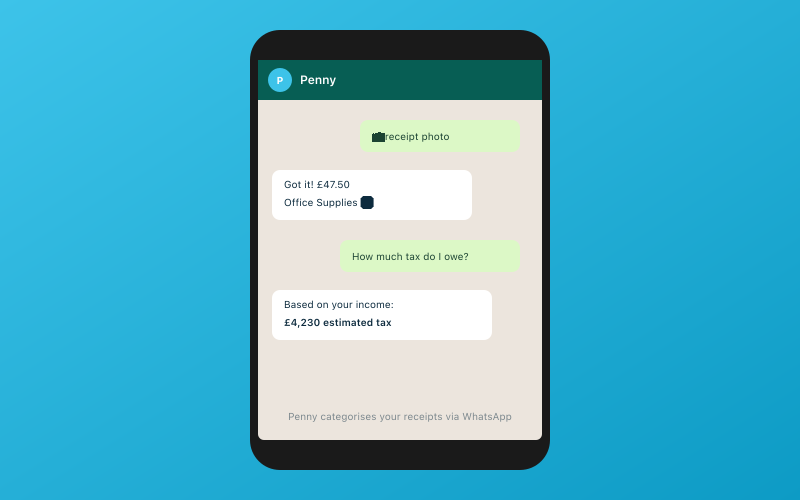 Chat with Penny on WhatsApp — your AI bookkeeper
- Multi-client dashboard — seeing all clients, their status, and what needs attention at a glance
- Exception-based workflow — spending time on items that need professional judgement, not routine categorisation
- Practice management — task tracking, deadlines, staff assignment, and workload visibility
- Workpapers — preparing and reviewing year-end accounts with supporting documentation
- Staff permissions — controlling who can access which clients and what actions they can take
- Client billing — tracking time or fixed fees and invoicing clients
Accounted Accountant Portal
Free for accountants (clients pay from £14/month)
Accounted takes a fundamentally different approach to practice software. The accountant portal is completely free — there is no per-client fee, no subscription tier, and no feature gating. The revenue model is simple: clients pay for their Accounted subscription, and accountants get full practice tools at no cost.
The portal includes a multi-client dashboard, practice management tools, workpapers, and staff permissions. But the defining feature is the exception-first workflow. Because Accounted's AI bookkeeper Penny categorises client transactions automatically and assigns confidence scores, accountants only need to review items where the AI is uncertain. A client with 200 transactions per month might generate only 15 exceptions that need professional review. The rest are categorised correctly and need nothing more than a quick scan.
This changes the economics of managing sole trader clients. Practices that previously found small sole trader bookkeeping unprofitable can serve these clients efficiently because the AI handles the volume work.
The client-facing product is strong too. WhatsApp receipt scanning means clients actually capture receipts instead of arriving at year end with a carrier bag of crumpled paper. Bank feeds and AI categorisation mean the books are largely up to date without the client needing to do much.
Strengths: Free portal with no per-client fees, exception-first workflow dramatically reduces review time, AI handles routine categorisation, practice management and workpapers included, WhatsApp receipt scanning improves client receipt compliance. Limitations: Newer platform with fewer third-party integrations. Not yet suitable for limited company clients with complex needs. Smaller user base means fewer accountants have experience with it.
Xero HQ and Xero Practice Manager
Xero Partner Programme (free for practices, clients pay from £15/month)
Xero HQ is the market standard for accountancy practices in the UK. The partner programme gives practices access to Xero HQ (client overview dashboard), Xero Practice Manager (task and workflow management), and Xero Workpapers — along with wholesale pricing for client subscriptions and Xero certification.
Xero has the largest market share among UK practices, which means staff familiarity and abundant training resources. The app marketplace covers every need — Dext for receipts, Spotlight for reporting, Ignition for billing. Practice Manager handles task management and time tracking, though many practices find its interface dated.
The limitation for practices focused on sole traders is that Xero was built primarily for limited companies. Self Assessment support requires Xero Tax, and the overall workflow assumes a level of complexity that many sole traders do not have. Transaction categorisation in Xero is manual, which means either the client does it (often poorly) or the practice does it (time-consuming).
Strengths: Market standard, enormous ecosystem, staff familiarity, comprehensive practice tools, strong partner programme with wholesale pricing and training. Limitations: Practice Manager interface feels dated. Client-side categorisation is manual. Sole trader Self Assessment requires Xero Tax. The ecosystem approach means multiple subscriptions (Dext, Spotlight, etc.) add cost and complexity.
QuickBooks Accountant
Free for practices (clients pay from £12/month)
QuickBooks Accountant provides a multi-client dashboard, client billing, and team management. The wholesale pricing programme gives practices discounts on client subscriptions, and the ProAdvisor certification is well-structured.
QuickBooks has invested heavily in automation features including automatic categorisation suggestions and receipt processing. The client mobile app is strong, and the setup process for new clients is relatively straightforward.
For practices with clients who sell physical products, QuickBooks' inventory management gives it an edge over platforms that focus on service businesses. The project profitability feature is also useful for practices that want to show clients which of their jobs are making money.
Strengths: Good client mobile app, inventory management for product-based clients, competitive pricing, reasonable automation features. Limitations: UK Self Assessment support is limited compared to UK-native platforms. Practice management tools are less developed than Xero's. The platform sometimes feels like a localised American product rather than a UK-native one.
Sage for Accountants
Various pricing structures
Sage has the deepest roots in UK accounting, and many practices — particularly those that started on Sage desktop products — remain loyal to the platform. Sage Accounting, combined with Sage for Accountants, provides a multi-client dashboard, practice management, and integration with Sage's payroll and pension products.
The strength of Sage is in handling complexity. For practices with clients who need payroll, pensions, and advanced reporting, the integrated Sage ecosystem handles it without third-party add-ons. The cloud version has improved significantly, though it still carries some of the complexity of its desktop heritage.
Strengths: Deep UK accounting heritage, integrated payroll and pensions, handles complex client needs, strong reporting. Limitations: Interface complexity can slow down work on simple clients. Cloud version still evolving. Sole trader features are not the primary focus.
FreeAgent Practice Dashboard
Free for practices (clients pay from £14.50/month or free with NatWest)
FreeAgent's practice dashboard provides a client overview and basic practice management. The client-facing product is excellent for sole traders — the tax timeline and plain-English explanations mean clients are more engaged with their finances, which reduces queries to the practice.
The free-with-NatWest arrangement affects practices too. If many of your clients bank with NatWest, they can use FreeAgent at no cost, which makes recommending it straightforward.
The practice tools, however, are notably less developed than Xero's or Accounted's. There are no workpapers, limited task management, and staff permissions are basic. For a practice managing dozens or hundreds of clients, the lack of workflow tools becomes a constraint.
Strengths: Excellent client-facing product, free with NatWest for clients, good for reducing client queries through tax timeline. Limitations: Practice management tools are minimal. No workpapers. Limited workflow and task management. Not suitable as a primary practice platform for larger firms.
The Economics of Sole Trader Clients
Many practices have historically found sole trader clients unprofitable. The bookkeeping work takes time, the fees clients are willing to pay are modest, and the year-end work is not significantly simpler than for a small limited company. Some practices have responded by increasing minimum fees or declining sole trader work entirely.
AI-powered bookkeeping changes this calculation. If an AI handles 90% of transaction categorisation correctly, and the practice only reviews the 10% that need professional judgement, the time per client drops dramatically. A practice that could profitably serve 50 sole trader clients might now serve 200 with the same team.
This is the core argument for Accounted's approach. The free portal means no per-client cost for the practice. The AI handles the volume work. The exception-first workflow focuses professional time where it adds value. The result is that sole trader clients become profitable without raising fees.
Our Recommendation
If you are an established practice with a Xero workflow and trained staff, switching carries real costs and risks. Xero's ecosystem is the most mature, and the familiarity advantage is genuine.
If you are looking at your sole trader book of clients and seeing either thin margins or work you are declining, Accounted's portal is worth a serious evaluation. The free pricing removes financial risk, and the exception-first workflow can be tested with a handful of clients before any broader commitment.
Try the Accountant Portal Free
Accounted's accountant portal is free with no client minimums and no feature restrictions. Set up a few sole trader clients, see how the exception-first workflow handles their transactions, and judge the time savings for yourself. There is no commitment and no cost. Visit accounted.io/accountants to get started.
Related Reading
- AI in Accounting: What's Real and What's Hype in 2026
- How to Switch from Xero to Accounted (Step-by-Step)
Start your free trial and see how Accounted simplifies your bookkeeping.
Editorial & Research
The Accounted editorial team covers software comparisons, technology, and the tools UK sole traders need to run their businesses efficiently. All software comparisons are based on independent research and publicly available pricing.
Ready to try Accounted?
Join UK sole traders who are simplifying their bookkeeping and tax.
Start your 14-day free trial