Best CIS Software for Construction Businesses in 2026
The Construction Industry Scheme adds a layer of complexity to accounting that most general-purpose software handles poorly or not at all. If you are a contractor paying subcontractors, you need to verify them with HMRC, deduct the correct amount from their payments, file monthly CIS returns, and handle the domestic reverse charge for VAT. If you are a subcontractor, you need to track deductions suffered and reclaim them against your tax bill.
Most accounting software treats CIS as an afterthought — an add-on module or a manual workaround. For construction businesses, this means either paying extra for CIS features, maintaining separate spreadsheets, or relying heavily on an accountant for what should be routine processing.
This guide compares how the main UK accounting platforms handle CIS requirements.
What Construction Businesses Need
CIS compliance involves several interconnected processes:
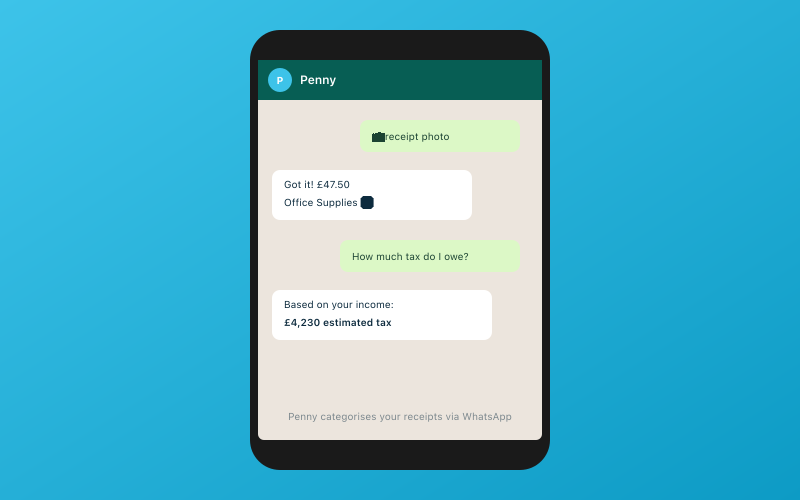 Chat with Penny on WhatsApp — your AI bookkeeper
For Contractors (Paying Subcontractors)
- Subcontractor verification — checking each subcontractor's status with HMRC before first payment
- Deduction calculation — applying the correct deduction rate (20% for verified, 30% for unverified, 0% for gross payment status)
- Payment statements — providing subcontractors with statements showing gross amount, deductions, and net payment
- Monthly CIS returns — reporting all subcontractor payments and deductions to HMRC by the 19th of each month
- Domestic reverse charge VAT — handling VAT correctly on construction services between CIS-registered businesses
For Subcontractors (Receiving Payments)
- Deduction tracking — recording CIS deductions suffered on each payment received
- Tax offset — applying CIS deductions against income tax and National Insurance liabilities
- Self Assessment — including CIS income and deductions on the tax return
Accounted
CIS included on all plans from £14/month
Accounted includes CIS features on every pricing tier, which is unusual. Most competitors either lock CIS behind higher plans or charge for it as an add-on. For construction businesses, this makes Accounted one of the most cost-effective options.
The AI bookkeeper Penny recognises construction-related transactions and applies the correct CIS treatment. When you pay a subcontractor, Penny identifies the payment, calculates the correct deduction based on the subcontractor's verification status, and records the deduction. Payment statements are generated automatically.
Monthly CIS return preparation pulls together all subcontractor payments and deductions for the period. Before filing, the AI checks for common errors — payments to unverified subcontractors without the 30% deduction, missing verification records, and deductions that do not match the expected rate.
For subcontractors, Accounted tracks CIS deductions received and carries them through to the Self Assessment return. The 11 SA schedules supported include the employment pages where CIS deductions are offset.
WhatsApp receipt scanning is particularly relevant for construction workers. Photographing receipts for materials from building merchants and tool suppliers on site is far more practical than opening a dedicated app. Send the receipt to Penny via WhatsApp and it is categorised and stored immediately.
The free accountant portal means your accountant can review CIS returns before they are filed, check deduction calculations, and manage the process across multiple construction clients through the exception-first workflow.
Strengths: CIS on all plans at no extra cost, AI identifies CIS transactions, deduction tracking for both contractors and subcontractors, monthly return preparation, payment statements, reverse charge VAT support, WhatsApp receipt scanning practical for on-site use. Limitations: Subcontractor verification with HMRC must currently be initiated manually. Newer platform with a smaller user base in the construction sector.
Xero
CIS module available as an add-on or on certain plans
Xero offers a CIS module that handles the core requirements: subcontractor management, deduction calculation, payment recording, and CIS return filing. The module integrates with Xero's invoicing and payment systems, so CIS deductions flow through to the accounts correctly.
Setup requires some accounting knowledge, but once configured the workflow is logical. Monthly CIS return filing works directly from Xero. The app marketplace includes construction-specific add-ons for project costing and job management.
Strengths: Established CIS module, integrates with Xero's invoicing, direct return filing, construction-specific apps in the marketplace, wide accountant familiarity. Limitations: CIS may require a higher plan or add-on cost. Setup requires accounting knowledge. Manual categorisation means CIS transactions are not auto-identified. The module can feel clunky compared to the core Xero experience.
QuickBooks
CIS features available on higher plans
QuickBooks includes CIS functionality on higher-tier plans covering subcontractor tracking, deduction calculation, and return preparation. The entry-level plan does not include CIS, which feels excessive for a small subcontractor who just needs to track deductions.
Strengths: Functional CIS tracking, deduction calculation, return preparation, reasonable interface. Limitations: Requires higher-tier plan. Less depth than Xero's CIS module. Construction-specific integrations are limited compared to Xero's marketplace. Subcontractor verification is manual.
Sage Accounting
CIS features vary by plan
Sage has deep roots in the construction sector. The cloud version provides subcontractor management, deduction tracking, return filing, and integration with Sage payroll for businesses with a mixed workforce of employees and subcontractors.
Strengths: Deep CIS heritage, detailed reporting, customisable payment statements, payroll integration for mixed workforce. Limitations: Interface complexity — the depth comes at the cost of simplicity. Cloud version CIS features are still catching up with the desktop version. Pricing structure can be confusing.
FreeAgent
Limited CIS support
FreeAgent's CIS support is basic. You can record CIS deductions on bills and track them for Self Assessment purposes, but the full CIS compliance workflow — subcontractor verification, automatic deduction calculation, monthly return filing — is not built in.
For subcontractors with simple affairs (one or two contractors, straightforward deductions), FreeAgent's basic tracking may be sufficient, especially if combined with an accountant who handles the CIS returns. For contractors managing multiple subcontractors, FreeAgent is not the right tool.
Strengths: Good for subcontractors with simple tracking needs, excellent general user experience, free with NatWest. Limitations: No contractor CIS return filing. No subcontractor verification. Basic deduction tracking only. Not suitable for contractors managing subcontractors.
Specialist CIS Software
Several specialist tools exist specifically for CIS compliance. These handle verification, deductions, returns, and statements, but you still need separate bookkeeping software — meaning two systems to maintain with no automatic data flow between them.
The Reverse Charge Complication
The domestic reverse charge for construction services means subcontractors do not charge VAT in the normal way on qualifying supplies. Instead, the contractor accounts for both output and input VAT. Getting this wrong is one of the most common VAT errors in the construction sector.
Accounted and Xero both support the reverse charge. QuickBooks and Sage have added support. FreeAgent's handling is limited. If your business deals with reverse charge transactions regularly, checking your software handles them correctly should be a priority.
The Cost of CIS as an Add-On
One of the frustrations for construction businesses is that CIS features are often locked behind higher pricing tiers or sold as add-ons. A small subcontractor earning £30,000 per year should not need to pay for a premium accounting plan just to track CIS deductions.
Accounted's approach of including CIS on all plans — starting at £14 per month — addresses this directly. Whether you are a sole trader plasterer tracking deductions or a contractor managing twenty subcontractors, CIS features are included without upgrading.
The annual cost comparison is revealing:
| Software | CIS-Capable Plan | Annual Cost | |---|---|---| | Accounted (Starter) | All plans | From £168/year | | Xero (with CIS) | Standard or Premium | From £360/year | | QuickBooks (with CIS) | Essentials or above | From £264/year | | Sage (with CIS) | Varies | From £168/year | | FreeAgent | Basic tracking only | From £174/year |
Our Recommendation
For contractors managing multiple subcontractors who want the deepest CIS toolset and do not mind complexity, Xero's CIS module with construction-specific marketplace apps provides the most comprehensive solution. If your accountant already runs on Xero, this is the path of least resistance.
For subcontractors and smaller contractors who want CIS compliance without paying a premium, Accounted offers the best value. CIS is included on every plan, the AI handles CIS transaction identification, and the WhatsApp receipt scanning is genuinely practical for construction workers who spend their days on site rather than at a desk. The reverse charge is supported, and your accountant gets free access to review everything.
Start Your Free Trial
Try Accounted free and see how Penny handles your CIS transactions. Connect your bank account, let the AI identify subcontractor payments and deductions, and see the monthly return prepared automatically. Your accountant can join through the free portal to review and file. No card required — start at accounted.io.
Related Reading
- Best Accounting Software for Accountancy Practices in 2026
- Accounted vs GoSimpleTax: AI Bookkeeping + Tax Filing vs Tax Filing Only
Start your free trial and see how Accounted simplifies your bookkeeping.
Editorial & Research
The Accounted editorial team covers software comparisons, technology, and the tools UK sole traders need to run their businesses efficiently. All software comparisons are based on independent research and publicly available pricing.
Ready to try Accounted?
Join UK sole traders who are simplifying their bookkeeping and tax.
Start your 14-day free trial