How to Start a Gardening Business
If you love being outdoors and working with your hands, a gardening business can be a genuinely rewarding way to earn a living. The demand is strong and consistent — homeowners, landlords, letting agents, and commercial property managers all need reliable gardeners. And unlike many businesses, you can start with minimal investment and build at your own pace.
The UK gardening services market is substantial, with millions of households using professional gardeners regularly. Whether you want to offer basic lawn maintenance, full garden design, landscaping, or specialist services, there's a market waiting.
Here's everything you need to know to get started.
What Services Will You Offer?
Before anything else, decide what your business will actually do. Gardening covers a broad range of services, and most successful businesses start with a core offering before expanding:
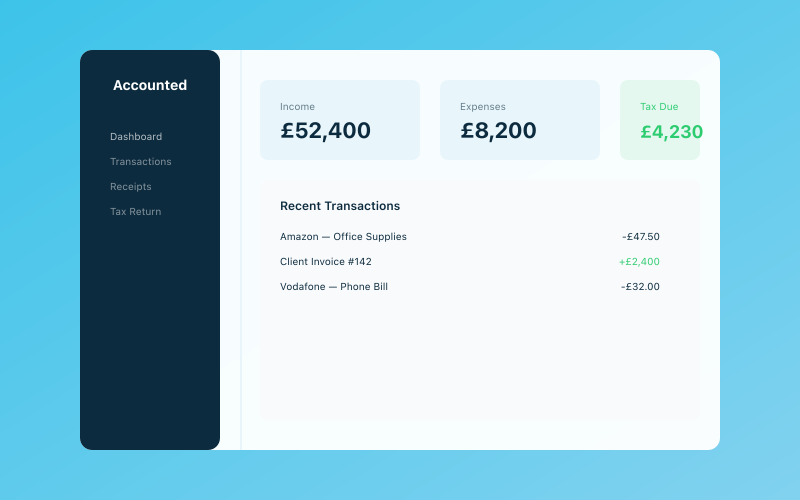 Your Accounted dashboard — income, expenses, and tax at a glance
Maintenance gardening is the bread and butter. This includes lawn mowing, hedge trimming, weeding, pruning, leaf clearance, and general tidying. It's the easiest to start with because clients need it regularly — weekly, fortnightly, or monthly — giving you predictable, recurring income.
Landscaping involves more significant work: laying patios, building decks, installing fences, creating garden features, and reshaping outdoor spaces. This is higher-value work but requires more skill, equipment, and often physical help. Some landscaping work may also require building regulations compliance.
Garden design is at the creative end. If you have an eye for design and knowledge of plants, offering design services can command premium rates. Many garden designers work on a consultancy basis, creating plans that the client or a landscaping team then implements.
Specialist services include tree surgery (which requires specific qualifications and insurance), pond maintenance, irrigation installation, and organic or wildlife gardening. These niches can command higher rates due to the specialist knowledge involved.
Most people starting out focus on maintenance gardening. It's the quickest route to regular income, the equipment costs are manageable, and you can add services as your skills and client base grow.
Setting Up Properly
Register as self-employed. As with most small businesses, the simplest route is to start as a sole trader. Register with HMRC before 5 October following the tax year you start trading. It's free and takes about ten minutes online.
Get insured. This is non-negotiable. At minimum, you need:
- Public liability insurance — covers damage to clients' property or injuries to third parties. Essential if you're working on someone else's property. Policies typically start from around £60-£150 per year for basic cover, with most gardeners opting for £1 million to £5 million cover.
- Tool and equipment insurance — covers theft or damage to your tools. Given that a decent set of professional gardening equipment can cost thousands, this is worth having.
- Employers' liability insurance — legally required if you take on any employees or regular helpers.
- Vehicle insurance — make sure your vehicle insurance covers business use, including carrying tools and materials.
Our sole trader insurance guide covers the different types of cover in more detail.
Invest in equipment. The basic kit for a maintenance gardening business includes:
- Professional lawn mower (£300-£1,000+)
- Strimmer/brush cutter (£100-£400)
- Hedge trimmer (£80-£300)
- Leaf blower (£50-£200)
- Hand tools (secateurs, loppers, shears, trowels, forks, rakes — budget £100-£300)
- Wheelbarrow (£30-£80)
- Safety equipment (gloves, ear protection, eye protection, steel-toe boots)
You'll also need a reliable vehicle large enough to carry your equipment. A small van or a car with a trailer works well. Many gardeners start with their existing car and upgrade as the business grows.
Total startup costs for a basic maintenance gardening business typically range from £1,000 to £5,000, depending on what equipment you already own and whether you need a vehicle.
Pricing Your Services
Gardening services in the UK are typically priced either hourly or per visit. Here are typical rates:
Hourly rates:
- General maintenance: £20 to £35 per hour (more in London and the South East)
- Landscaping labour: £25 to £45 per hour
- Garden design consultancy: £40 to £80+ per hour
Per-visit rates:
- Many gardeners quote a flat rate per visit based on the size of the garden and the work needed. A typical small-to-medium garden maintenance visit might be £30 to £60 for one to two hours of work.
Project-based pricing:
- Landscaping projects are usually quoted as a fixed price based on the scope of work, materials, and time involved.
When setting your rates, factor in:
- Travel time between clients (aim to cluster clients geographically)
- Equipment wear, fuel, and maintenance costs
- Waste disposal costs (green waste removal charges or tip fees)
- Your tax and National Insurance obligations
- Weather-related lost days (you can't mow in the rain)
A common approach is to offer an initial visit at a slight discount or as a free assessment, then quote a regular price based on what the garden actually needs. This lets you see the garden, manage expectations, and price accurately.
Finding and Keeping Clients
Start local. Your first clients will almost certainly be in your immediate area. Tell neighbours, friends, and family. Put cards up in local shops, community noticeboards, and post offices. Deliver leaflets to houses in your target area — streets with detached houses and larger gardens are usually your best bet.
Online presence. Set up a Google Business Profile (free) so you appear in local search results. Create a simple Facebook page and join local community groups. Many gardeners get a steady stream of work simply from being active and responsive in local Facebook groups.
Review platforms. Register on Checkatrade, Bark, or TrustATrader. These platforms charge per lead or a monthly subscription, but they can be effective for building your client base, especially early on. Positive reviews on these platforms build trust quickly.
Build recurring revenue. The real value in a gardening business is recurring clients. A customer who books you fortnightly from March to October is worth far more than a series of one-off jobs. Focus on delivering consistent quality to turn every new client into a regular. A client paying £40 per fortnight for seven months is worth over £600 per year — and most will come back year after year.
Networking. Build relationships with estate agents, letting agents, property managers, and local tradespeople. Estate agents often need gardens tidied before property viewings. Letting agents need ongoing maintenance for rental properties. Builders and decorators may need garden clearance or restoration after building work.
Tax and Financial Management
As a sole trader gardener, your tax obligations for 2025/26 are:
Income tax on your profits:
- Personal Allowance: £12,570 (tax-free)
- Basic rate: 20% on £12,571 to £50,270
- Higher rate: 40% on £50,271 to £125,140
- Additional rate: 45% over £125,140
National Insurance:
- Class 2: £3.45 per week
- Class 4: 6% on profits between £12,570 and £50,270, plus 2% above £50,270
Allowable expenses you can deduct include:
- Equipment and tools (or capital allowances for more expensive items)
- Fuel and vehicle costs (or mileage at 45p/mile for the first 10,000 miles)
- Seeds, plants, compost, and other materials
- Insurance premiums
- Marketing costs (leaflets, website, directory listings)
- Protective clothing and workwear
- Waste disposal fees
- Phone bills (business proportion)
- Bookkeeping software
Track everything from the start. It's tempting to think you'll sort the finances later, but "later" often means a stressful January trying to reconstruct a year's worth of transactions. Accounted lets you log expenses as they happen — snap a photo of a receipt at the garden centre and it's done. Penny can help categorise your spending so you're always clear on what you can claim.
VAT registration is required if your turnover exceeds £90,000. Most solo gardening businesses won't hit this threshold, but if you're growing a team and taking on larger contracts, keep an eye on your cumulative turnover.
Seasonal Planning and Growth
Gardening is inherently seasonal. Your busiest months will be March through to October, with a significant dip in winter. Here's how to manage that:
Diversify for winter. Offer services that extend beyond the growing season: leaf clearance in autumn, gutter cleaning, fence repairs, garden clearance, and preparation work for spring. Some gardeners add Christmas tree delivery, wreath making, or winter planting services.
Save during the busy months. Set aside money during peak season to cover your quieter months and your tax bill. A good rule of thumb is to set aside 25-30% of your income for tax and NI. Accounted can estimate your tax liability as you go, so you always know how much to save.
Plan for growth. If you're consistently turning away work, it might be time to consider hiring help. Taking on a part-time employee or working with a reliable subcontractor can let you serve more clients without burning out. Our guide to writing a business plan can help you think through the numbers before making that leap.
Upskill. Consider qualifications that open new revenue streams — RHS courses, chainsaw certification (for tree work), or landscape design qualifications. Each new skill is an opportunity to offer higher-value services.
Related Reading
View our pricing and start your free 30-day trial today.
Accounted helps UK sole traders stay on top of their bookkeeping and tax. Start your free 30-day trial at getaccounted.co.uk.
Starting out? Accounted is built for UK sole traders from day one — from £14/month. Get started →
Business & Operations Advisors
Our business advisors cover the practical side of running a UK sole trader business — from HMRC registration to managing growth. Content is written for real business owners in plain English, not accountants.
Ready to try Accounted?
Join UK sole traders who are simplifying their bookkeeping and tax.
Start your 14-day free trial