Starting a Business in London — Costs, Taxes, and Tips
London is one of the most exciting places in the world to start a business. It's packed with customers, talent, and opportunity — but it also comes with higher costs, more competition, and a few unique challenges you won't find anywhere else in the UK.
Whether you're launching a street food stall in Borough Market, freelancing from a co-working space in Shoreditch, or setting up a trades business in South London, this guide covers the practical stuff: what it actually costs, how tax works, and how to give yourself the best chance of success.
Why London? The Advantages
Let's start with the good news. London has a lot going for it as a place to start a business.
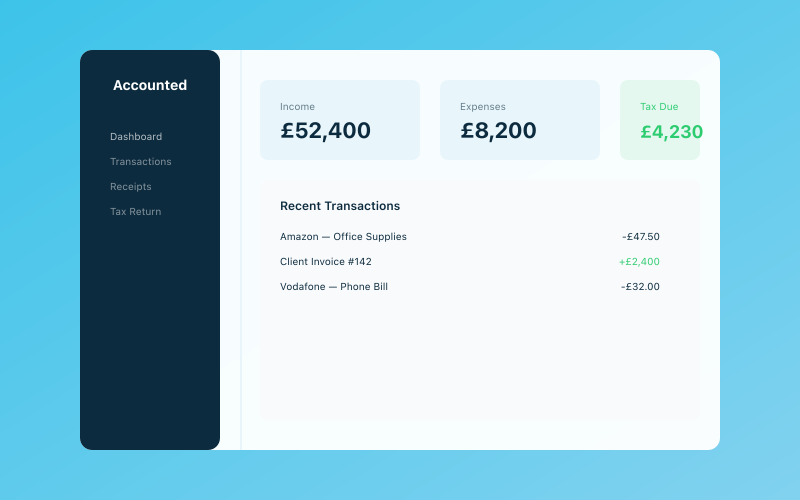 Your Accounted dashboard — income, expenses, and tax at a glance
The population is around 9 million, which means a massive potential customer base right on your doorstep. It's also incredibly diverse, so niche businesses that might struggle elsewhere can find their audience here. There's a reason London has everything from Japanese cheesecake shops to specialist vintage typewriter repair services.
Access to talent is another big plus. If you need to hire, the pool of candidates is enormous. And if you're a freelancer or consultant, the concentration of large companies and agencies means there's no shortage of potential clients.
London also benefits from excellent transport links — both domestically and internationally. If your business involves travel, you've got five major airports and high-speed rail connections to the rest of the UK and Europe.
Finally, the networking opportunities are second to none. There are hundreds of business events, meetups, and co-working spaces across the city. Building connections is genuinely easier here than in most other places.
The Real Costs of Starting a Business in London
Now for the less glamorous part. London is expensive, and those costs can catch new business owners off guard.
Workspace costs are the big one. If you need commercial premises, expect to pay significantly more than the national average. A small retail unit in Zone 1 might cost £50,000 or more per year in rent, though you can find more affordable options in outer boroughs. A desk in a co-working space typically runs from £200 to £600 per month, depending on the location and facilities.
If you're working from home, you can claim a portion of your household costs as a business expense. HMRC's simplified expenses method lets you claim between £10 and £26 per month depending on how many hours you work from home. Alternatively, you can calculate the actual proportion of costs — things like rent, utilities, council tax, and broadband — that relate to your business use. Have a look at our guide on work-from-home expenses for the full breakdown.
Business rates are another London-specific sting. If you occupy commercial premises, you'll likely pay business rates. The good news is that small business rates relief can reduce or eliminate this cost if your property's rateable value is below £15,000. Properties with a rateable value of £12,000 or less pay no business rates at all.
Living costs matter too, because you need to eat and pay rent while your business gets going. The average rent for a one-bedroom flat in London is over £1,500 per month — sometimes much more in central areas. Factor this into your financial planning, because it directly affects how long your savings will last before the business needs to be self-sustaining.
Transport costs add up quickly. A Zone 1–3 annual Travelcard costs over £1,800. If you're visiting clients or suppliers, these journeys are claimable as business travel expenses — just make sure you keep records.
Insurance is essential regardless of where you're based, but some London-specific factors can push premiums up. Public liability insurance, professional indemnity, and contents cover are all worth considering. Check out our business insurance guide for more detail on what you actually need.
Registering Your Business and Getting Set Up
The registration process is the same wherever you are in the UK. If you're starting as a sole trader, you need to register with HMRC for Self Assessment. You can do this online, and it's free. You should register as soon as possible after you start trading — technically, you must do so by 5 October in the business's second tax year, but there's no reason to wait.
You'll receive a Unique Taxpayer Reference (UTR) number, which you'll need for your tax returns.
Depending on your business type, you might also need:
- A licence from your local council — food businesses need to register with the local authority at least 28 days before trading. Market stall holders need a street trading licence. If you're interested in market trading, we've got a dedicated guide on starting a market stall business.
- Planning permission — if you're changing the use of a property or making alterations.
- Professional registration — some professions require you to be registered with a regulatory body.
London has 32 boroughs plus the City of London, and each has its own council with slightly different processes and fees for licences. Check your specific borough's website for the details relevant to your business.
Tax When You're Based in London
Your tax obligations are the same whether you're in London or Lands End. As a sole trader in the 2025/26 tax year, here's what you'll pay:
Income tax on your taxable profits (that's your income minus allowable expenses):
- Personal Allowance: The first £12,570 is tax-free
- Basic rate: 20% on profits between £12,570 and £50,270
- Higher rate: 40% on profits between £50,270 and £125,140
- Additional rate: 45% on profits above £125,140
National Insurance contributions:
- Class 2 NI: £3.45 per week (£179.40 per year) if your profits are above £12,570
- Class 4 NI: 6% on profits between £12,570 and £50,270, and 2% on profits above £50,270
VAT: If your taxable turnover exceeds £90,000 in any 12-month period, you must register for VAT. Given London's higher prices and larger customer base, many London businesses hit this threshold sooner than they might elsewhere.
One thing that does vary is the congestion charge and ULEZ. If your business involves driving in central London, you'll pay the £15 daily congestion charge (as of 2025/26). This is an allowable business expense if the journey is for business purposes. The Ultra Low Emission Zone covers all of Greater London, and non-compliant vehicles face a daily charge of £12.50. If you're buying a vehicle for business, factor in ULEZ compliance — it could save you a significant amount over the year.
Using a tool like Accounted to track your income and expenses as you go makes life much easier when tax time comes around. Penny, the AI bookkeeping assistant, can help categorise your transactions automatically, so you're not scrambling to make sense of a year's worth of bank statements in January.
Tips for Keeping Costs Down
London doesn't have to break the bank. Here are some practical ways to keep your startup costs manageable:
Start from home if you can. Many successful London businesses started at a kitchen table. You avoid commercial rent, business rates, and commuting costs. If you need to meet clients, use coffee shops or book meeting rooms by the hour — plenty of co-working spaces offer day passes.
Use outer boroughs. If you do need premises, look beyond Zones 1 and 2. Areas like Croydon, Barking, and Walthamstow offer significantly lower rents while still being well-connected by public transport.
Take advantage of free resources. London has a wealth of free business support. The British Library's Business & IP Centre offers free workshops, one-to-one advice, and access to market research databases. Many boroughs also run their own business support programmes.
Claim all your allowable expenses. This is crucial wherever you are, but especially in London where costs are higher. Every legitimate business expense reduces your taxable profit, which means you pay less tax. Keep receipts for everything — travel, supplies, software subscriptions, professional development. Our complete list of sole trader expenses is worth bookmarking.
Network strategically. You don't need to attend every £30-a-ticket networking breakfast. Many of the best networking opportunities in London are free — meetup groups, industry events, and online communities. Focus on building genuine relationships rather than collecting business cards.
Writing a Business Plan
Whether you need funding or not, a solid business plan is worth the effort — especially in London, where competition is fierce and costs are high.
Your plan should be realistic about London-specific costs. Don't base your financial projections on national averages for rent, wages, or utilities. Research the actual costs for your specific borough and industry.
Include a cash flow forecast that accounts for the time it takes to build up a customer base. Many London businesses take longer to become profitable because the higher fixed costs mean you need more revenue just to break even.
If you're seeking funding, London has more options than most places. There are angel investor networks, startup accelerators, government-backed loans through the British Business Bank, and even borough-specific grants. Do your research — there may be funding available that's specific to your industry or location.
Making It Work Long-Term
Starting a business in London is one thing. Making it sustainable is another.
Keep your bookkeeping up to date from day one. This is non-negotiable. With Making Tax Digital for Income Tax coming in from April 2026 for sole traders earning over £50,000, you'll need to submit quarterly updates to HMRC. Getting into good habits now will save you a world of stress later.
Build a financial buffer. Aim to have at least three to six months' worth of expenses saved up before you launch. London's higher cost of living makes this even more important.
Stay on top of your tax obligations. Set aside money for your tax bill as you earn it — a common rule of thumb is 25-30% of your profits. Payment on account means you may need to make advance tax payments, so don't let the first bill catch you off guard.
Review your costs regularly. London is a dynamic city, and prices change. Your office rent might go up, a cheaper co-working space might open nearby, or a supplier might offer better terms. Keep reviewing and optimising.
London rewards businesses that are scrappy, adaptable, and well-organised. The opportunity is genuinely enormous — you just need to go in with your eyes open about the costs and challenges.
Related Reading
View our pricing and start your free 30-day trial today.
Accounted helps UK sole traders stay on top of their bookkeeping and tax. Start your free 30-day trial at getaccounted.co.uk.
Starting out? Accounted is built for UK sole traders from day one — from £14/month. Get started →
Business & Operations Advisors
Our business advisors cover the practical side of running a UK sole trader business — from HMRC registration to managing growth. Content is written for real business owners in plain English, not accountants.
Ready to try Accounted?
Join UK sole traders who are simplifying their bookkeeping and tax.
Start your 14-day free trial