How to Start an Events Management Company
If you've ever organised a wedding, a corporate away day, or even a particularly ambitious birthday party, you already know the thrill of pulling off a great event. Turning that skill into a business is an exciting prospect — and the UK events industry is worth billions, with demand for experienced organisers growing year on year.
But there's a big difference between organising your mate's 40th and running a professional events company. In this guide, we'll cover everything from registering your business and getting insured to finding clients and managing the financial side. Let's get into it.
What You'll Offer and How to Get Set Up
Events management is broad, and most successful companies specialise in one or two areas rather than trying to do everything. Common niches include:
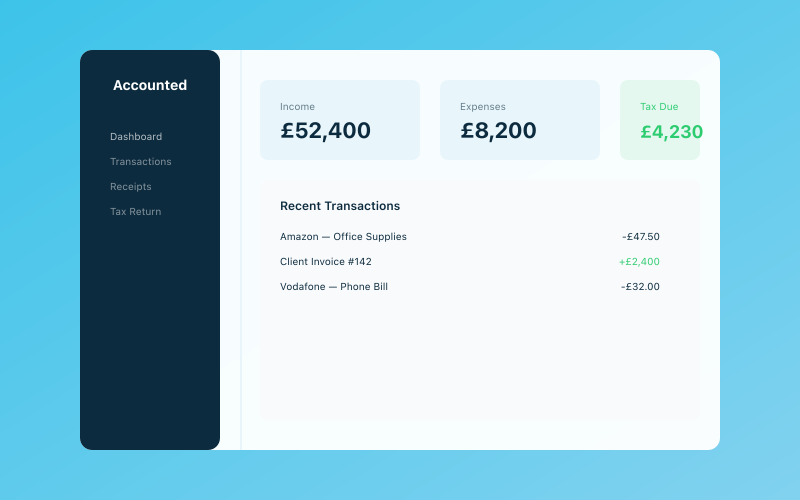 Your Accounted dashboard — income, expenses, and tax at a glance
- Corporate events — conferences, product launches, team-building days, awards ceremonies
- Weddings and celebrations — full planning or day-of coordination
- Festivals and outdoor events — music festivals, food fairs, sporting events
- Exhibitions and trade shows — stand design, logistics, attendee management
- Private parties — milestone birthdays, anniversaries, holiday gatherings
- Charity events — fundraising galas, awareness campaigns, community events
Each niche has different requirements, pricing structures, and client expectations. Corporate clients tend to have bigger budgets but stricter briefs. Wedding clients are emotionally invested and need hand-holding. Festival organisers deal with complex logistics and licensing. Think about where your strengths lie and what kind of work energises you.
Most events management businesses start as sole traders, though some opt for a limited company structure from the outset — especially if they're handling high-value contracts with significant liability. Here's what you need to sort out:
Register with HMRC. As a sole trader, you'll need to register for Self Assessment. Our guide to registering as self-employed with HMRC covers the process step by step. If you expect your turnover to exceed the VAT threshold (currently £90,000), you'll also need to register for VAT.
Choose a business name. You don't need to formally register a business name as a sole trader, but pick something professional and memorable. Check Companies House to make sure nobody else is using it, and snap up the domain name and social media handles early.
Get insured. This is critical for events management. At a minimum, you'll want public liability insurance (covers injury or property damage at events you organise), professional indemnity insurance (covers claims arising from your advice or planning), employers' liability insurance (required by law if you hire staff, even temporary ones), and equipment insurance if you own staging, AV gear, or other kit. Some venues and corporate clients won't even consider working with you unless you can show proof of adequate insurance. Check out our sole trader insurance guide for more on what you need.
Open a business bank account. Separating business and personal finances isn't just good practice — it's essential when you're handling client payments, supplier deposits, and event budgets.
A solid business plan helps you stand out — both to yourself and to any potential investors or lenders. Your plan should cover your niche and target market, services offered, pricing strategy, marketing plan, financial projections, and competitive analysis. Don't overcomplicate it. A clear, honest business plan is more useful than a 50-page document that gathers dust. If you need a hand, our guide to writing a business plan walks through the process in plain English.
Building Your Supplier Network and Setting Prices
Your supplier relationships will make or break your events business. Clients hire you because you know the right people and can pull things together seamlessly. Start building relationships with venues, caterers, AV and production companies, florists and decorators, photographers and videographers, entertainment providers, transport and logistics firms, and print and signage companies.
Visit industry trade shows, join local business networks, and don't be afraid to approach suppliers directly. Many are happy to work with new event planners, especially if you can offer them regular bookings.
Keep a detailed supplier database from day one. Record pricing, contact details, minimum order values, lead times, and your own notes on quality and reliability. This becomes one of your most valuable business assets over time.
Pricing in events management varies enormously depending on the type of event, client, and your experience. Here are the most common models:
Percentage of total event budget. Typically 15–20% of the total spend. This works well for large events where you're managing a significant budget and coordinating multiple suppliers.
Flat project fee. You quote a fixed price for the entire event based on the scope of work. This gives clients certainty and works well for events with a clear brief.
Day rate or hourly rate. More common for consultation work or day-of coordination. Day rates for event managers typically range from £250 to £600+, depending on experience and the complexity of the event.
Retainer. Some corporate clients prefer a monthly retainer for ongoing event management across the year. This gives you predictable income and the client a dedicated resource.
Whichever model you choose, always account for your time in the lead-up, not just the event day itself. Planning, supplier meetings, site visits, and administration can easily account for 80% of the total hours on a project. Be transparent about what's included in your fee and what isn't. Hidden extras are the fastest way to lose a client's trust.
Finding Your First Clients
Getting your first few events under your belt is the hardest part. Here's how to make it happen:
Leverage your existing network. Friends, family, colleagues, and acquaintances all know people who need events organised. Let everyone know what you're doing and ask them to spread the word.
Offer to assist established planners. Working as a freelance assistant for an experienced events company is a brilliant way to learn the ropes, build relationships, and get exposure to real projects. Many planners need extra hands during peak season.
Volunteer for charity events. Offering your services to a local charity gives you real experience, portfolio material, and networking opportunities — all while doing something worthwhile.
Build a portfolio. Even if your early events are small or unpaid, document everything with professional photos. A strong portfolio is your most persuasive sales tool.
Create an online presence. A clean, professional website with portfolio images, testimonials, and clear contact information is essential. Instagram and Pinterest are particularly important for wedding and celebration planners, while LinkedIn works better for corporate clients.
Attend industry events. Trade shows like Event Production Show, The Meetings Show, and International Confex are great places to meet suppliers, learn trends, and network with potential clients and collaborators.
Managing the Finances
Events management can be financially complex. You're often handling large sums — client deposits, supplier payments, venue fees — and the timing of cash in and cash out rarely aligns neatly.
Here's how to stay on top of it:
Keep meticulous records. Every invoice, receipt, deposit, and payment needs to be tracked. This is non-negotiable. Using accounting software like Accounted makes this far more manageable — Penny, the built-in AI assistant, can help categorise transactions and flag anything that needs your attention.
Separate client funds. If you're holding deposits on behalf of clients, consider keeping a separate client account. This protects both you and your clients and avoids confusion about whose money is whose.
Invoice promptly and chase firmly. Cash flow is the lifeblood of an events business. Send invoices as soon as milestones are reached, and don't be afraid to follow up on late payments.
Understand your tax obligations. As a sole trader, you'll pay Income Tax and National Insurance on your profits. You'll file a Self Assessment tax return each year, and if you're above the VAT threshold, you'll need to submit quarterly VAT returns too.
Track allowable expenses. Common deductible expenses for events managers include travel to venues and supplier meetings, marketing and website costs, software subscriptions, phone and internet, home office costs, professional development and training, insurance premiums, and equipment and supplies.
Staying on top of expenses throughout the year means your tax return is a straightforward task rather than a January panic.
Scaling Up and Pitfalls to Avoid
Once you've established yourself, there are several ways to grow. Hiring staff or freelancers is the natural next step as your event calendar fills up. Many events companies use a mix of permanent staff and freelancers who come on board for specific events. Expanding your services to include event marketing, content creation, or venue finding gives you additional revenue streams. Investing in professional branding, a polished website, and case studies from your best events lets you charge premium prices. Some event planners also create passive income through templates, courses, or guides for DIY event planning, or by earning commission from venue and supplier referrals. As your portfolio grows, approaching larger companies and agencies for corporate contracts can be transformative for your revenue.
Every events business hits bumps. The biggest pitfalls to watch for include underpricing your services (account for all your time, not just the glamorous event-day hours), poor cash flow management (large deposits going out before client payments come in can leave you short), not using written contracts (always specify scope, fees, cancellation terms, and liability), overcommitting (saying yes to everything leads to burnout and mistakes), and neglecting your own admin (your business finances need the same attention you give your clients' events).
Starting an events management company is exciting, creative, and genuinely rewarding. The barriers to entry are low, the potential is enormous, and if you're someone who thrives on logistics and loves bringing people together, it could be the perfect business for you. Get registered, get insured, start building your network, and land that first event. Everything else follows from there.
Related reading:
- How to Register as Self-Employed with HMRC
- How to Write a Business Plan
- The Complete Guide to Sole Trader Insurance
Accounted helps UK sole traders stay on top of their bookkeeping and tax. Start your free 30-day trial at getaccounted.co.uk.
Related Reading
- Home-Based Food Businesses — Kitchen Requirements and Tax
- How to Start a Social Media Management Business
- Starting a Business in London — Costs, Taxes, and Tips
View our pricing and start your free 30-day trial today.
Starting out? Accounted is built for UK sole traders from day one — from £14/month. Get started →
Business & Operations Advisors
Our business advisors cover the practical side of running a UK sole trader business — from HMRC registration to managing growth. Content is written for real business owners in plain English, not accountants.
Ready to try Accounted?
Join UK sole traders who are simplifying their bookkeeping and tax.
Start your 14-day free trial