Starting a Market Stall Business — Licences, Tax, and Tips
There's something brilliantly appealing about running a market stall. Low startup costs, face-to-face customer interaction, the flexibility to test products without committing to a permanent shop, and the buzz of a busy market day. Whether you're selling handmade jewellery, artisan food, vintage clothing, or fresh produce, a market stall can be a fantastic way to start a business.
But it's not as simple as rocking up with a table and some stock. There are licences to obtain, regulations to follow, tax obligations to understand, and practical considerations that can make or break your venture. Here's the full picture.
Getting a Pitch — How Market Licences Work
The first thing you need is permission to trade. How this works depends on the type of market.
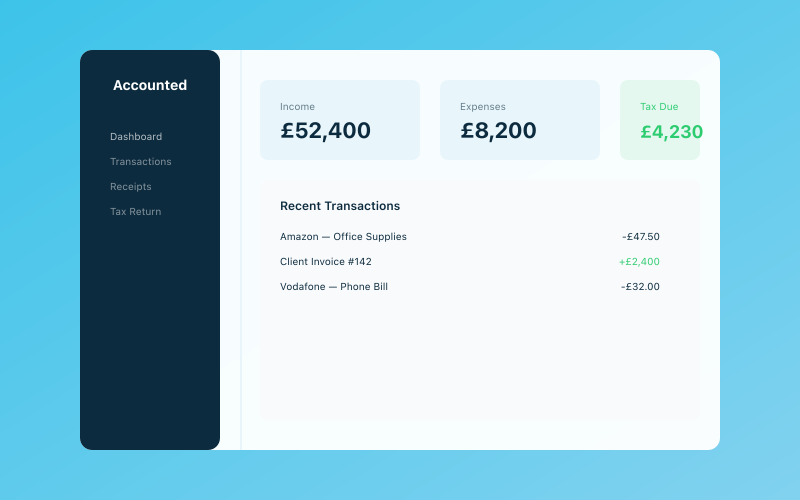 Your Accounted dashboard — income, expenses, and tax at a glance
Established markets (ones that have been running for years, often with a charter) are usually managed by the local council or a private market operator. You apply for a pitch — sometimes called a stall or a stand — and pay a fee. Fees vary enormously depending on the market's popularity and location. A pitch at a small weekly market in a rural town might cost £15-30 per day, while a prime spot at a popular London market could be £50-100 or more.
Most markets have a waiting list, so don't expect to get a permanent pitch immediately. Many operators offer casual or occasional trading days for newcomers, which is a great way to test the waters and build a reputation before committing to a regular pitch.
Street trading — setting up outside an established market — requires a street trading licence from your local council. These are governed by the Local Government (Miscellaneous Provisions) Act 1982 (in England and Wales) or equivalent legislation in Scotland and Northern Ireland. The council can issue:
- A street trading licence: Allows you to trade in designated areas. There's usually an application process, a fee, and conditions about where and when you can trade.
- A street trading consent: Similar but typically for a specific location.
Some councils operate a "consent streets" system where you need consent to trade, while others designate "licence streets" or "prohibited streets." Check your local council's policy — it varies significantly from one area to another.
Private markets and events — car boot sales, craft fairs, food festivals — are organised by private operators. You'll deal directly with the organiser, who handles the licensing for the overall event. You'll still need to be registered as self-employed and meet any regulatory requirements for your product type.
What You Need Before You Start Trading
Beyond the pitch itself, there are several things to sort out.
Register as self-employed. If you're trading regularly with the intention of making a profit, you need to register with HMRC as self-employed. You should do this as soon as you start trading. You'll get a Unique Taxpayer Reference (UTR) number, which you'll need for your Self Assessment tax return.
Food hygiene registration. If you're selling food, you must register your business with your local council's environmental health department at least 28 days before you start trading. This is free. You may also need a Level 2 Food Hygiene Certificate — many markets require this. The certificate costs around £10-30 to obtain through an online course.
Product safety and labelling. Whatever you sell, it needs to comply with product safety regulations. Food products need proper labelling (ingredients, allergens, use-by dates). Cosmetics and skincare products need to comply with UK cosmetics regulations, including a product safety assessment. Electrical items need to meet safety standards. Get this right from the start — the consequences of selling unsafe products are serious.
Public liability insurance. Most markets require traders to have public liability insurance, typically with a minimum cover of £1 million or £5 million. This covers you if a customer or member of the public is injured or their property is damaged as a result of your business activities. Premiums for market traders start from around £50-100 per year for basic cover. Our business insurance guide explains the different types of insurance and what you actually need.
Payment facilities. Cash is still common at markets, but card payments are increasingly expected. A mobile card reader from companies like SumUp, Zettle, or Square costs from £19-79 for the device, with transaction fees of around 1.69% per card payment. Not accepting cards means missing sales — particularly from younger customers.
Tax Obligations for Market Traders
Market trading income is taxable, just like any other self-employed income. Here's what you need to know.
Income tax is calculated on your profits — that's your total sales minus your allowable expenses. For 2025/26, the rates are:
- Personal Allowance: £12,570 tax-free
- Basic rate: 20% on profits between £12,570 and £50,270
- Higher rate: 40% on profits between £50,270 and £125,140
- Additional rate: 45% on profits above £125,140
National Insurance is also due on your profits:
- Class 2: £3.45 per week if profits exceed £12,570
- Class 4: 6% on profits between £12,570 and £50,270, plus 2% above that
The trading allowance gives you a £1,000 tax-free allowance for trading income. If your total market stall income is under £1,000 per year, you don't need to declare it or pay tax. But if you're treating this as a real business (and you should be if you want it to grow), you'll almost certainly exceed this quickly.
VAT registration is required if your taxable turnover exceeds £90,000 in any rolling 12-month period. Most new market stall businesses won't hit this threshold immediately, but keep an eye on it as you grow. Some market traders voluntarily register for VAT if they buy a lot of VAT-inclusive supplies, as it allows them to reclaim the input VAT.
Cash transactions and record-keeping — because markets involve a lot of cash sales, keeping good records is particularly important. HMRC expects you to record all your sales, whether paid by cash or card. A daily sales log is essential. Note down your total takings at the end of each market day, broken down by payment method if possible. Keep all receipts for purchases and expenses.
Using Accounted to track your income and expenses makes this much easier. You can record your daily takings quickly after each market, and Penny helps categorise your expenses automatically. When January comes around and it's time to file your Self Assessment, everything is already in order.
What Expenses Can You Claim?
Market traders can claim a wide range of allowable expenses against their profits. Common ones include:
- Pitch fees — the cost of your market stall pitch
- Stock and materials — the cost of goods you buy to sell, or raw materials if you make your products
- Equipment — gazebos, tables, display stands, card readers, scales, refrigeration units
- Vehicle costs — fuel, insurance, and maintenance for a vehicle used to transport stock and equipment to markets. You can use HMRC's simplified mileage rate (45p per mile for the first 10,000 miles) or claim actual costs
- Packaging — bags, wrapping, boxes, labels
- Insurance — public liability and product liability premiums
- Marketing — business cards, flyers, social media advertising, signage
- Storage — if you rent a storage unit for stock or equipment
- Phone and internet — the business proportion of your phone contract and broadband
- Clothing — only if it's specialist protective clothing or a branded uniform, not everyday clothes
- Accounting software — subscriptions to tools like Accounted are an allowable business expense
- Professional fees — accountant fees, market trader association memberships
Keep receipts for everything. If you pay cash for supplies, get a receipt. If a receipt isn't available, make a note of the date, amount, and what it was for. HMRC won't accept "I think it was about fifty quid" as a record.
Tips for Making Your Market Stall Profitable
Start with one market and do it well. It's tempting to sign up for every market you can find, but spreading yourself too thin is a common mistake. Build a following at one market first, learn what sells and what doesn't, refine your display and pricing, then expand.
Presentation matters enormously. Customers make snap judgements. A well-organised, visually appealing stall with clear signage and pricing will outsell a cluttered table every time. Invest in a decent gazebo (if outdoors), good signage, and attractive display stands.
Price for profit, not just to sell. Many new market traders underprice their products. Calculate your actual costs — materials, pitch fees, travel, time — and make sure your prices leave a healthy margin. If you can't make a profit at a price customers will pay, the product or the market isn't right for you.
Build relationships. Regular customers are gold. Remember names, be friendly, offer loyalty incentives. Market shopping is a social experience, and people return to stallholders they like and trust.
Use social media. Post about which markets you'll be at, show off new stock, share behind-the-scenes content. Instagram and Facebook are particularly effective for market businesses. Many successful market traders build a significant online following that drives footfall to their stall.
Track what sells. Keep a record of which products sell well and which don't. This sounds obvious, but many market traders don't do it systematically. Over time, this data helps you optimise your product range and stock levels.
Plan for weather. If you're outdoors, British weather will test you. A good gazebo with weights (not just pegs), waterproof covers for stock, and layers for yourself are essential. Bad weather days will happen — factor them into your financial planning so one rainy Saturday doesn't wipe out the month's profit.
Growing Beyond the Market
Many successful businesses started as market stalls and grew into shops, online businesses, or wholesale operations. Markets are brilliant for testing products, building a customer base, and learning what works.
If you want to scale up, consider:
- Selling online — through your own website, Etsy, or other platforms
- Wholesale — supplying shops and other retailers
- Pop-up shops — short-term retail spaces that bridge the gap between market stall and permanent shop
- Multiple markets — once you've mastered one, expand to others
- Hiring help — taking on staff or a regular helper to manage busier markets or additional locations
Each of these steps has its own tax and regulatory implications, so take advice as you grow. And keep your bookkeeping tight — it only gets more complicated as your business expands. Having a solid foundation with tools like Accounted means scaling up doesn't mean starting your financial records from scratch.
Writing a proper business plan is worthwhile at this stage — it forces you to think through the numbers and set realistic goals.
Related Reading
View our pricing and start your free 30-day trial today.
Accounted helps UK sole traders stay on top of their bookkeeping and tax. Start your free 30-day trial at getaccounted.co.uk.
Starting out? Accounted is built for UK sole traders from day one — from £14/month. Get started →
Business & Operations Advisors
Our business advisors cover the practical side of running a UK sole trader business — from HMRC registration to managing growth. Content is written for real business owners in plain English, not accountants.
Ready to try Accounted?
Join UK sole traders who are simplifying their bookkeeping and tax.
Start your 14-day free trial