Starting a Pet Sitting and Dog Boarding Business
The UK is a nation of animal lovers. With over 12 million households owning a pet, the demand for reliable pet care services is enormous — and growing. Pet sitting and dog boarding businesses have flourished as more people travel for work and leisure but want quality care for their furry companions while they're away.
If you adore animals and want to turn that passion into a business, pet sitting and dog boarding can be a genuinely fulfilling way to earn a living. But it's not as simple as just looking after a few dogs in your living room. There are licences to obtain, regulations to follow, insurance to arrange, and a proper business to set up.
Here's your complete guide to starting a pet sitting and dog boarding business in the UK.
Understanding the Different Services
The pet care industry covers several distinct services, and it's worth understanding what each involves before deciding which to offer:
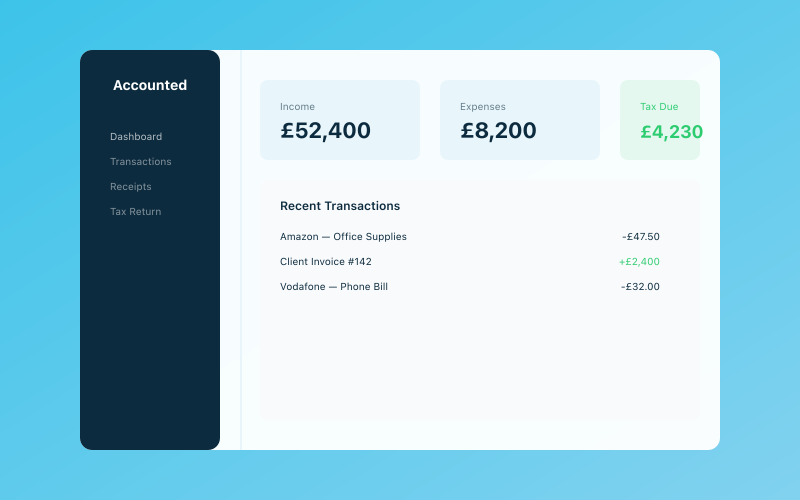 Your Accounted dashboard — income, expenses, and tax at a glance
Dog boarding (home boarding). This is where you look after dogs in your own home while their owners are away. It's one of the most popular services because many owners prefer their dog to stay in a home environment rather than traditional kennels. You'll typically charge per night.
Pet sitting. You visit the client's home to feed, walk, and care for their pets. This can include dogs, cats, rabbits, fish, and other animals. Some pet sitters stay overnight at the client's home; others visit multiple times a day. This is ideal if you can't have animals in your own property.
Dog walking. While this guide focuses on boarding and sitting, many pet care businesses offer dog walking as an additional service. It's a natural complement and provides regular weekday income alongside boarding bookings. Our guide to starting a dog walking business covers this in detail.
Doggy daycare. Looking after dogs during the day while owners are at work. This can be run from your home or from dedicated premises.
Many successful pet care businesses combine several of these services to maximise income and fill different time slots throughout the week.
Licensing Requirements
This is the most important step, and you must get it right before taking in any animals.
Dog boarding and daycare require a licence. Under the Animal Welfare (Licensing of Activities Involving Animals) (England) Regulations 2018 (and equivalent legislation in Wales, Scotland, and Northern Ireland), you need a licence from your local council to provide home boarding for dogs or run a doggy daycare.
To obtain a licence, you'll typically need to:
-
Apply to your local council. The application process and fees vary by council, but expect to pay between £150 and £500 for the initial application.
-
Pass an inspection. A council inspector (often an animal welfare officer or vet) will visit your premises to check that they meet the required standards. They'll assess:
- The space available for dogs
- Cleanliness and hygiene
- Security (fenced garden, secure doors and gates)
- Separation arrangements for dogs that don't get along
- Fire safety measures
- Disease control procedures
- Record-keeping systems
-
Meet the minimum standards. These cover everything from the size of sleeping areas to exercise provisions, feeding arrangements, and emergency procedures. The standards are detailed, so review them thoroughly before your inspection.
-
Maintain the licence. Licences are typically granted for one to three years depending on your inspection rating. Higher-rated businesses get longer licences and pay less per year.
Pet sitting (visiting clients' homes) may not require a licence in the same way, as you're not housing animals on your own premises. However, the regulations vary by local authority, so check with your council. Some councils interpret the regulations broadly.
Cat boarding in your home (rather than in dedicated cattery premises) may also require licensing depending on your local council's interpretation of the regulations.
Insurance — Protecting Yourself and the Animals
Insurance is essential in pet care. Animals are unpredictable, and even the best-behaved dog can cause damage or get injured.
Public liability insurance covers claims if a dog in your care injures someone or damages property. This is your most important policy. Aim for at least £1 million to £5 million cover. Specialist pet business insurers offer policies from around £100 to £300 per year.
Care, custody, and control (CCC) insurance covers the animals while they're in your care. Standard public liability policies often exclude animals in your custody, so this specific cover is crucial. It protects you if a pet becomes ill, is injured, escapes, or dies while in your care.
Key insurance covers the cost of replacing locks if you lose a client's keys while pet sitting at their home.
Employers' liability insurance is required if you take on any staff.
Personal accident insurance covers your own injury while working with animals.
Several specialist insurers cater specifically to pet care businesses — companies like Protectivity, Cliverton, and Pet Business Insurance offer tailored packages. Our sole trader insurance guide covers the broader principles of business insurance.
Setting Up Your Business
Register as self-employed. Start as a sole trader by registering with HMRC. This is free and straightforward. You'll need to register by 5 October following the tax year in which you start trading.
Prepare your home (for boarding). If you're offering home boarding, your property needs to be suitable:
- Secure, fully fenced garden with no escape routes
- A dedicated area for dogs to sleep
- Separate space for dogs from different households if needed
- Clean, hygienic environment
- Adequate ventilation and temperature control
- Secure storage for food, medications, and cleaning supplies
Create client documentation. Before taking in any animal, you should have:
- A booking form capturing the pet's details, medical history, dietary requirements, and behavioural notes
- Emergency contact details for the owner and their vet
- A consent form authorising emergency veterinary treatment
- Your terms and conditions, including cancellation policy and liability limitations
Set up a dedicated business bank account. While not legally required for sole traders, keeping your business finances separate from personal spending makes bookkeeping and tax much easier. Accounted works brilliantly alongside a dedicated business account — you can track all your pet care income and expenses in one place.
Pricing Your Services
Pet care pricing varies significantly by region, but here are typical UK rates:
Dog home boarding:
- £20 to £40 per night (more in London and the South East)
- Multi-dog discounts are common — perhaps 10-20% off the second dog from the same household
Pet sitting (visiting):
- £10 to £20 per visit (30-60 minutes)
- Overnight stays at the client's home: £30 to £60 per night
Doggy daycare:
- £15 to £35 per day
- Half-day rates: £10 to £20
Dog walking (as an add-on):
- £10 to £15 per walk (30-60 minutes)
- Group walks are typically cheaper per dog but more profitable overall
When setting your prices, consider:
- Your local market and competitors' rates
- The number of animals you can care for simultaneously (your licence will specify a maximum)
- Additional costs: food, treats, cleaning supplies, waste bags, wear and tear on your home
- Travel costs if you're offering pet sitting or pickup/drop-off services
- Your time — dog boarding is essentially a 24-hour commitment
Income potential. If you board two dogs at £30 per night and are booked for 250 nights a year, that's £15,000 just from boarding. Add daycare, walking, and pet sitting, and a full-time pet care business can realistically turn over £20,000 to £40,000 or more. Some operators with larger licensed capacities and additional services earn significantly more.
Tax and Record-Keeping
As a sole trader in the pet care industry, your tax obligations for 2025/26 are:
Income tax on profits:
- Personal Allowance: £12,570
- Basic rate (20%): £12,571 to £50,270
- Higher rate (40%): £50,271 to £125,140
- Additional rate (45%): over £125,140
- Class 2: £3.45 per week
- Class 4: 6% on profits between £12,570 and £50,270, plus 2% above £50,270
Deductible expenses for a pet care business include:
- Pet food and treats purchased for boarding animals
- Cleaning products and waste disposal
- Equipment (beds, bowls, leads, toys, crates)
- Insurance premiums
- Licensing fees
- Marketing and advertising
- Vehicle costs or mileage (45p per mile for the first 10,000 miles)
- A proportion of household bills if you use your home for boarding (use of home as office/business premises)
- Professional development and first aid courses
- Bookkeeping software
Tracking expenses throughout the year is crucial in a business with lots of small, frequent purchases. Penny inside Accounted makes this easy — photograph a receipt at the pet shop and it's categorised and stored. Come January, your records are already in order.
Growing Your Pet Care Business
Once you're established, there are several ways to grow:
Build a reputation. In pet care, trust is everything. Ask happy clients for testimonials and reviews. A strong Google Business Profile with five-star reviews is worth more than any advertising campaign. Photos of happy dogs on your social media (with owners' permission) build trust and attract new clients.
Expand your services. Add dog walking, grooming referrals, pet taxi services, or puppy socialisation sessions. Each additional service is another revenue stream and another reason for clients to choose you over competitors.
Increase your capacity. If demand exceeds your licence limit, consider applying for an increased capacity. This might require changes to your property. Alternatively, you could move to dedicated premises for a larger-scale operation — though this is a significant step up in terms of investment and regulation.
Build a client community. Create a Facebook group for your clients, share updates and photos during boarding stays, and send follow-up messages after each visit. Pet owners love seeing their animals happy, and this kind of personal touch generates loyalty and referrals.
Consider a business plan. If you're looking to scale beyond a solo operation, a formal business plan helps you think through the finances, the market, and your growth strategy.
Related Reading
View our pricing and start your free 30-day trial today.
Accounted helps UK sole traders stay on top of their bookkeeping and tax. Start your free 30-day trial at getaccounted.co.uk.
Starting out? Accounted is built for UK sole traders from day one — from £14/month. Get started →
Business & Operations Advisors
Our business advisors cover the practical side of running a UK sole trader business — from HMRC registration to managing growth. Content is written for real business owners in plain English, not accountants.
Ready to try Accounted?
Join UK sole traders who are simplifying their bookkeeping and tax.
Start your 14-day free trial