Landlord Insurance — What You Can and Can't Claim
Insurance is one of those costs that every sensible landlord pays, but not every landlord claims correctly on their tax return. The good news is that most types of landlord insurance are fully tax deductible. The not-so-good news is that there are exceptions, grey areas, and a few traps around how insurance payouts are treated.
In this guide, we'll work through each type of landlord insurance, explain whether the premiums are deductible, and cover the tax treatment of any claims you make. By the end, you'll know exactly what you can and can't claim.
The General Rule: Insurance as an Allowable Expense
HMRC's general principle is that insurance premiums paid wholly and exclusively for the purpose of your rental business are allowable expenses. This means you can deduct them from your rental income when calculating your taxable profit.
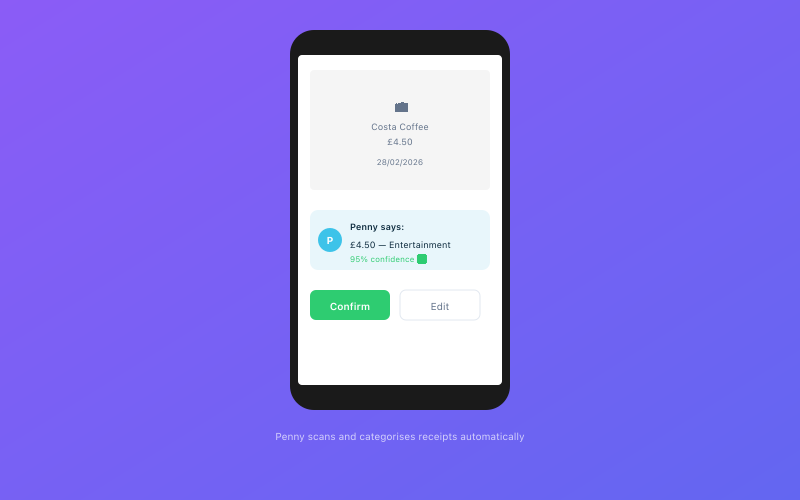 Penny scans and categorises your receipts automatically via WhatsApp
The key phrase is "wholly and exclusively." If the insurance relates solely to your rental property and the business of letting it, the premium is deductible. If the insurance covers both your rental property and something else (such as your own home), you'd need to apportion the cost and only claim the proportion attributable to the rental activity.
Types of Insurance You Can Claim
Buildings Insurance
Buildings insurance covers the structure of the property — walls, roof, floors, windows, and permanent fixtures. It protects against risks such as fire, flood, subsidence, storm damage, and other structural perils.
Tax treatment: The premium is fully deductible as an allowable expense.
If you own a leasehold property and the buildings insurance is included within your service charge, the insurance element is deductible as part of the overall service charge — you don't need to claim it separately. For more on this, see our guide to ground rent and service charges.
Contents Insurance (Landlord)
Landlord contents insurance covers the items you provide in the property — furniture, white goods, curtains, carpets, and other moveable items. This is particularly relevant if you let the property furnished or part-furnished.
Tax treatment: The premium is fully deductible as an allowable expense.
Note that this covers your contents as the landlord, not the tenant's belongings. Tenants are responsible for insuring their own possessions.
Landlord Liability Insurance
This covers your legal liability if a tenant, visitor, or member of the public is injured or their property is damaged as a result of a defect in your rental property. For example, if a loose handrail causes a visitor to fall, liability insurance would cover the compensation claim.
Tax treatment: The premium is fully deductible as an allowable expense.
Rent Guarantee Insurance
Rent guarantee insurance (also called tenant default insurance) pays out if your tenant stops paying rent. It typically covers the rental income for a set period (often 6–12 months) while you go through the process of recovering the arrears or obtaining possession.
Tax treatment: The premium is fully deductible as an allowable expense.
Legal Expenses Insurance
Legal expenses insurance covers the cost of legal proceedings related to your rental property — most commonly, the cost of evicting a tenant who won't leave or pursuing a tenant for rent arrears. Some policies also cover disputes with contractors, planning issues, or tax investigations.
Tax treatment: The premium is fully deductible as an allowable expense.
Landlord Emergency Cover
Emergency cover provides a 24/7 helpline and emergency callout for issues like burst pipes, boiler breakdowns, broken locks, or pest infestations. The insurer sends out a contractor to deal with the emergency.
Tax treatment: The premium is fully deductible as an allowable expense. The cost of the actual emergency repair (if there's an excess or the repair goes beyond what the policy covers) is also deductible as a maintenance expense.
Unoccupied Property Insurance
If your property is empty between tenancies (a void period), standard insurance policies may not provide cover. Specialist unoccupied property insurance fills this gap.
Tax treatment: The premium is fully deductible as an allowable expense. Void period costs are recognised by HMRC as a necessary part of the rental business.
Types of Insurance You Can't Claim
Your Own Home Insurance
If you live in a property and also let out part of it (for example, under the Rent a Room scheme), the insurance on your home is primarily a personal expense. You cannot claim the full premium. However, if you let a self-contained part of the property, you may be able to claim a proportionate share of the insurance premium that relates to the let area.
Life Insurance
Life insurance that pays out on your death is a personal expense, not a property business expense. Even if you've taken out life insurance to cover the mortgage on a rental property, the premium is not deductible from your rental income.
Exception: If you've taken out a specific life-of-another policy as part of a joint venture or partnership arrangement related to the property business, there may be an argument for deductibility, but this is highly specialised and you'd need professional advice.
Mortgage Protection Insurance (PPI)
Payment protection insurance on your buy-to-let mortgage — covering your mortgage payments if you're unable to work through illness or redundancy — is a personal expense, not a property business expense. The premiums are not deductible.
Private Medical Insurance
Even if you argue that your health is essential to running your property business, private medical insurance is a personal expense and not deductible.
Insurance Payouts — How They're Taxed
Receiving a payout from an insurance claim is one side of the coin; understanding how it's taxed is the other. The treatment depends on what the payout is for.
Payouts for Lost Rent
If you claim on a rent guarantee policy and receive a payout for lost rental income, that payout is taxable as rental income. It replaces the rent you would have received, so HMRC treats it exactly the same as rent.
Example: Your tenant stops paying rent for three months. Your rent guarantee insurance pays out £3,600 (three months at £1,200). This £3,600 is added to your rental income for the year.
This may feel counterintuitive — you've already paid a premium for the insurance, and now you're being taxed on the payout. But the premium was deductible, and the payout replaces taxable income, so the system is internally consistent.
Payouts for Repairs
If your buildings insurance pays out to cover the cost of repairing damage — for example, fixing a roof after storm damage or repairing fire damage — the tax treatment depends on how the repair cost itself would have been treated.
If the repair is a revenue expense (which most repairs are), the insurance payout and the repair cost effectively cancel each other out:
- You include the insurance payout as income
- You deduct the repair cost as an expense
- The net effect on your taxable profit is nil
If you carry out the repair yourself and the insurance payout exceeds the cost of the repair, the excess would be taxable income.
Payouts for Total Loss
If a property is completely destroyed and the insurance pays out the full insured value, the position is more complex. This effectively involves a disposal of the property for Capital Gains Tax purposes, and the insurance proceeds are treated as the disposal proceeds. You'd calculate the gain (or loss) in the usual way, comparing the proceeds with the original cost and any allowable expenditure.
This is a specialist area and professional CGT advice would be essential.
Claiming Insurance Premiums on Your Tax Return
Insurance premiums are claimed on the UK property pages (SA105) of your Self Assessment tax return. They form part of your total allowable expenses, which are offset against your rental income to calculate your taxable profit.
There's no requirement to itemise each type of insurance separately on the return — they all go into the overall expenses figure. However, your records should separately identify each premium so that you can support the claim if HMRC queries it.
Timing of the Deduction
You claim the premium in the tax year it relates to, not necessarily the year you pay it. Most insurance policies run for 12 months, so if your policy year doesn't align with the tax year (6 April to 5 April), you may need to apportion the premium.
Example: Your buildings insurance policy runs from 1 January 2026 to 31 December 2026 and costs £360. For the 2025/26 tax year (6 April 2025 to 5 April 2026), you'd claim the portion from 6 April 2025 to 5 April 2026 — which is the full £360 if the previous year's policy covered the period up to 5 April 2025.
In practice, if the amounts are similar from year to year, HMRC is unlikely to challenge you for claiming the actual amount paid in the tax year rather than doing a precise day-count apportionment. But if you change insurers or the premium changes significantly, apportioning is the correct approach.
Getting the Best Value from Landlord Insurance
A few practical tips to help you manage your insurance costs effectively:
Shop Around Annually
Insurance premiums can vary significantly between providers. Getting quotes from several insurers each year (or using a specialist landlord insurance broker) can save you hundreds of pounds — savings that drop straight to your bottom line and reduce your taxable profit.
Review Your Cover Regularly
Make sure your sum insured (particularly for buildings insurance) reflects the current rebuild cost, not the market value. Underinsurance can leave you exposed, while overinsurance means you're paying a higher premium than necessary. A professional rebuild cost assessment every few years is a worthwhile investment.
Keep Your Premium Documents
For each policy, keep the schedule of insurance (showing the cover and premium), the renewal notice, and proof of payment. These are the records you'll need to support your tax deduction. Using Accounted to store and categorise these documents as they arrive saves time and means everything is in one place come tax return season.
Multiple Properties
If you own several rental properties, each with its own insurance, the premiums are all deductible. Remember that HMRC treats all your UK rental properties as a single property business, so the insurance costs for all your properties are aggregated with your other expenses and deducted from your total rental income.
For more on managing the tax across a portfolio, our guide on tax when you own multiple properties covers the key considerations.
Summary
Most landlord insurance premiums are fully tax deductible — buildings, contents, liability, rent guarantee, legal expenses, and emergency cover all qualify. The main exceptions are personal insurance (life insurance, income protection, private medical) and home insurance that isn't attributable to the rental business.
Insurance payouts can be taxable, particularly payouts for lost rent, but repair payouts typically net off against the cost of the repair. Keep clear records of premiums paid, claims made, and payouts received, and make sure your tax return reflects the correct figures.
Accounted helps UK sole traders stay on top of their bookkeeping and tax. Start your free 30-day trial at getaccounted.co.uk
Related reading:
- What Expenses Can Landlords Claim?
- Ground Rent and Service Charges — Are They Tax Deductible?
- Landlord Record Keeping — What HMRC Expects You to Keep
Related Reading
- EPC Requirements for Rental Properties — Landlord Obligations
- Wear and Tear Allowance — What Replaced It and How It Works
Explore our property features built specifically for UK landlords.
Accounted includes built-in property management — track rental income, Section 24, and allowable expenses across multiple properties. See property features →
Tax & Compliance Specialists
Our tax specialists have decades of combined experience in UK sole trader and small business taxation, MTD compliance, and HMRC submissions. All content is reviewed against current HMRC guidance before publication and updated quarterly to reflect legislative changes.
Ready to try Accounted?
Join UK sole traders who are simplifying their bookkeeping and tax.
Start your 14-day free trial