Rent a Room Relief: Earn Up to £7,500 Tax-Free
What Is Rent a Room Relief?
Rent a Room Relief is one of the simplest tax breaks available to UK homeowners. If you let a furnished room (or rooms) in your main home, you can earn up to £7,500 per year completely tax-free. No Self Assessment. No tax to pay. Nothing to declare — as long as you stay within the threshold.
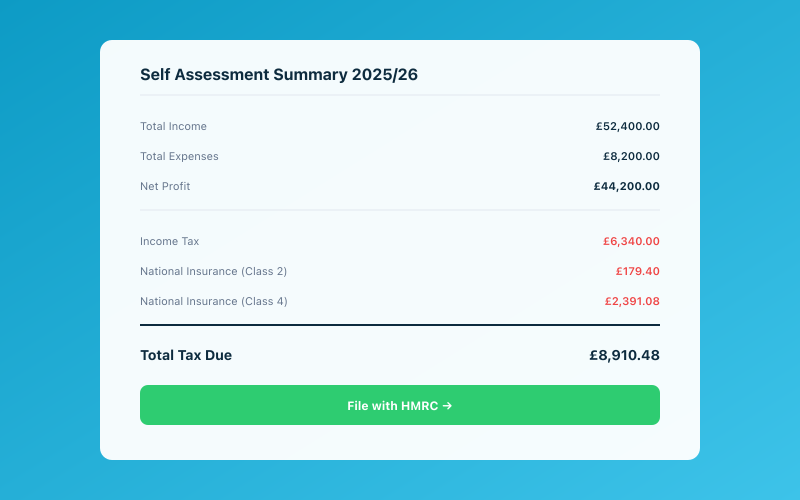 Your Accounted dashboard shows your real-time tax position
The scheme was introduced in 1992 to encourage homeowners to make use of spare rooms, and it's been updated over the years. The current £7,500 threshold has been in place since April 2016.
It covers a wide range of arrangements: a traditional lodger renting your spare bedroom, hosting guests through platforms like Airbnb or Booking.com (as long as it's a room in your home, not a separate property), or even renting out space to a student during term time.
The £7,500 Threshold
The threshold is straightforward:
- Total rental income up to £7,500: Completely tax-free. No need to declare it to HMRC.
- Total rental income above £7,500: You have a choice of how to be taxed (more on this below).
This is gross income — the total rent received, not profit after expenses. If you earn £7,500 in rent but spend £2,000 on extra utilities and cleaning, your gross income is still £7,500 and you're within the threshold.
Sharing the Allowance
If you jointly own the property with someone else (a partner, for example), the £7,500 allowance is split equally — £3,750 each. This applies regardless of how you split the rental income between you.
Who Qualifies?
To claim Rent a Room Relief, you must meet these conditions:
You Must Let a Furnished Room in Your Main Home
The room must be in the property you live in as your primary residence. A separate flat, a garden annexe with its own entrance, or a second property does not qualify — those are standard rental arrangements and are taxed accordingly.
"Furnished" means the room must include at least basic furniture — a bed, wardrobe, and desk, for instance. Renting out an empty room doesn't qualify, though the bar for "furnished" is relatively low.
You Must Be a Resident
You need to be living in the property while the room is let. If you move out and rent the whole house, Rent a Room Relief doesn't apply. However, short absences (holidays, business trips) don't disqualify you — you just need to be resident at the property overall.
It Covers Related Services Too
The £7,500 threshold includes income from services you provide alongside the room: meals, laundry, cleaning. If you're providing a full board arrangement to a lodger, the total income (rent plus board) counts towards the threshold.
What If You Earn More Than £7,500?
If your rental income exceeds £7,500, you have two options:
Option A: The Standard Method
Calculate your profit the normal way — total rental income minus allowable expenses (cleaning, extra utilities, a proportion of council tax, wear and tear on furnishings, etc.). You pay tax on the profit.
This is better if your expenses are high relative to your income. If you earn £10,000 but have £4,000 in expenses, your taxable profit is £6,000 — less than the £7,500 threshold would leave you with under Option B.
Option B: The Rent a Room Method
Deduct the £7,500 allowance from your gross income and pay tax on the remainder. No expenses can be claimed on top of this — it's the £7,500 flat deduction or nothing.
This is simpler and often better if your expenses are low. If you earn £10,000, your taxable income under this method is £10,000 – £7,500 = £2,500. At the basic rate of 20%, that's £500 in tax.
How to Choose
You don't need to commit in advance. When you file your Self Assessment return, you elect which method to use. You can switch between methods from year to year depending on which gives the better result.
If your income exceeds £7,500 and you choose Option B (the Rent a Room method), you'll need to register for Self Assessment if you haven't already, and declare the income on your tax return.
Practical Scenarios
The Spare Room Lodger
You rent your spare room to a professional for £550 per month — that's £6,600 per year. Under Rent a Room Relief, this is entirely tax-free. You don't need to tell HMRC, file a return, or do anything administrative.
The Airbnb Host
You list a room in your home on Airbnb and earn £9,000 over the year from short-term guests. This exceeds the £7,500 threshold, so you'll need to declare it. Using the Rent a Room method, your taxable income is £9,000 – £7,500 = £1,500. At 20%, that's £300 in tax — on £9,000 of gross income.
The Student Let
You rent two furnished rooms to university students during term time (September to June) for £400 per month each. That's £800 per month for 10 months = £8,000. Over the threshold, but using the Rent a Room method, your taxable amount is just £500.
The Full Board Arrangement
You provide a room plus meals and laundry to a lodger for £700 per month — £8,400 per year. The total including services counts towards the threshold. You're over £7,500, but by only £900. Using the Rent a Room method, you'd pay tax on £900 at your marginal rate.
Interaction with Your Mortgage
Before taking in a lodger, check your mortgage terms. Most residential mortgages include conditions about letting, and some require you to notify the lender. Key points:
- Standard residential mortgages usually permit a single lodger without issue, but check
- Some lenders require written consent before you take in a lodger
- Buy-to-let mortgages are for properties you don't live in — they're a different product entirely
- Insurance: Notify your home insurer that you have a lodger. Failing to disclose could invalidate a claim
Taking in a lodger under Rent a Room Relief doesn't typically require switching to a buy-to-let mortgage, since you're still resident in the property. But every lender has different terms, so read yours or ask.
Interaction with Benefits
If you receive means-tested benefits — Universal Credit, Housing Benefit, or Council Tax Support — rental income from a lodger may affect your entitlement. The first £7,500 is ignored for tax purposes, but benefits agencies may count it as income.
Check with your benefits provider before taking in a lodger to understand how the extra income might affect your payments.
What About Council Tax?
Having a lodger doesn't usually affect your council tax. If you live alone and claim the single-person discount (25%), you'll lose that discount if your lodger is a non-student adult. But if your lodger is a full-time student, the discount is preserved.
How to Declare (or Not Declare)
Under £7,500: Nothing to Do
If your total rental income from rooms in your home is £7,500 or less, you don't need to tell HMRC. You don't need to register for Self Assessment. You don't need to file a return. The income is simply tax-free.
Over £7,500: Self Assessment
Register for Self Assessment if you're not already registered. On your tax return, declare the income under UK property. You can then elect to use the Rent a Room method (deducting £7,500) or the standard method (deducting actual expenses).
Keep records of your rental income regardless of whether you need to declare it. Bank statements showing regular payments from your lodger are sufficient. If HMRC ever queries whether you exceeded the threshold, records make everything simple.
Is It Worth It?
For most homeowners with a spare room, Rent a Room Relief is remarkably generous. Earning £625 per month completely tax-free — with no paperwork — is hard to beat. It's one of the few truly straightforward tax reliefs in the UK system.
Even above the threshold, the effective tax rate is low. On £10,000 of income, you'd pay just £500 in tax (basic rate) using the Rent a Room method — an effective rate of 5%.
Get Started with Accounted
If your rental income crosses the £7,500 threshold and you need to file Self Assessment, Accounted makes it straightforward. Track your property income alongside your other earnings, and let Accounted handle the numbers when it's time to file. Landlords can manage everything in one place. Start your free trial today — no credit card required.
Related Reading
Penny, your AI bookkeeper, tracks your tax position in real time and flags opportunities to reduce your bill. Meet Penny →
Tax & Compliance Specialists
Our tax specialists have decades of combined experience in UK sole trader and small business taxation, MTD compliance, and HMRC submissions. All content is reviewed against current HMRC guidance before publication and updated quarterly to reflect legislative changes.
Ready to try Accounted?
Join UK sole traders who are simplifying their bookkeeping and tax.
Start your 14-day free trial