Rent-Free Periods for Landlords: Tax Implications
Offering a rent-free period is a common incentive in the UK property market. Whether you are letting commercial premises or a residential property, a rent-free period can attract tenants and reduce void periods. But the tax implications of rent-free arrangements are not always straightforward.
This guide covers how rent-free periods affect your income reporting, the rules around spreading the cost, tenant improvements in lieu of rent, and the tax treatment of reverse premium payments.
How Rent-Free Periods Affect Landlord Income
When you grant a rent-free period at the start of a lease, the most obvious impact is that you receive no rental income during that period. For tax purposes, you simply have less income to declare.
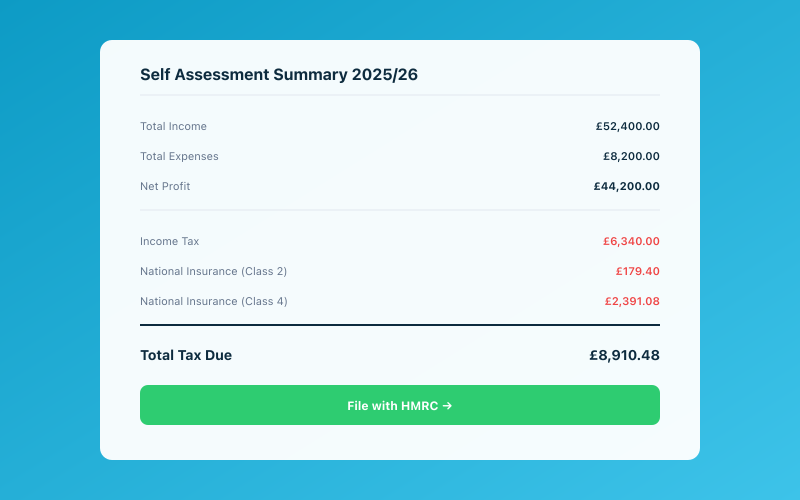 Your Accounted dashboard shows your real-time tax position
Cash Basis Landlords
If you report your rental income on the cash basis (available to property businesses with annual rental income under £150,000), the position is simple. You report income when you receive it. During the rent-free period, you receive nothing, so there is nothing to report.
Your expenses during the rent-free period (mortgage interest, insurance, maintenance, management fees) are still deductible as normal. This means the rent-free period may create or increase a property loss for that period.
Traditional (Accrual) Accounting
If you use traditional accounting, you recognise income when it is earned rather than when it is received. For straightforward rent-free periods at the start of a tenancy, the treatment is similar to cash basis — no income is earned during the rent-free period, so nothing is reported.
However, things become more complex when the rent-free period is part of a broader arrangement where the total consideration for the lease needs to be spread across its term (see below).
Spreading Rental Income Across the Lease
For commercial property leases, accounting standards may require the total rental income over the lease term to be spread evenly, regardless of when payments are actually received. This is the straight-line basis of recognition.
How This Works
Suppose you grant a five-year commercial lease with six months rent-free, followed by four and a half years at £24,000 per year.
Total rent over five years: £24,000 x 4.5 years = £108,000
Under straight-line recognition: £108,000 / 5 years = £21,600 per year
In this case, you would recognise £21,600 of income in each year of the lease, even though you receive nothing in the first six months and £24,000 per year thereafter.
When Does Spreading Apply?
Straight-line spreading is required under Generally Accepted Accounting Practice (GAAP) for businesses that prepare accounts under FRS 102 or IFRS. In practice, this mainly affects:
- Companies (including property companies)
- Larger property businesses that prepare formal accounts
- Commercial property landlords with complex lease arrangements
For individual landlords reporting on their Self Assessment return using cash basis, straight-line spreading does not apply. You simply report what you receive.
Expenses During Rent-Free Periods
Your allowable expenses continue to accrue during a rent-free period, even though you have no income. This includes:
- Mortgage interest (subject to the Section 24 restriction for residential landlords — relief is given as a 20% tax credit rather than a deduction against income)
- Insurance premiums
- Property management fees (if your agent charges a fixed monthly fee)
- Maintenance and repairs
- Service charges and ground rent (for leasehold properties)
- Council tax (if you are responsible during the rent-free period — for commercial property, business rates)
If these expenses exceed your rental income for the year (which is likely if you have a significant rent-free period), the excess creates a property loss that can be carried forward to offset against future property income.
Tenant Improvements in Lieu of Rent
Sometimes a landlord and tenant agree that the tenant will carry out improvements to the property instead of paying rent. This is common in commercial property, where a tenant might fit out shop premises or refurbish an office.
Tax Treatment for the Landlord
If a tenant carries out improvements to your property instead of paying rent, HMRC may treat the value of those improvements as rental income to you. The logic is that you received something of value (the improvements) in exchange for the use of your property.
This can create a tax charge even though you received no cash. The amount taxable is the market value of the improvements at the time they are carried out.
When Improvements Are Not Taxable
Not all tenant improvements create a tax charge for the landlord. If the tenant carries out improvements for their own benefit (such as fitting out the property for their specific business use) and this is not a condition of the lease or a substitute for rent, the improvements are not treated as the landlord's income.
The distinction depends on the terms of the lease and the specific arrangement:
- Improvements required by the lease as a condition of reduced rent: Likely taxable
- Improvements the tenant chooses to make for their own business purposes: Generally not taxable
- Improvements that enhance the landlord's property beyond what was there before: Potentially taxable if they form part of the rent consideration
Documenting the Arrangement
Clear documentation is essential. If tenant improvements are genuinely for the tenant's benefit and not a substitute for rent, the lease should reflect this. Ambiguous arrangements are more likely to be challenged by HMRC.
Reverse Premium Payments
A reverse premium is a payment made by a landlord to a tenant as an incentive to enter into a lease. This is the opposite of a normal premium (which the tenant pays to the landlord).
Reverse premiums are relatively common in commercial property, particularly when the market favours tenants and landlords need to offer inducements to fill vacant space.
Tax Treatment for the Landlord
For the landlord, a reverse premium payment is a capital expense related to the property and is not deductible against rental income. It is not treated as a revenue expense because it is a one-off payment to secure a new lease, not a recurring cost of the property business.
However, the reverse premium may be taken into account when calculating any capital gain or loss on the eventual disposal of the property.
Tax Treatment for the Tenant
From the tenant's perspective (which is less relevant to landlords, but worth understanding for completeness), a reverse premium received is generally taxable as a revenue receipt in the tenant's hands. For a tenant operating a business, it is taxed as trading income. For others, it may be taxable as property income or miscellaneous income.
The tenant may spread the reverse premium over the period of the lease for accounting purposes, but the full amount is taxable over time.
Rent-Free Periods and VAT
For VAT-registered landlords who have opted to tax a commercial property, rent-free periods create a specific question: do you need to charge VAT during the rent-free period?
The General Position
If you have opted to tax and the supply of the property is a continuous supply of services, you should technically account for VAT on the open market value of the property during the rent-free period if the rent-free arrangement amounts to a non-monetary consideration. In practice, HMRC takes a pragmatic approach for genuine commercial rent-free periods at the start of a lease.
Where the rent-free period is a straightforward commercial incentive and there is no non-monetary consideration flowing from the tenant to the landlord, there is no supply during the rent-free period and no VAT to account for.
When VAT May Be Due
If the tenant provides something in return for the rent-free period (such as improvements to the property), this could constitute non-monetary consideration. In that case, VAT would be due on the value of what the tenant provides during the rent-free period.
Practical Tips for Landlords
Keep Clear Records
Document the terms of any rent-free period in the lease agreement. Specify whether the rent-free period is an incentive or whether there is any consideration flowing from the tenant.
Plan for Cash Flow
Even though a rent-free period reduces your taxable income, you still have expenses to pay. Ensure you have sufficient cash reserves or other income to cover mortgage payments, insurance, and maintenance during the rent-free period.
Let Accounted Keep Your Property Accounts in Order
Managing the tax implications of rent-free periods, tenant improvements, and lease incentives requires careful record keeping. Accounted tracks all your property income and expenses, and Penny, your AI bookkeeper, ensures that rent-free periods are correctly reflected in your accounts — so your Self Assessment return is accurate and you never overpay or underpay tax. Start your free trial and let Accounted simplify your property bookkeeping.
Related Reading
-
Section 24 Mortgage Interest Relief: How It Affects Your Tax in 2025/26
-
What Expenses Can Landlords Claim? The Definitive 2025/26 List
Start your free trial and let Penny handle your bookkeeping automatically.
Penny, your AI bookkeeper, tracks your tax position in real time and flags opportunities to reduce your bill. Meet Penny →
Tax & Compliance Specialists
Our tax specialists have decades of combined experience in UK sole trader and small business taxation, MTD compliance, and HMRC submissions. All content is reviewed against current HMRC guidance before publication and updated quarterly to reflect legislative changes.
Ready to try Accounted?
Join UK sole traders who are simplifying their bookkeeping and tax.
Start your 14-day free trial