Capital Allowances for Furnished Holiday Lets
Furnished holiday lets (FHLs) have long enjoyed a privileged tax position in the UK, and one of the biggest advantages has been the ability to claim capital allowances on the cost of furnishings, equipment, and even structural improvements. If you own a qualifying FHL, understanding how to make the most of capital allowances can make a meaningful difference to your tax bill.
That said, the rules around FHLs have been under scrutiny, and the landscape has shifted in recent years. In this guide, we'll cover how capital allowances work for furnished holiday lets, what you can claim, the key qualifying conditions, and the changes you need to be aware of heading into 2025/26 and beyond.
What Are Capital Allowances?
Capital allowances are a way of getting tax relief on certain types of capital expenditure — that is, money you spend on assets that have a lasting value, rather than day-to-day running costs. Instead of deducting the full cost of a capital item in one go (as you would with a revenue expense like a repair), capital allowances let you write off the cost over time, or sometimes in full in the year of purchase.
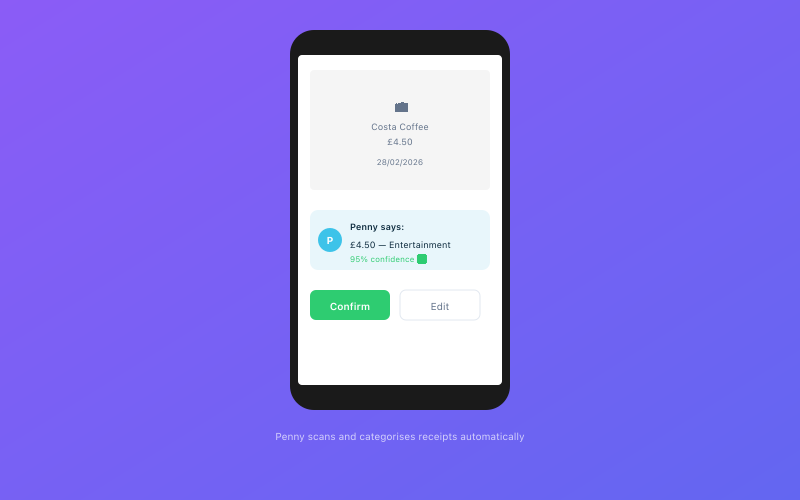 Penny scans and categorises your receipts automatically via WhatsApp
For most residential landlords, capital allowances are not available. If you let a standard buy-to-let property, you can't claim capital allowances on furnishings — you're limited to the Replacement of Domestic Items Relief, which only gives relief when you replace an existing item with a like-for-like equivalent.
Why FHLs Are Different
Furnished holiday lets are treated as a trade for certain tax purposes. This is the crucial distinction. Because they're treated as a trading activity, FHL owners can access reliefs that ordinary residential landlords cannot — including capital allowances.
This means that when you buy furniture, white goods, or equipment for your holiday let, you can claim the cost through the capital allowances system rather than waiting until the item needs replacing.
Qualifying as a Furnished Holiday Let
Before you can claim capital allowances, your property needs to meet HMRC's FHL qualifying conditions. These are stricter than many people realise, and you need to satisfy all three tests in each tax year:
The Three Letting Conditions
- Availability condition — the property must be available for commercial holiday letting for at least 210 days in the tax year
- Letting condition — the property must actually be let commercially as holiday accommodation for at least 105 days in the tax year
- Pattern of occupation condition — the property must not be let to the same person for a continuous period of more than 31 days, and the total of all such longer lets must not exceed 155 days in the tax year
If you have multiple FHLs, there's an averaging election available for the letting condition, which can help if one property falls slightly short in a particular year.
For a full breakdown of these rules, including recent changes, see our guide to furnished holiday let rules for 2026.
What Capital Allowances Can You Claim?
Once your property qualifies as an FHL, you can claim capital allowances on a wide range of assets. The main categories are:
Plant and Machinery
This is the broadest and most commonly used category. Plant and machinery for FHL purposes includes:
- Furniture — beds, sofas, tables, chairs, wardrobes, and shelving
- White goods — washing machines, tumble dryers, dishwashers, fridges, freezers
- Kitchen equipment — ovens, hobs, microwaves, kettles, toasters
- Entertainment and technology — televisions, Wi-Fi routers, sound systems
- Bathroom fittings — where they go beyond the basic fixtures integral to the building
- Garden equipment — lawnmowers, garden furniture, barbecues, hot tubs
- Safety equipment — smoke alarms, carbon monoxide detectors, fire extinguishers
- Laundry and cleaning equipment — vacuum cleaners, irons, ironing boards
Integral Features
Some items that form part of the fabric of the building also qualify for capital allowances, though they fall into a separate "integral features" category with different writing-down rates. These include:
- Electrical systems (including lighting systems)
- Cold and hot water systems
- Heating, ventilation, and air conditioning systems
- Lifts and escalators
- External solar shading
Structures and Buildings Allowance (SBA)
Introduced in 2018, the Structures and Buildings Allowance gives relief on the cost of constructing or renovating commercial structures. For qualifying FHLs, this can include the cost of building an extension or converting a barn into holiday accommodation. The SBA provides a flat 3% annual writing-down allowance over approximately 33 years.
Annual Investment Allowance (AIA)
The Annual Investment Allowance is where things get particularly generous. The AIA allows you to deduct the full cost of qualifying plant and machinery in the year of purchase, up to the annual limit.
The AIA limit has been permanently set at £1,000,000 per year. For most FHL owners, this means you can write off the entire cost of furnishing and equipping your property in one go, with no need to spread the deduction over multiple years.
For example, if you spend £25,000 furnishing a new holiday cottage — beds, sofas, kitchen appliances, a hot tub, garden furniture, televisions, and linens — you can claim the full £25,000 as a deduction against your FHL income in that tax year through the AIA.
When the AIA Doesn't Apply
The AIA doesn't cover cars, and it doesn't apply to items you owned before they were first used in the FHL business. It also doesn't apply to the Structures and Buildings Allowance — SBA has its own flat-rate relief.
If your spending exceeds the AIA limit (unlikely for most individual FHL owners), the excess goes into a writing-down allowance pool at either 18% (main rate pool) or 6% (special rate pool for integral features and long-life assets).
Practical Example: Furnishing a New Holiday Let
Let's say you've just completed the renovation of a two-bedroom holiday cottage in the Lake District and you're furnishing it from scratch.
| Item | Cost | |---|---| | Two double beds with mattresses | £2,400 | | Bedside tables and wardrobes | £1,200 | | Sofa, armchair, and coffee table | £2,800 | | Dining table and chairs | £900 | | Kitchen appliances (oven, hob, fridge, washing machine, dishwasher) | £3,500 | | Small kitchen items (microwave, kettle, toaster) | £250 | | Two televisions and Wi-Fi equipment | £1,100 | | Bathroom fittings (towel rails, mirrors, shelving) | £400 | | Garden furniture and barbecue | £1,500 | | Hot tub | £5,000 | | Bed linen, towels, and kitchenware | £1,200 | | Smoke alarms, CO detectors, fire blanket | £150 | | Total | £20,400 |
Using the AIA, you can claim the full £20,400 against your FHL income in the tax year of purchase. If your FHL income for the year is £30,000 and your other allowable expenses are £8,000, your taxable profit would be:
£30,000 − £8,000 − £20,400 = £1,600
That's a substantial tax saving, particularly if you're a higher rate taxpayer paying 40% on income above £50,270.
Record Keeping for Capital Allowances Claims
HMRC will expect you to be able to substantiate any capital allowances claim, so your record keeping needs to be thorough. For each item you claim, you should retain:
- Purchase invoices or receipts showing the date, amount, and description
- Delivery notes or proof that the item was delivered to the FHL property
- Photographs of the property and its furnishings (useful for evidencing the assets exist)
- A schedule of assets listing all items claimed, their cost, and the date of purchase
Keeping on top of this throughout the year is far easier than trying to reconstruct it at tax return time. Accounted's AI assistant Penny can help you categorise and track capital expenditure as you go, flagging items that may qualify for capital allowances so nothing slips through the cracks.
For broader guidance on what HMRC expects, our guide to landlord allowable expenses covers the basics of expense tracking for property income.
FHL Capital Allowances vs Standard Buy-to-Let
It's worth appreciating just how different the position is for FHL owners compared to ordinary residential landlords:
| | Furnished Holiday Let | Standard Buy-to-Let | |---|---|---| | Capital allowances on furniture | Yes (via AIA or WDA) | No | | Replacement of Domestic Items Relief | Not needed (use capital allowances) | Yes | | Mortgage interest deduction | Fully deductible as expense | 20% tax credit only (Section 24) | | Loss relief against other income | Possible | No — property losses only | | Pension contribution relief | FHL profits count as relevant earnings | Rental profits do not |
This is one of the reasons many landlords actively seek to qualify their properties as FHLs. The tax advantages — particularly around capital allowances and mortgage interest — can be significant.
For a deeper comparison, including the Section 24 rules that affect standard landlords, see our guide to Section 24 explained for landlords.
Changes to Watch: The Future of the FHL Regime
The government announced in the Autumn Budget 2024 that the FHL tax regime would be abolished from April 2025, removing the special tax advantages that FHL properties enjoy. However, the implementation and transitional arrangements are complex, and some elements — particularly around capital allowances already claimed — have transitional provisions.
If you've already claimed capital allowances on FHL assets, those claims won't be clawed back. However, going forward, new expenditure may need to be treated under the same rules as ordinary residential lettings, which means Replacement of Domestic Items Relief rather than capital allowances.
It's essential to stay up to date with these changes. Our guide to furnished holiday lettings is regularly updated as new details emerge.
Making the Most of the Remaining Opportunities
If you currently qualify as an FHL and are considering significant expenditure on furnishings or equipment, timing your purchases wisely could make a considerable difference. Claiming the AIA on a major furnishing project while the FHL rules still apply could deliver meaningful tax savings.
As always, keep detailed records, make sure your property genuinely meets the qualifying conditions, and seek specialist advice if you're planning a large claim.
Accounted helps UK sole traders stay on top of their bookkeeping and tax. Start your free 30-day trial at getaccounted.co.uk
Related reading:
- Furnished Holiday Let Rules for 2026 — What's Changing
- What Expenses Can Landlords Claim?
- Section 24 Explained for Landlords
Related Reading
- The Annual Tax on Enveloped Dwellings (ATED) — Who Pays It
- Landlord Tax When You Live Abroad — Complete Guide
- Energy Performance Certificates and Landlord Tax Deductions
You may also find our Buy-to-Let Tax Guide: Complete 2026 Overview helpful.
For step-by-step guidance, see our article on How to Calculate Rental Profit for Tax.
For more on this topic, read Furnished Holiday Let Tax Rules 2026.
Related reading: Landlord Allowable Expenses: Complete List.
For more on this topic, read Non-Resident Landlord Tax Rules UK.
For more on this topic, read Property Joint Ownership: Tax Rules for Couples.
See our detailed comparison: Property Trading vs Investment: Tax Differences.
For more on this topic, read Rent-a-Room Relief: £7,500 Tax-Free Income.
Related reading: Section 24 Mortgage Interest Relief for Landlords.
For more on this topic, read Tax Implications of Renting a Room in Your Own Home.
Related reading: How Accounted Manages Property Income for Landlords.
Related reading: Capital Allowances for Furnished Lets.
For more on this topic, read HMO Tax Implications: Houses of Multiple Occupancy.
For more on this topic, read Multiple Property Portfolios: Tax Reporting.
Explore our property features built specifically for UK landlords.
Accounted includes built-in property management — track rental income, Section 24, and allowable expenses across multiple properties. See property features →
Tax & Compliance Specialists
Our tax specialists have decades of combined experience in UK sole trader and small business taxation, MTD compliance, and HMRC submissions. All content is reviewed against current HMRC guidance before publication and updated quarterly to reflect legislative changes.
Ready to try Accounted?
Join UK sole traders who are simplifying their bookkeeping and tax.
Start your 14-day free trial