Spring Budget 2026: What It Means for Sole Traders and Landlords
Budget season always generates anxiety for small business owners. Every announcement has the potential to change how much tax you pay, what reliefs are available, and how you need to report your income. The Spring Budget 2026 is particularly significant because it lands just weeks before Making Tax Digital for Income Tax goes live, and it comes during a period of substantial reform to the UK tax system.
This guide breaks down the key measures that affect sole traders, freelancers, and landlords, explains what they mean in practical terms, and identifies the areas you should be watching closely.
The Big Picture: Where the Government Is Heading
The trajectory of UK tax policy over the past few years has been clear. Thresholds have been frozen while incomes have risen, meaning more people pay more tax without headline rates changing. Digital reporting requirements are expanding, giving HMRC more real-time visibility into taxpayer affairs. And various allowances and reliefs have been reduced or removed.
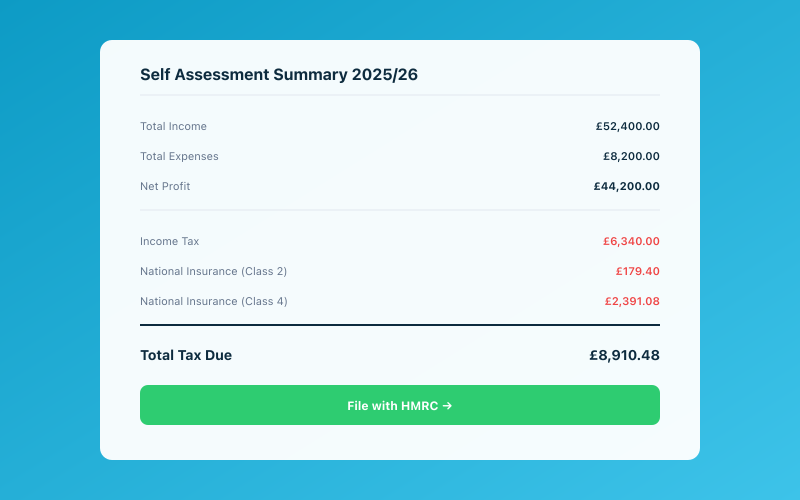 Your Accounted dashboard shows your real-time tax position
The Spring Budget 2026 continues these broad trends. The government has signalled its commitment to fiscal discipline while maintaining public spending commitments, and that means the tax base continues to broaden.
MTD for Income Tax: Full Speed Ahead
The Budget confirmed that Making Tax Digital for Income Tax will proceed as planned from 6 April 2026 for those with qualifying income above £50,000. There had been speculation in some quarters about a further delay, but the government has confirmed the timetable.
The £30,000 Threshold Coming in 2027
The Budget also confirmed that the second wave, bringing those with income between £30,000 and £50,000 into scope, will proceed from April 2027. There is ongoing consultation about whether to lower the threshold further to £20,000 in subsequent years, though no firm date has been set for this.
Penalties and the Soft Landing
HMRC has confirmed a soft landing period for the first year of MTD for Income Tax. During 2026/27, penalties for late quarterly submissions will not be charged for the first year, provided that taxpayers are making genuine efforts to comply. This does not mean you can ignore the obligations, but it does mean that honest mistakes during the transition will not attract automatic penalties.
This soft landing is sensible and welcome, but do not treat it as a reason to delay preparation. Getting your digital records set up now, before April, is far easier than trying to retrospectively digitise months of records while also learning a new system.
National Insurance: What Has Changed
Self-Employed NI
The Budget confirmed that Class 4 National Insurance rates for the self-employed remain at 6% on profits between £12,570 and £50,270, and 2% above that. The effective abolition of Class 2 continues, though the voluntary contribution route remains open for those building their State Pension entitlement.
Employer NI
The employer NI rate of 15%, introduced in April 2025, remains in place. The secondary threshold at which employers begin paying NI on employees' earnings stays at £5,000. The Employment Allowance of £10,500 continues, providing significant relief for smaller employers.
For sole traders who employ staff, the combined effect of the higher employer NI rate and the lower secondary threshold makes each employee more expensive. If you are considering hiring, factor in that employer NI adds 15% to salary costs above the threshold.
Property Tax: What Landlords Need to Know
Section 24 Continues
The restriction of mortgage interest relief to the basic rate remains fully in place. Higher rate landlords continue to receive only 20% tax credit on their finance costs rather than full relief at their marginal rate. This has been the position since April 2020, and the Budget confirmed no changes.
The Furnished Holiday Lettings Abolition
The abolition of the Furnished Holiday Lettings regime from April 2025 is now fully in effect. Properties that previously qualified as FHLs no longer receive the favourable tax treatment that included capital allowances on furnishings, pension-relevant earnings from rental income, and Capital Gains Tax reliefs. If you have a holiday let, you are now taxed in the same way as any other rental property.
Energy Efficiency and Property
The Budget included measures encouraging landlords to improve the energy efficiency of rental properties. There are ongoing discussions about whether to introduce tax incentives for energy efficiency improvements, and landlords should watch this space. Currently, the cost of improving a property's EPC rating is typically treated as a capital improvement rather than a deductible revenue expense, though repairs and like-for-like replacements remain allowable.
Threshold Freezes Continue
The Personal Allowance
The personal allowance stays at £12,570 and the higher rate threshold at £50,270. The freeze is now confirmed to continue until at least April 2028. By that point, the personal allowance will have been static for seven years.
The Impact on Real Incomes
To put this in context, if the personal allowance had risen with CPI inflation since 2021/22, it would be approximately £15,400 by now. That means someone earning the current personal allowance of £12,570 would pay no income tax at all under an inflation-adjusted system, but under the frozen threshold, someone earning £15,400 pays tax on roughly £2,830 of income. The fiscal drag effect is substantial and cumulative.
The VAT Registration Threshold
The VAT registration threshold remains at £90,000 for 2026/27. This was increased from £85,000 in April 2024, the first rise in seven years. Sole traders approaching this turnover level should monitor their rolling twelve-month revenue carefully.
Pension Measures
Annual Allowance Unchanged
The pension annual allowance remains at £60,000. There had been some speculation about a reduction, but the Budget confirmed the current level continues. This is good news for sole traders and company directors looking to make meaningful pension contributions.
Pensions and Inheritance Tax
The Budget reiterated the incoming change from April 2026 that brings unused pension funds within the scope of Inheritance Tax. This is a significant shift for estate planning, and anyone with substantial pension savings should review their plans with an adviser.
Carry Forward Reminder
The Budget documentation reminded taxpayers that unused annual allowance from the three previous tax years can be carried forward. For the 2025/26 contribution year, that means unused allowance from 2022/23, 2023/24, and 2024/25 can potentially be used, subject to having had pension scheme membership in those years. With the tax year ending on 5 April, time is running out to make contributions that use this carry-forward entitlement.
What to Watch For
Several areas remain subject to ongoing consultation, and sole traders and landlords should keep an eye on developments.
The Trading Allowance
The £1,000 trading allowance has been in place since 2017 and the Budget made no changes. If you have small amounts of trading income below £1,000, you can still use this allowance to avoid declaring that income.
The Cash Basis Default
The cash basis has been the default method of accounting for sole traders since April 2024, with the previous turnover threshold removed. The Budget confirmed this continues, and sole traders can now use the cash basis regardless of turnover unless they opt for accruals accounting.
Potential Future Changes to Loss Relief
There have been consultations around restricting sideways loss relief for certain types of business. While no changes were announced in this Budget, sole traders who regularly use trading losses to reduce other income should be aware this is an area under review.
Practical Steps to Take Now
With the Budget measures confirmed, here is what you should be doing in the weeks before the new tax year.
If your income is above £50,000, make sure you have MTD-compatible software set up and tested before 6 April. Accounted handles MTD quarterly submissions and Penny categorises your transactions throughout the quarter, so you are always ready to submit.
Review your pension contributions and make any top-ups before 5 April to maximise your 2025/26 tax relief. Check whether you have unused carry-forward allowance.
If you are a landlord, ensure your property income records are fully digital. MTD applies to property income as well as trading income, so your rental figures need the same treatment as your self-employment records.
Budget changes can feel overwhelming, but most of them do not require you to do anything differently day to day. What they do require is good record-keeping and awareness of where you stand relative to the key thresholds. That is exactly what Accounted provides, with Penny monitoring your income, flagging when you approach thresholds, and keeping your quarterly records submission-ready.
Start your free trial of Accounted today and take the uncertainty out of whatever the Budget throws at you.
Related Reading
-
How Much Tax Will I Pay as a Sole Trader? Calculator and Examples
-
Loss Relief for Sole Traders: How to Use Business Losses to Reduce Tax
-
Starting a Business Mid-Year: How Tax Works in Your First Year
Start your free trial and let Penny handle your bookkeeping automatically.
Penny, your AI bookkeeper, tracks your tax position in real time and flags opportunities to reduce your bill. Meet Penny →
Tax & Compliance Specialists
Our tax specialists have decades of combined experience in UK sole trader and small business taxation, MTD compliance, and HMRC submissions. All content is reviewed against current HMRC guidance before publication and updated quarterly to reflect legislative changes.
Ready to try Accounted?
Join UK sole traders who are simplifying their bookkeeping and tax.
Start your 14-day free trial