Spring Statement 2026: Impact on Self-Employed and Small Businesses
What to Expect From the Spring Statement 2026
The Spring Statement is the Chancellor's opportunity to update the country on the economic outlook and announce fiscal measures outside of the main Autumn Budget. While traditionally a lower-key event, recent Spring Statements have carried significant announcements, and 2026 is shaping up to be no different.
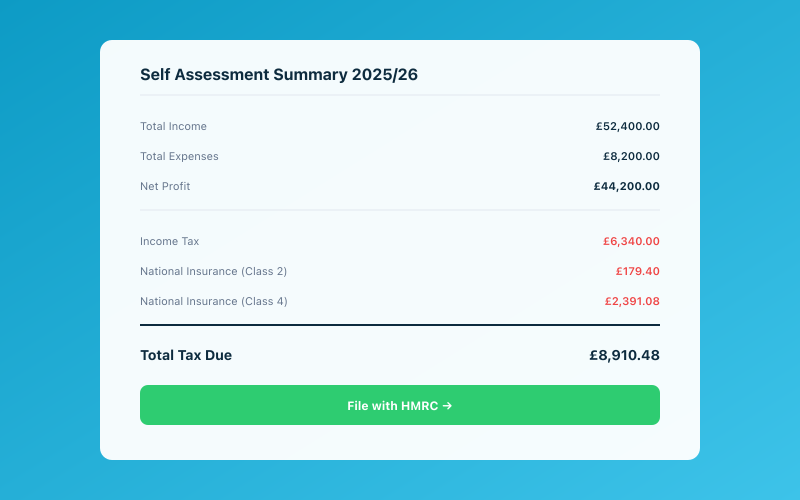 Your Accounted dashboard shows your real-time tax position
For self-employed workers and small business owners, the Spring Statement matters. Even when it doesn't introduce major tax changes, it sets the tone for what's coming. The economic forecasts, spending priorities, and policy signals all affect how you should plan for the rest of the year.
The Economic Context
The Spring Statement arrives against cautious optimism mixed with real challenges. The UK economy has shown signs of stabilisation, but growth remains modest.
Key factors include: the Bank of England gradually reducing interest rates but keeping them well above pre-2022 levels; headline inflation down from its peak but core inflation stickier than expected; employment costs pushed up by National Living Wage increases, employer NIC changes, and pension auto-enrolment; and the government under pressure to manage borrowing while funding public commitments.
For small businesses, this means operating where costs are high, borrowing is expensive, and the government is looking for ways to raise revenue or control spending.
What's Been Rumoured and Signalled
Making Tax Digital Implementation
With MTD for Income Tax launching in April 2026 for those with qualifying income over £50,000, the government may provide updates on the rollout or adjustments to the timetable for lower income thresholds. Watch for announcements about when those with income between £30,000 and £50,000 will be brought in.
Business Rates Reform
The government has signalled its intention to reform business rates. Any movement — even a consultation announcement — would be significant for high street businesses, hospitality, and retail.
Support for Small Business Investment
With the Annual Investment Allowance at £1 million and full expensing for companies in place, there's discussion about additional incentives for small businesses, particularly around green investment and technology adoption.
National Insurance and Employment Costs
The Autumn Budget 2024 increased employer NIC, hitting small employers hard. While a reversal is unlikely, there may be adjustments to employment allowances or targeted relief.
What to Watch For in the OBR Forecasts
The Office for Budget Responsibility will publish updated economic forecasts. Pay attention to GDP growth (demand outlook), inflation forecasts (pricing decisions), interest rate assumptions (borrowing costs), wage growth (staffing costs), and public borrowing (likelihood of future tax rises).
If the OBR downgrades growth forecasts, be cautious with spending and investment. If forecasts are upgraded, there may be more room for growth.
How to Prepare: Practical Steps
1. Get Your Records in Order
If MTD for Income Tax applies to you from April 2026, your quarterly reporting obligations start soon. Accounted is built for MTD compliance and handles quarterly submissions directly. Penny, Accounted's AI bookkeeper, can bring your records up to date quickly by categorising historical transactions and matching receipts.
2. Review Your Tax Position
Know your likely income, expenses, and tax liability. If you're close to any thresholds — the higher rate band, the VAT registration threshold — plan accordingly. If the Spring Statement changes any thresholds, you'll be able to assess the impact immediately.
3. Plan for Higher Costs
Budget for ongoing increases in the National Living Wage, pension contributions, and employer NIC. If you're considering your first employee, model the full cost carefully — the gap between take-home pay and total employment cost is wider than many people expect.
4. Build a Cash Reserve
If you don't already have a cash reserve covering three to six months of fixed costs, start building one. A strong cash position protects you from unexpected tax changes and economic shocks.
5. Invest in Efficiency
Every hour saved on administration is an hour spent on billable work. Automated bookkeeping, digital invoicing, and streamlined tax filing all reduce the time and cost of running your business.
6. Talk to Your Accountant
Book a conversation before and after the Spring Statement. Before, to make sure you're prepared. After, to assess the impact on your specific situation.
After the Statement: What to Do
Don't just read the headlines. Look at what's changing and when, what's being consulted on (signalling future changes), and what wasn't mentioned (usually meaning no change yet). Update your financial plans based on actual announcements and start preparing immediately for any new compliance requirements.
Staying Informed
Tax and fiscal policy changes frequently. Tools like Accounted are updated to reflect current rules and rates, so your tax calculations are always based on the latest legislation.
Whether the Spring Statement brings major changes or a holding pattern, the fundamentals don't change: keep your records current, know your numbers, plan ahead, and get professional advice when you need it.
If you want to make sure your bookkeeping and MTD compliance are sorted before the Spring Statement changes anything, give Accounted a try. With Penny handling the day-to-day and automatic MTD submissions built in, you'll be ready for whatever the Chancellor announces. Start your free trial today.
Related Reading
-
Can I Claim Travel Expenses as Self-Employed? The Complete Rules
-
Starting a Business Mid-Year: How Tax Works in Your First Year
Start your free trial and let Penny handle your bookkeeping automatically.
Penny, your AI bookkeeper, tracks your tax position in real time and flags opportunities to reduce your bill. Meet Penny →
Tax & Compliance Specialists
Our tax specialists have decades of combined experience in UK sole trader and small business taxation, MTD compliance, and HMRC submissions. All content is reviewed against current HMRC guidance before publication and updated quarterly to reflect legislative changes.
Ready to try Accounted?
Join UK sole traders who are simplifying their bookkeeping and tax.
Start your 14-day free trial