Back to School — A Freelancer's Guide to Refocusing in September
There's a particular energy that comes with September. The kids go back to school, the air gets a bit crisper, and — if you're a freelancer — the phone starts ringing again. After the relative quiet of summer, September feels like a second January: a chance to reset, refocus, and get back to business.
Unlike January, though, September doesn't come with the pressure of a brand-new year. You're halfway through the tax year, you have six months of data to work with, and the busiest quarter for many freelancers is just around the corner. It's the perfect moment to take stock, tidy up, and plan for a strong finish.
Here's how to make the most of it.
Take Stock of Where You Are
Before you start planning what's next, spend an hour understanding where you stand right now. Pull up your records for the tax year so far (April to August) and look at the numbers.
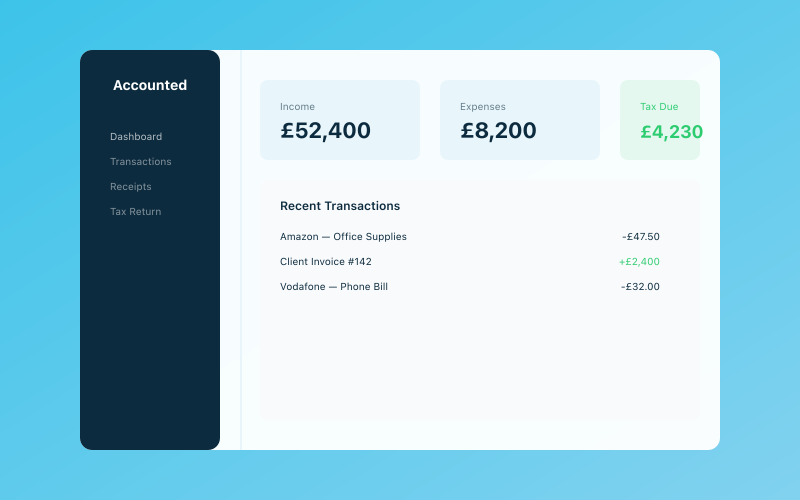 Your Accounted dashboard — income, expenses, and tax at a glance
Income to date. How much have you earned so far? Is it on track with what you expected? If you set financial goals in January, this is the halfway check-in. If you didn't, use your income to date to project what the full year might look like.
Expenses to date. Are you spending more or less than planned? Are there categories that have crept up — subscriptions you forgot to cancel, travel costs that have ballooned, or one-off purchases you hadn't budgeted for?
Profit to date. Income minus expenses. This is the figure that determines your tax bill. If it's higher than expected, that's good news for your bank balance but means your tax bill will be larger too. If it's lower, consider whether that's a temporary dip or a trend.
Outstanding invoices. Is anyone sitting on unpaid work? September is a natural point to chase anything overdue. Clients returning from holiday are often more responsive than clients winding down for one.
If you're using Accounted, Penny can pull together a half-year summary in seconds, giving you a clear view of your financial position without manual calculations.
Get Your Bookkeeping Up to Date
Be honest: did your bookkeeping slip over the summer? If you've been enjoying the sunshine instead of categorising transactions, you're in good company. But now's the time to catch up.
Reconcile your bank accounts. Go through June, July, and August and make sure every transaction is accounted for. If you've been using bank feeds in Accounted, most of the work will be done — you just need to confirm the categories and deal with anything flagged as unmatched.
Log any missing expenses. Did you buy materials, pay for travel, or attend an event over the summer? Make sure you have receipts and that they're recorded. Summer can be a time when legitimate expenses get overlooked because "I'll do it later" turns into "I've completely forgotten."
Review your categories. As your business evolves, your expense categories may need updating. Are you still using categories from when you started, even though your spending patterns have changed? A quick clean-up now makes your year-end accounts much easier to prepare.
Staying on top of your bookkeeping now also puts you in a strong position for any Making Tax Digital quarterly updates, if your income is above the £50,000 threshold from April 2026. For more on this, see our guide to what's changing in April 2026.
Plan for Q4
October, November, and December are busy months for many freelancers and service businesses. Clients return from holidays with budgets to spend, year-end projects kick off, and there's a general sense of urgency as the calendar year winds down.
Pipeline review. What work do you have lined up? Are there proposals outstanding, leads to follow up on, or repeat clients who typically need work in Q4? Reach out now rather than waiting for them to come to you.
Capacity planning. How much work can you realistically take on between now and Christmas? If you tend to overcommit in busy periods, set a clear limit and stick to it. Turning down work is sometimes the smartest business decision you can make.
Pricing review. If you've been thinking about raising your rates, September is an excellent time to do it. Clients expect some annual adjustment, and framing a price increase alongside a new season or quarter feels natural. Give existing clients 30–60 days' notice so the new rate applies from November onwards.
Marketing push. September is when decision-makers are most receptive. If you've been meaning to update your website, send out a newsletter, or reach out to new prospects, do it now — before Q4 gets too hectic.
Set Goals for the Rest of the Tax Year
You have roughly seven months left in the 2025/26 tax year (September through to 5 April 2026). That's enough time to make a meaningful difference to your financial position.
Set two or three specific goals. They might include:
- "Earn £X in the remaining seven months" — based on your half-year figures and your annual target.
- "Build a tax reserve of £X by January" — so you're not scrambling when your Self Assessment payment is due on 31 January. Accounted can show you a running estimate of your tax liability to help you calibrate.
- "Reduce expenses by X% in Q4" — if you've identified areas where you're overspending.
- "Win two new clients before Christmas" — if growing your client base is a priority.
- "Complete my Self Assessment return by November" — yes, you can file that early. Your return for 2025/26 can be submitted from 6 April 2026 onwards. The earlier you file, the sooner you know what you owe, and the more time you have to plan your finances.
Write your goals down somewhere you'll actually see them. Review them monthly.
Sort Out Your Systems
September is a great time for a systems audit. Over the course of a year, tools, processes, and habits accumulate like clutter. Some are useful; some are deadweight.
Review your software stack. Are you paying for tools you no longer use? Could one tool replace two or three others? Freelancers have a tendency to accumulate subscriptions — project management here, invoicing there, time tracking somewhere else. Consolidating where possible saves money and mental energy.
Update your templates. Proposals, contracts, invoices, email templates — when was the last time you refreshed them? Outdated templates can make your business look stale. A quick update takes an hour and makes everything feel sharper.
Automate what you can. If you're still doing things manually that could be automated, September is the time to make the switch. Bank feeds, recurring invoices, expense categorisation, and tax estimates are all things Penny can handle within Accounted, freeing up your time for the work that actually earns money.
Back up your files. When was your last backup? If the answer makes you uncomfortable, sort it out today. Cloud storage, external drives, or both — just make sure your business-critical files are protected.
Invest in Yourself
The September "back to school" feeling isn't just for children. It's a good time for freelancers to invest in their own development too.
Professional development. Are there courses, workshops, or conferences happening in Q4 that could enhance your skills? Many industries concentrate their events in the autumn, and the cost is typically an allowable business expense.
Networking. The freelance community tends to come alive again in September. Local meetups, online communities, and industry events are busier and more energetic than their summer equivalents. A new connection made in September could lead to work in October.
Health and wellbeing. If the summer was relaxing, carry that energy forward. If it was stressful (quiet periods can be their own kind of stress), take deliberate steps to protect your wellbeing. Regular exercise, clear boundaries between work and personal time, and proper breaks during the day aren't indulgences — they're business investments.
The September Mindset
September is a reset, not a revolution. You don't need to overhaul your entire business or set wildly ambitious targets. You just need to get organised, get current with your records, and make a plan for the months ahead.
The freelancers who finish the year strong are usually the ones who use September well — not by working harder, but by working smarter. Catch up on the admin, make a plan, set some goals, and then get back to doing the work you love.
The rest tends to take care of itself.
For help managing the end-of-year deadlines that follow, check our Self Assessment deadlines guide for 2025/26 and our January stress guide for sole traders.
Related reading:
Accounted helps UK sole traders stay on top of their bookkeeping and tax. Start your free 30-day trial at getaccounted.co.uk.
Related Reading
- The Four-Day Work Week for Freelancers — Is It Possible?
- Journaling for Business Clarity — A Practical Approach
Start your free trial and see how Accounted simplifies your bookkeeping.
Business & Operations Advisors
Our business advisors cover the practical side of running a UK sole trader business — from HMRC registration to managing growth. Content is written for real business owners in plain English, not accountants.
Ready to try Accounted?
Join UK sole traders who are simplifying their bookkeeping and tax.
Start your 14-day free trial