The Remittance Basis — UK Tax for Non-Domiciled Individuals
The UK's treatment of non-domiciled individuals — commonly known as "non-doms" — has been one of the most distinctive features of the British tax system. For decades, the remittance basis allowed qualifying individuals to avoid UK tax on their foreign income and gains, provided they did not bring that money into the UK.
But this area has undergone major reform. The government announced fundamental changes to the non-dom regime, and these changes are reshaping how foreign income is taxed for UK residents who are not domiciled here. In this guide, we will explain the traditional remittance basis, what is changing, and what it means for affected individuals.
What Is Domicile?
Before we get into the tax rules, it is important to understand what "domicile" means. Domicile is a legal concept that is distinct from residence, nationality, or citizenship. In simple terms, your domicile is the country you consider your permanent home — the place you intend to return to ultimately.
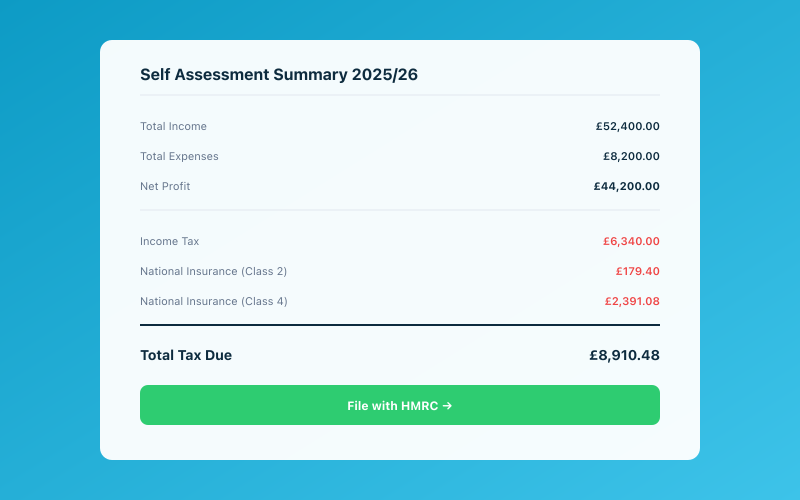 Your Accounted dashboard shows your real-time tax position
You acquire a domicile of origin at birth (usually your father's domicile). You can later acquire a domicile of choice by moving to another country with the clear intention of making it your permanent home. Domicile is notoriously difficult to change; merely living in a country for many years does not automatically change your domicile.
A person can be UK resident (living and working in the UK, paying UK tax on their UK income) while being domiciled elsewhere — say, in France, India, or the United States. It is this combination of UK residence with non-UK domicile that creates the non-dom status.
How the Remittance Basis Traditionally Worked
Under the traditional remittance basis, a UK-resident non-dom could choose to be taxed only on:
- Their UK-source income and gains (taxed in the same way as anyone else)
- Any foreign income or gains that they "remitted" (brought) to the UK
Foreign income and gains that remained outside the UK were not subject to UK tax. This was an enormously valuable benefit for individuals with significant overseas wealth.
The Remittance Basis Charge
The remittance basis was not entirely free. If you had been UK resident for a certain number of years, you had to pay an annual charge to use it:
- 7 out of the previous 9 years — £30,000 annual charge
- 12 out of the previous 14 years — £60,000 annual charge
After 15 out of the previous 20 years, a non-dom was deemed domiciled for tax purposes, meaning the remittance basis was no longer available and worldwide income and gains became fully taxable.
Individuals also lost their personal allowance and CGT annual exempt amount when claiming the remittance basis (unless their unremitted foreign income and gains were below £2,000, in which case the remittance basis could apply automatically without losing these allowances).
The Major Reforms
The government announced in the 2024 Spring Budget that the remittance basis would be abolished entirely from 6 April 2025, replaced with a new residence-based system. This is a fundamental shift in UK tax policy.
The New Foreign Income and Gains Regime
Under the new rules, individuals who become UK tax resident after a period of non-residence qualify for a four-year exemption on their foreign income and gains (FIG). During this four-year window:
- Foreign income and gains can be brought to the UK without a UK tax charge
- There is no annual remittance basis charge
- The personal allowance and CGT annual exempt amount are retained
After the four-year period ends, the individual is taxed on their worldwide income and gains like any other UK resident, regardless of their domicile.
This is a significant change from the old regime, which could provide relief for 15 years or more. The new system is simpler and more time-limited.
Transitional Provisions
For existing non-doms who were using the remittance basis before April 2025, there are several transitional measures:
Temporary Repatriation Facility (TRF) — Individuals can bring previously unremitted foreign income and gains into the UK at a reduced tax rate during a transitional window. This is designed to encourage non-doms to bring their overseas wealth into the UK rather than leaving it stranded abroad. The rate for the TRF is 12% for the 2025/26 tax year.
Rebasing of foreign assets — Non-doms who held foreign assets as at 5 April 2017 can rebase those assets to their market value at that date for CGT purposes when calculating gains on future disposals. This means pre-April 2017 gains are effectively wiped out.
Transitional relief for 2025/26 — Existing non-doms who do not qualify for the new four-year FIG regime can claim a 50% reduction in their taxable foreign income for 2025/26 only.
Who Is Affected?
The changes primarily affect:
- Long-term non-doms who have been using the remittance basis for many years. They lose their ability to shelter foreign income and gains from UK tax.
- Wealthy individuals considering UK residence — The four-year FIG regime may still be attractive to some, but it is far less generous than the old system.
- Non-doms with significant unremitted income abroad — They need to decide whether to use the TRF to bring funds to the UK at the reduced rate or leave them overseas (where they may still be subject to foreign taxes).
Inheritance Tax Changes for Non-Doms
The reforms also affect inheritance tax (IHT). Previously, non-doms were only subject to UK IHT on their UK-situated assets. Foreign assets were excluded.
Under the new rules, after ten years of UK residence, an individual's worldwide estate becomes subject to UK IHT. There is also a "tail" provision — after leaving the UK, the worldwide IHT charge continues for a period before falling away.
This is a major change for non-doms who held substantial overseas assets that were previously outside the scope of UK IHT. Estate planning in this area has become considerably more complex.
For background on how IHT works with business assets, see our guide on inheritance tax and business property relief.
Planning Considerations
For New Arrivals
If you are moving to the UK and qualify for the four-year FIG regime, you should:
- Plan the timing of your arrival carefully to maximise the four-year window
- Consider whether to realise gains on foreign assets during the four-year period (when they can be remitted tax-free)
- Review your investment structure and consider whether changes are needed before the four-year period ends
For Existing Non-Doms
If you have been resident in the UK for many years and were using the remittance basis:
- Assess the Temporary Repatriation Facility — bringing funds to the UK at 12% may be better than the alternative
- Review whether rebasing of pre-April 2017 assets is beneficial
- Consider whether continued UK residence is the right choice, given the loss of remittance basis protection
- Review your IHT exposure, particularly on overseas assets
For Everyone
- Seek professional advice — The interaction between UK tax, foreign tax, and double tax treaties makes this area exceptionally complex. Generic guidance can only go so far.
- Keep meticulous records — You need to track the source, location, and movement of foreign income and gains with precision. Mistakes can be extremely costly.
Keeping your UK financial records in order is one less thing to worry about. Accounted provides clear, organised bookkeeping for your UK income and expenses, and Penny can help you stay on top of your UK tax obligations while you navigate the complexities of international tax planning.
The Bigger Picture
The abolition of the remittance basis represents a fundamental shift in UK tax policy. For decades, the non-dom regime was a deliberate strategy to attract wealthy individuals to the UK. The new system is simpler and more equitable, but it also makes the UK less competitive as a destination for internationally mobile wealth.
Whether the changes will achieve their intended goal of raising additional tax revenue — or whether they will simply prompt non-doms to relocate — remains to be seen. What is clear is that affected individuals need to review their position urgently and plan accordingly.
Related Reading
Get Your UK Finances in Order
Whatever your residency or domicile status, accurate UK bookkeeping is essential. Make sure your records are up to date and your tax obligations are clear.
Start your free trial and let Penny handle your bookkeeping automatically.
Accounted helps UK sole traders stay on top of their bookkeeping and tax. Start your free 30-day trial at getaccounted.co.uk.
Penny, your AI bookkeeper, tracks your tax position in real time and flags opportunities to reduce your bill. Meet Penny →
Tax & Compliance Specialists
Our tax specialists have decades of combined experience in UK sole trader and small business taxation, MTD compliance, and HMRC submissions. All content is reviewed against current HMRC guidance before publication and updated quarterly to reflect legislative changes.
Ready to try Accounted?
Join UK sole traders who are simplifying their bookkeeping and tax.
Start your 14-day free trial