How the £100K Tax Trap Works (And How to Avoid It)
Earning over £100,000 a year sounds like a straightforward win. More money, more options, more financial security. But the UK tax system has a nasty surprise waiting for anyone whose income creeps above that threshold — the so-called £100K tax trap.
It is one of the most punishing marginal tax rates in the entire system, and it catches thousands of people every year. In this guide, we will explain exactly how it works, what it costs you, and what you can do about it.
What Is the £100K Tax Trap?
The £100K tax trap refers to the withdrawal of the personal allowance for individuals with adjusted net income above £100,000. In 2025/26, the standard personal allowance is £12,570 — the amount of income you can earn before paying any income tax.
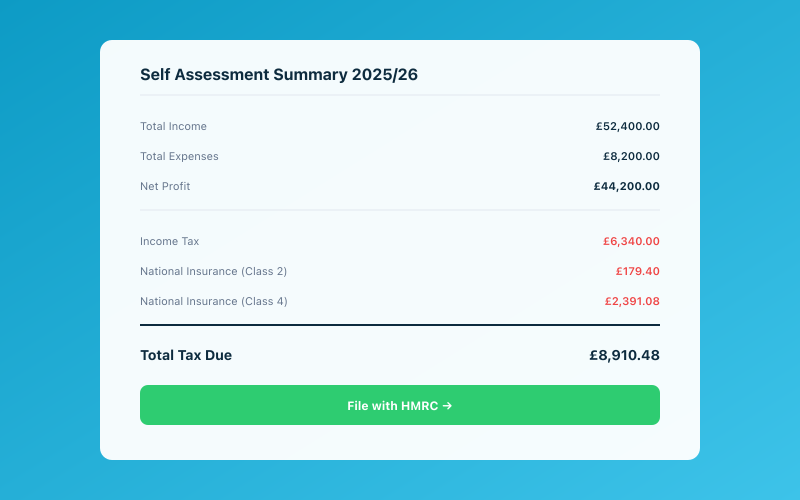 Your Accounted dashboard shows your real-time tax position
Once your adjusted net income exceeds £100,000, your personal allowance is reduced by £1 for every £2 of income above the threshold. By the time you reach £125,140, your personal allowance has been completely eliminated.
This creates an effective marginal tax rate of 60% on income between £100,000 and £125,140.
Here is why. On this band of income, you are paying:
- 40% higher rate tax on the income itself
- Plus an effective 20% tax because you are losing £1 of personal allowance (which would have been taxed at 0%) for every £2 earned — meaning that £1 of previously untaxed income now becomes taxable at 40%
The combined effect is a 60% marginal rate. For every additional £1 you earn in this band, you keep just 40p.
A Practical Example
Let us say you earn exactly £100,000. You benefit from the full £12,570 personal allowance, and your total income tax bill for 2025/26 would be around £27,432 (ignoring any other reliefs or deductions).
Now imagine you get a £5,000 pay rise, taking you to £105,000. Your personal allowance drops by £2,500 (half of the £5,000 excess), falling to £10,070.
On that extra £5,000, you pay £2,000 in higher rate tax (40%) plus an additional £1,000 because £2,500 of previously untaxed income is now taxed at 40%. Your total extra tax on that £5,000 rise is £3,000 — a 60% marginal rate.
If you factor in National Insurance (2% at this income level), the effective marginal rate climbs to around 62%. That is higher than the 45% additional rate paid by people earning over £125,140. It genuinely makes more sense, from a tax perspective, to earn £125,140 than £100,001.
Why This Matters for Self-Employed People
If you are employed, your employer handles PAYE and you see the effect in your pay packet. It stings, but it is automatic. For sole traders and the self-employed, the trap is more dangerous because income can fluctuate year to year.
You might have a particularly good trading year that pushes you just over £100,000 unexpectedly. If you have not planned for it, you could face a significantly higher tax bill than anticipated — not just because you earned more, but because the personal allowance withdrawal amplifies the effect.
This is exactly where good bookkeeping pays for itself. If you can see your income trajectory mid-year, you have time to take action before the tax year ends. Penny, the AI assistant inside Accounted, can flag when you are approaching key thresholds, giving you time to plan.
How to Avoid or Reduce the Trap
There are several legitimate strategies for managing income around the £100,000 mark. None of them involve anything aggressive or risky — they are standard tax planning techniques.
1. Pension Contributions
This is the single most effective tool for most people. Pension contributions reduce your adjusted net income, which is the figure used to calculate the personal allowance taper.
If you earn £110,000 and make £10,000 in gross pension contributions, your adjusted net income drops to £100,000. Your full personal allowance is restored, and you get tax relief on the pension contribution at your marginal rate (effectively 60% in this band).
That £10,000 pension contribution effectively costs you just £4,000 after all the tax benefits. It is extraordinarily efficient.
For employed individuals, salary sacrifice into a pension is even better, as it also saves National Insurance contributions.
2. Gift Aid Donations
Charitable donations made under Gift Aid reduce your adjusted net income. If you were planning to donate to charity anyway, making sure those donations are Gift Aid eligible can help manage the taper.
3. Timing of Income
If you are self-employed, you may have some flexibility over when you invoice clients or recognise income. We are not suggesting you defer income artificially — that could attract HMRC scrutiny — but legitimate timing decisions, such as when to take on a large project, can make a difference.
For more ideas on reducing your overall tax burden, read our guide on how to pay less tax legally in the UK.
4. Maximise Allowable Expenses
Make sure you are claiming every expense you are entitled to. Overlooked expenses are surprisingly common among sole traders, and even a few hundred pounds can matter when you are right on the boundary.
Our guide on reducing your tax bill as a sole trader covers the most commonly missed deductions.
5. Use ISAs and Tax-Free Wrappers
While ISAs do not reduce your adjusted net income, they can be part of a longer-term strategy. Investment income from ISAs is not taxable, so shifting savings into ISA wrappers reduces the amount of interest and dividend income that counts towards the £100,000 threshold.
The Interaction With Other Thresholds
The £100K trap does not exist in isolation. Several other tax charges and thresholds interact with it:
- High Income Child Benefit Charge — If you also claim Child Benefit and your income is above £60,000, you face the HICBC as well. The combination of HICBC and the personal allowance taper can make the effective marginal rate even higher.
- Student loan repayments — Plan 2 student loan repayments (9% on income over £27,295) add to the marginal rate. In the taper zone, the combined marginal rate for someone with a student loan could exceed 70%.
- Pension Annual Allowance taper — For those earning above £260,000 (adjusted income), the pension Annual Allowance itself starts tapering, limiting how much you can contribute.
How the Trap Compares to Other Rates
To put the 60% marginal rate in context:
| Income Band | Marginal Rate | |---|---| | £0 – £12,570 | 0% | | £12,571 – £50,270 | 20% (basic rate) | | £50,271 – £100,000 | 40% (higher rate) | | £100,001 – £125,140 | 60% (effective) | | £125,141 – £150,000 | 40% (higher rate) | | Over £150,000 | 45% (additional rate) |
The jump to 60% between £100,000 and £125,140 is jarring. It is higher than the rate paid by someone earning £200,000 or even £1,000,000. This is not a bug in the system — it is a deliberate policy choice — but it does mean that planning around this band is especially valuable.
Record-Keeping Is Essential
Whether you are employed or self-employed, keeping accurate records of your income throughout the year is the foundation of managing the £100K trap. You cannot plan effectively if you do not know where you stand.
For sole traders, this means staying on top of your bookkeeping month by month — not scrambling to piece things together in January. Accounted makes this straightforward by connecting to your bank accounts and categorising transactions automatically, so you always have a clear picture of your income.
Common Mistakes to Avoid
- Ignoring the trap entirely — Many people do not realise the 60% rate exists until they see their tax bill.
- Failing to claim pension tax relief — Higher rate and additional rate taxpayers need to claim extra relief through Self Assessment. It is not always done automatically.
- Not considering total income — Adjusted net income includes employment income, self-employment profits, rental income, savings interest, and dividends. A second income source can push you over without you realising.
- Leaving it too late — Pension contributions must be made before the end of the tax year to count. Last-minute planning is better than no planning, but earlier is always better.
Related Reading
Take Control of Your Tax Position
The £100K tax trap is avoidable with the right planning. Whether it is pension contributions, expense claims, or simply understanding where you stand mid-year, a little awareness goes a long way.
Start your free trial and let Penny handle your bookkeeping automatically.
Accounted helps UK sole traders stay on top of their bookkeeping and tax. Start your free 30-day trial at getaccounted.co.uk.
Penny, your AI bookkeeper, tracks your tax position in real time and flags opportunities to reduce your bill. Meet Penny →
Tax & Compliance Specialists
Our tax specialists have decades of combined experience in UK sole trader and small business taxation, MTD compliance, and HMRC submissions. All content is reviewed against current HMRC guidance before publication and updated quarterly to reflect legislative changes.
Ready to try Accounted?
Join UK sole traders who are simplifying their bookkeeping and tax.
Start your 14-day free trial