Employee Share Schemes — EMI, CSOP, SIP Explained
Offering employees a stake in the business is one of the most powerful tools available to UK companies. It aligns incentives, helps with recruitment and retention, and — when structured through a tax-advantaged scheme — provides significant tax benefits for both the company and the employee.
But the landscape of employee share schemes can feel bewildering. EMI, CSOP, SIP, SAYE — there is a whole alphabet soup of options, each with different rules, limits, and tax treatments. In this guide, we will focus on the three most commonly used schemes: the Enterprise Management Incentive (EMI), the Company Share Option Plan (CSOP), and the Share Incentive Plan (SIP). We will explain how each one works, who they suit, and the tax advantages they offer.
Why Employee Share Schemes Matter
Before diving into the specifics, it is worth understanding why share schemes are so popular. Beyond the obvious financial incentive, they create a sense of ownership. Employees who hold shares — or options over shares — think and act more like owners. They are more invested in the company's success, and that tends to show up in performance and loyalty.
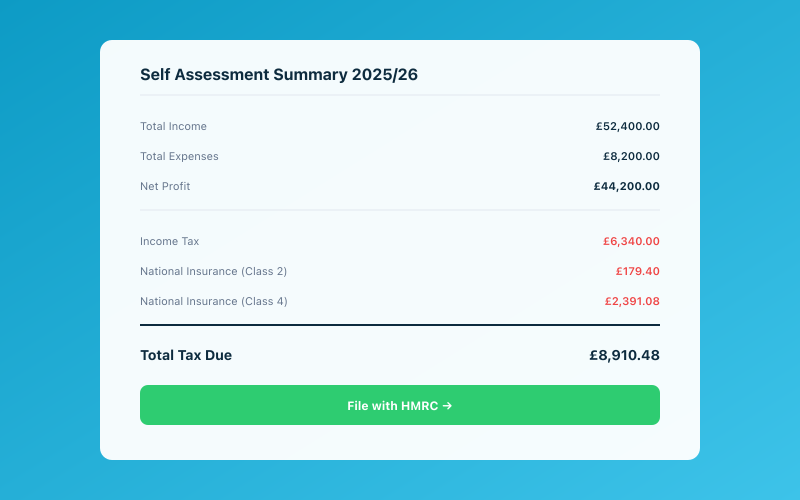 Your Accounted dashboard shows your real-time tax position
From a tax perspective, the benefits are substantial. Without a tax-advantaged scheme, giving employees shares or options typically triggers income tax and National Insurance charges. The approved schemes we will discuss here defer, reduce, or eliminate many of those charges.
Enterprise Management Incentives (EMI)
EMI is widely regarded as the most generous share scheme available in the UK. It is specifically designed for smaller, higher-risk companies and offers exceptional tax treatment.
How EMI Works
EMI allows qualifying companies to grant share options to employees with a total value of up to £250,000 per employee (based on market value at the date of grant). The company as a whole can grant EMI options over shares worth up to £30 million.
Options can be exercised at any point according to the terms set out in the option agreement. Many companies set vesting schedules — for instance, 25% of options vesting after one year, with the remainder vesting monthly over the following three years.
Tax Benefits of EMI
The tax advantages are significant:
- No income tax on grant — Receiving the option does not trigger a tax charge.
- No income tax on exercise (usually) — As long as the exercise price is at least equal to the market value at the date of grant, there is no income tax when you exercise the option. If the exercise price is below market value at grant, income tax is charged on the difference.
- Capital Gains Tax on sale — When you eventually sell the shares, you pay CGT on the gain (sale price minus exercise price). The annual exempt amount (£3,000 for 2025/26) can be used to reduce the taxable gain.
- BADR eligibility — EMI shares may qualify for Business Asset Disposal Relief (BADR), meaning the first £1 million of qualifying lifetime gains is taxed at just 10%. The normal two-year holding period for BADR is reduced to just two years from the date the EMI option was granted (not from exercise).
For more on BADR, see our guide on Entrepreneurs' Relief and its replacement.
Who Can Use EMI?
There are restrictions. The company must:
- Have gross assets of no more than £30 million
- Have fewer than 250 full-time equivalent employees
- Be a trading company (not substantially investment-based)
- Be independent (not a subsidiary of another company, in most cases)
Certain trades are excluded, including property development, banking, insurance, and legal services. Employees must work at least 25 hours per week (or 75% of their working time) for the company.
Company Share Option Plan (CSOP)
CSOP is an HMRC-approved share option scheme that is available to a broader range of companies than EMI. It is a good option for companies that do not qualify for EMI or that want to extend share options beyond the EMI limits.
How CSOP Works
Under a CSOP, a company can grant options over shares worth up to £60,000 per employee (based on market value at the date of grant). There is no overall company limit on the total value of CSOP options.
The exercise price must be at least equal to the market value of the shares at the date of grant. Options cannot normally be exercised until at least three years after the grant date, and must be exercised within ten years.
Tax Benefits of CSOP
- No income tax on grant — As with EMI, receiving the option is tax-free.
- No income tax on exercise — Provided the option is exercised between three and ten years after grant and the exercise price was at least market value at grant, there is no income tax charge.
- CGT on sale — You pay CGT on any gain between the exercise price and the sale price.
- No employer NICs — The company does not pay employer National Insurance on the gain.
The key difference from EMI is that CSOP does not automatically qualify for BADR, so CGT is payable at the standard rates (18% or 24% for non-residential gains) rather than the 10% BADR rate.
Who Can Use CSOP?
CSOP is available to most UK companies. There are fewer restrictions than EMI — notably, there are no limits on company size, gross assets, or number of employees. The main requirements are:
- The company must be independent
- Shares must be ordinary shares
- The employee must not hold more than 30% of the company's share capital
Share Incentive Plan (SIP)
SIP is fundamentally different from EMI and CSOP. Rather than granting options, a SIP allows employees to acquire actual shares, often with the company matching some or all of their purchase.
How SIP Works
There are four types of shares available under a SIP:
- Free shares — The company can give employees up to £3,600 worth of free shares per year.
- Partnership shares — Employees can buy shares out of their pre-tax salary, up to £1,800 per year or 10% of salary (whichever is lower).
- Matching shares — The company can match partnership shares on a ratio of up to 2:1.
- Dividend shares — Dividends received on SIP shares can be reinvested in further shares.
All four types can be used in combination, making SIP quite flexible.
Tax Benefits of SIP
- Free and matching shares — No income tax or NICs at the point of award. If held for at least five years, they are completely free of income tax and NICs when removed from the plan.
- Partnership shares — Bought from pre-tax salary, so income tax and NICs are saved on the amount invested. If held for at least five years, no further tax when removed.
- Dividend shares — Tax-free if held in the plan for at least three years.
- CGT — When shares are eventually sold, CGT is payable on any gain above the market value at the point they leave the plan.
The tax treatment if shares are withdrawn early (within three to five years for free and matching shares) is less favourable, with income tax charged on the lower of the market value at award or withdrawal.
Who Can Use SIP?
SIP must be offered to all employees with a qualifying period of service (up to 18 months). It cannot be targeted at specific individuals. This makes it best suited to larger companies that want to give all staff a stake in the business.
Which Scheme Is Right for You?
The right scheme depends on your company's size, structure, and objectives:
| Feature | EMI | CSOP | SIP | |---|---|---|---| | Best for | Small/medium companies | Medium/large companies | All-employee schemes | | Per-employee limit | £250,000 | £60,000 | £3,600 (free) + £1,800 (partnership) | | BADR eligibility | Yes | No | No | | Minimum holding period | None (flexible) | 3 years | 5 years (for full benefit) | | Company size restrictions | Yes | No | No | | Can target individuals | Yes | Yes | No (all-employee) |
For a small, growing business looking to incentivise key employees, EMI is usually the best choice. The generous limits and BADR eligibility make it extremely tax-efficient.
For larger companies, CSOP provides a good balance of flexibility and tax advantage. And for businesses wanting to create broad-based employee ownership, SIP is the natural fit.
SAYE — A Brief Mention
We should also mention Save As You Earn (SAYE), sometimes called Sharesave. This is another all-employee scheme where employees save a fixed amount each month (between £5 and £500) over three or five years and then use the savings to buy shares at a price set at the start — usually at a discount of up to 20%. SAYE is widely used by listed companies but is available to private companies too.
Practical Considerations
Setting up a share scheme involves legal, tax, and valuation costs. EMI and CSOP require an HMRC-agreed valuation of the shares at the time of grant. SIP requires a trust to hold the shares.
For business owners, the key is to plan early. Share schemes work best when they are put in place well before any potential exit, giving employees time to build value and meet holding period requirements.
If you are considering an exit in the future, understanding how share schemes interact with Business Asset Disposal Relief is crucial. See our guide on selling a business and asset disposal relief for more detail.
Related Reading
Get Your Finances in Order First
Before implementing a share scheme, you need clear, accurate financial records. Accounted keeps your bookkeeping organised and gives you the financial clarity you need to make big decisions like employee share schemes.
Start your free trial and let Penny handle your bookkeeping automatically.
Accounted helps UK sole traders stay on top of their bookkeeping and tax. Start your free 30-day trial at getaccounted.co.uk.
Penny, your AI bookkeeper, tracks your tax position in real time and flags opportunities to reduce your bill. Meet Penny →
Tax & Compliance Specialists
Our tax specialists have decades of combined experience in UK sole trader and small business taxation, MTD compliance, and HMRC submissions. All content is reviewed against current HMRC guidance before publication and updated quarterly to reflect legislative changes.
Ready to try Accounted?
Join UK sole traders who are simplifying their bookkeeping and tax.
Start your 14-day free trial