Building a Referral Programme for Your Accounting Practice
Ask any successful accounting practice where their best clients come from, and the answer is almost always the same: referrals. Word-of-mouth recommendations from existing clients, professional contacts, and business networks consistently deliver higher-quality leads than any other channel. The clients who come through referrals tend to be a better fit, more trusting from the outset, and more likely to stay long-term.
Yet despite this, very few practices have a structured referral programme. Most rely on referrals happening organically — a satisfied client mentions your name to a friend, and you hope that friend gets in touch. It works, but it's passive. A deliberate referral programme takes this natural dynamic and amplifies it, turning occasional word-of-mouth into a predictable, scalable growth channel.
Here's how to build one.
Why Referrals Work So Well for Accountants
Before we get into the mechanics, it's worth understanding why referrals are particularly powerful for accounting practices.
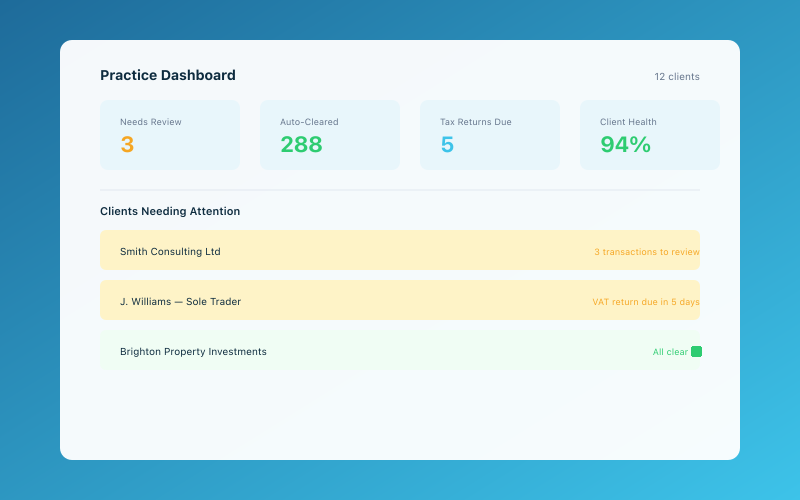 The Accounted practice dashboard — manage all your clients in one place
Trust transfer. Choosing an accountant requires trust — you're handing over sensitive financial information and relying on someone to get your tax right. A recommendation from a trusted friend or colleague transfers that trust instantly. The referred prospect arrives with a positive predisposition that no amount of advertising can create.
Pre-qualification. Clients tend to refer people who are similar to themselves. If your existing clients are sole traders earning £40,000–£80,000, they'll generally refer other sole traders in that bracket. This means referrals are naturally pre-qualified — they're the kind of client you already serve well.
Lower acquisition cost. The cost of acquiring a client through referrals is dramatically lower than through paid advertising, SEO, or other marketing channels. Even if you offer a referral incentive (more on that shortly), it's typically a fraction of what you'd spend on ads.
Higher lifetime value. Research consistently shows that referred clients have higher retention rates and higher lifetime value than clients acquired through other channels. They start the relationship with goodwill and are more forgiving of the inevitable hiccups.
Designing Your Referral Programme
A referral programme doesn't need to be complicated. In fact, the simpler it is, the more likely people are to participate. Here's a framework:
Define who can refer. The obvious answer is "existing clients," but don't stop there. Other referral sources include:
- Other professional contacts (solicitors, mortgage brokers, financial advisers, insurance brokers)
- Former clients who left on good terms
- Business networks and membership organisations
- Friends and family of your team
Define the incentive. This is where practices often overthink things. Your referral incentive doesn't need to be lavish — it just needs to be clear, tangible, and worth the effort. Options include:
- Fee credit. The most popular option. Offer the referrer a credit against their next invoice — say, £50 or £100, or one month's fee waived. This is simple, directly valuable, and keeps the referrer engaged with your practice.
- Gift cards or vouchers. Amazon, John Lewis, or a restaurant voucher. Less directly related to your service but universally appreciated.
- Charity donation. Some practices offer to donate to a charity of the referrer's choice. This works particularly well for professional referral partners who might feel uncomfortable accepting a personal incentive.
- No incentive at all. Some practices simply ask for referrals and thank the referrer personally. For close client relationships, this can be perfectly effective — people refer because they genuinely want to help.
- Reciprocal referrals. For professional partners (solicitors, etc.), the incentive might simply be that you refer clients to them in return.
Define the trigger. When does the incentive get paid? Common options are:
- When the referred person becomes a paying client
- When the referred person has been a client for three months (reduces the risk of paying for clients who churn quickly)
- When the referred person signs the engagement letter
We'd suggest keeping it simple: pay the incentive when the new client signs up and pays their first invoice. Waiting too long can feel mean-spirited and reduces the motivational impact.
Communicating Your Programme
A referral programme only works if people know about it. Here's how to get the word out:
Tell every client directly. The single most effective way to get referrals is to ask for them. After you've delivered a good piece of work — filed their return, saved them tax, resolved an HMRC issue — that's the moment to say: "If you know anyone who could use the same kind of help, we'd love an introduction." Most clients are happy to refer; they just don't think of it unless prompted.
Include it in your onboarding. Mention the referral programme as part of your new client welcome process. Something like: "By the way, many of our clients come to us through word of mouth. If you know someone who's looking for an accountant, here's how our referral programme works." For tips on streamlining onboarding generally, see our guide on how to onboard new clients.
Add it to your email signature. A simple line: "Know someone who needs an accountant? Ask us about our referral programme." It's subtle but ensures every email you send is a gentle reminder.
Feature it on your website. Create a dedicated page explaining the programme, with a simple form or email address for submitting referrals.
Mention it in your newsletter. If you send a regular newsletter, include a standing section about the referral programme, ideally with a recent success story.
Remind at key moments. Tax return filing season, year-end, and MTD deadlines are all moments when your clients are thinking about their accountant and may be talking to peers about tax. These are natural times to remind them about the programme.
Building Professional Referral Partnerships
Client referrals are one leg of the stool. Professional referral partnerships are another — and they can be even more productive.
The professionals who most commonly refer clients to accountants include:
- Solicitors — particularly those handling commercial transactions, property purchases, or business formation
- Mortgage brokers — self-employed clients often need accountants to prepare their accounts for mortgage applications
- Financial advisers — who work with clients on pensions, investments, and tax planning
- Business coaches and consultants — who work with start-ups and growing businesses
- Other accountants — larger firms that don't want small clients, or sole practitioners who are at capacity
Building these relationships takes time but can be incredibly rewarding. Start by identifying professionals who serve the same market as you. Invite them for coffee. Understand what they do and what kind of clients they serve. Explain what kind of clients you're looking for. Make it easy for them to refer — give them your details in a format they can simply forward on.
The key to a productive professional referral relationship is reciprocity. If you're receiving referrals, look for opportunities to refer clients back. Even if the volume isn't perfectly matched, the willingness to reciprocate keeps the relationship healthy.
Tracking Referrals
You can't improve what you don't measure. Track:
- Referral source. For every new client, record how they found you. This should be a standard question in your onboarding process. Over time, you'll see which clients and which professional partners are your most prolific referrers.
- Conversion rate. Not every referral becomes a client. Track how many referrals you receive vs. how many convert. If your conversion rate is low, the problem might be your sales process rather than the quality of referrals.
- Time to conversion. How long from initial referral to signed engagement? If it's taking weeks, you might be losing prospects to competitors who respond faster.
- Incentives paid. Track what you're spending on referral incentives. This is your client acquisition cost — and it should be dramatically lower than other channels.
- Lifetime value by source. Over time, compare the lifetime value of referred clients vs. clients from other channels. This data justifies continued investment in your referral programme.
A simple spreadsheet works for tracking, or you can use your CRM or practice management software. The important thing is that you do it consistently.
Making It Easy to Refer
The biggest barrier to referrals isn't willingness — it's effort. People mean to refer you but forget, or they don't know how to make the introduction. Remove as much friction as possible:
Give referrers something to forward. A simple one-page PDF or a link to your website that explains who you are, what you do, and who you help. When someone says "you should try my accountant," having something tangible to pass along is much more effective than a name and phone number.
Offer a warm introduction option. Some referrers prefer to make a personal introduction (copying both parties into an email) rather than just handing over contact details. Make it clear that either approach is welcome.
Respond quickly. When a referral comes in, respond within 24 hours. The referrer's reputation is on the line — if their friend contacts you and doesn't hear back for a week, it reflects badly on them. Fast response times protect the referrer's credibility and increase conversion rates.
Thank the referrer. Always, always thank the person who referred. Even if the referral doesn't convert, acknowledge the gesture. A personal thank-you note (not just an automated email) goes a long way.
Software and Tools That Help
If you use practice management software like Karbon or Senta, you may be able to build referral tracking into your existing workflow. If you're looking for ways to make the overall client experience better — which naturally leads to more referrals — tools like Accounted give your sole trader clients a smooth, modern experience that they're happy to recommend to peers.
For broader practice growth strategies, our article on reducing client churn complements the referral approach — after all, there's no point winning new clients if you're losing existing ones at the same rate.
Starting Your Programme This Week
You don't need to have everything perfect to get started. Here's a minimal viable referral programme you could launch this week:
- Decide on an incentive (even if it's just a heartfelt thank-you).
- Email your top 20 clients letting them know you're always happy to take on new clients through recommendation.
- Ask your three best professional contacts if they ever come across people who need an accountant.
- Add a referral mention to your email signature.
- Start tracking where new enquiries come from.
That's it. You can refine and formalise over time, but the most important thing is to start asking.
Related Reading
Learn about our free accountant portal and how it saves your practice time.
Accounted helps UK sole traders stay on top of their bookkeeping and tax. Start your free 30-day trial at getaccounted.co.uk.
Accounted gives accountants a free practice portal — manage all your clients, file to HMRC, and let Penny handle the routine work. See the accountant portal →
Editorial & Research
The Accounted editorial team covers software comparisons, technology, and the tools UK sole traders need to run their businesses efficiently. All software comparisons are based on independent research and publicly available pricing.
Ready to try Accounted?
Join UK sole traders who are simplifying their bookkeeping and tax.
Start your 14-day free trial