IR35 and Substitution — The Key Test Explained
Of all the factors that determine IR35 status, the right of substitution is widely regarded as the most powerful. A genuine, unfettered right to send someone else to do the work in your place is one of the strongest indicators that you're operating as a business, not as a disguised employee. Get this test right, and you're well on your way to demonstrating an outside IR35 position.
But "genuine" is the operative word. HMRC is well practised at spotting sham substitution clauses, and a clause in your contract that doesn't reflect reality is worse than useless — it can actively undermine your credibility.
Let's explore exactly what substitution means, what makes it genuine, and how to evidence it properly.
Why Substitution Matters So Much
The logic behind the substitution test is straightforward. In an employment relationship, the employer hires you — they want your personal service. You can't simply send your mate to do your job on Monday morning.
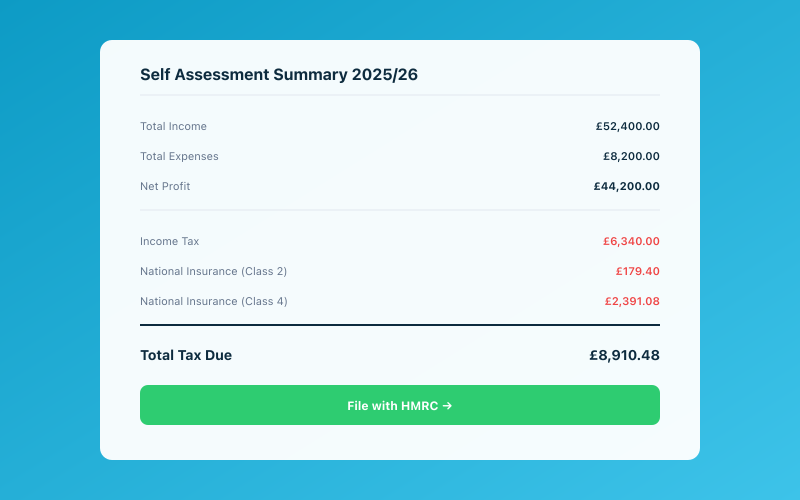 Your Accounted dashboard shows your real-time tax position
In a genuine business-to-business relationship, the client engages your company to deliver a service. Whether you personally deliver it, or someone else from your company does, shouldn't matter to the client — they're paying for the output, not the individual.
When a contractor has a genuine right to provide a substitute, it fundamentally changes the nature of the relationship. It shifts from personal service (the hallmark of employment) to a commercial arrangement (the hallmark of a business).
This is why substitution has been emphasised in virtually every major IR35 tribunal case. In Express and Echo Publications v Tanton (1999), the Court of Appeal held that an unfettered right of substitution was inconsistent with a contract of employment — making it effectively a trump card.
However, more recent cases have taken a more nuanced view. The right of substitution is weighed alongside other factors, and a contractual clause that exists only on paper won't carry much weight.
What Makes a Substitution Clause Genuine?
For a substitution clause to support an outside IR35 position, it needs to satisfy several criteria:
It Must Be Contractually Permitted
The starting point is the contract. If your contract doesn't mention substitution, you've already lost this test. The clause should clearly state that:
- You have the right to provide a substitute to perform the services
- The client cannot unreasonably refuse a substitute
- You (or your company) are responsible for paying the substitute
It Must Be Practically Possible
A contractual right that can't realistically be exercised is treated as a sham. If the work requires a specific security clearance that only you hold, or the client has made clear they'll only accept you personally, the substitution clause is meaningless in practice.
Think about whether a substitute could genuinely do the work. In many IT contracting roles, someone with similar skills and experience could pick up the work reasonably. In niche consultancy roles where your personal expertise is the whole point of the engagement, substitution may be practically impossible.
It Should Be Unfettered (or Close to It)
"Unfettered" means without restriction. The gold standard is a clause that lets you send whoever you want, whenever you want, without needing the client's permission.
In practice, some degree of restriction is normal and acceptable — for example, requiring the substitute to have relevant skills or appropriate security clearance. The client can also require that the substitute doesn't have a conflict of interest.
What weakens the clause is requiring the client's approval for any and all substitutes. If the client has an effective veto, the right is fettered, and its value as evidence diminishes significantly.
It Should Be at Your Cost
In a genuine business arrangement, if you send a substitute, you pay them from your company funds. The client continues to pay your company the agreed rate, and your company pays the substitute. If the substitute costs more than your normal rate, you absorb the difference. If they cost less, you keep the profit.
This financial element is important because it demonstrates that you're taking a commercial risk — something employees don't do.
Exercising Substitution: The Gold Standard
Having a substitution clause in your contract is good. Actually using it is much better.
If you've sent a substitute to a client — even once — and the client accepted them, that's powerful evidence. It proves:
- The right genuinely exists in practice, not just on paper
- The client accepts that personal service isn't required
- You operate as a business that provides resources, not an individual selling their time
Practical tips for exercising substitution:
- Identify potential substitutes in advance. Have a short list of people with appropriate skills who could step in. This might be other contractors you know, subcontractors you've worked with, or associates.
- Formalise the arrangement. Have a subcontract agreement ready that you can use when you deploy a substitute. This shows professionalism and genuine business operation.
- Document everything. When you send a substitute, record the date, who you sent, why, how the client responded, and how payment was handled.
- Don't manufacture a substitution. Sending someone for one day just to tick a box looks contrived. Genuine reasons include holiday, illness, overlapping commitments, or the substitute having specific skills suited to a particular task.
Case Law: What the Tribunals Have Said
Several important cases have shaped how substitution is assessed:
Express and Echo Publications v Tanton (1999)
A newspaper delivery driver had a clause allowing him to send a substitute if he was unwilling or unable to do the work. The Court of Appeal held that this unfettered right of substitution was inconsistent with a contract of employment. This case established substitution as a potentially decisive factor.
Consistent Group v Kalwak (2008)
Agency workers had a contractual right to send substitutes. The Court of Appeal looked beyond the contract to the reality of the working arrangements and found the substitution clause was a sham — it didn't reflect what actually happened. This case established the principle that tribunals must look at the reality, not just the contractual terms.
Pimlico Plumbers v Smith (2018)
The Supreme Court found that a plumber engaged through Pimlico Plumbers was a worker (not self-employed) partly because his ability to substitute was heavily restricted — he could only send another Pimlico-approved plumber, which the court viewed as a limited right.
HMRC v Atholl House (2022)
In this case involving a BBC presenter, the Upper Tribunal examined the right of substitution closely. The presenter could provide a substitute with the BBC's agreement, but the BBC had significant control over who that substitute could be. The tribunal found this weakened (but didn't eliminate) the substitution argument.
The Key Takeaway
Substitution is powerful but not absolute. The contractual right must be genuine, practically exercisable, and reflected in reality. A clause that exists only on paper, or one that gives the client an effective veto, will carry limited weight.
Common Mistakes with Substitution
Mistake 1: A Generic Clause Without Practical Reality
Many contractors have a boilerplate substitution clause in their contract template but have never considered how they'd actually exercise it. They don't have a list of potential substitutes, no subcontract agreement prepared, and no plan for how it would work in practice.
If HMRC investigates, they'll ask: "Have you ever sent a substitute? Do you have substitutes identified? How would you go about it?" If you can't answer these questions convincingly, the clause looks like window dressing.
Mistake 2: Client Approval That Amounts to a Veto
A clause that says "the worker may provide a substitute subject to the client's prior written approval" can be problematic. If the client can refuse any substitute for any reason, the right is effectively meaningless.
Better wording: "The worker may provide a substitute, and the client shall not unreasonably withhold approval. The client may only refuse a substitute who lacks the required skills, experience, or security clearance for the specific engagement."
Mistake 3: Ignoring Substitution Because It Feels Awkward
Some contractors feel uncomfortable raising substitution with clients because it seems impersonal or might suggest they're not committed. But this is a business relationship, not a personal one. Professional conversations about coverage, contingency, and resource flexibility are entirely normal between businesses.
Mistake 4: Confusing Substitution with Delegation
Substitution means sending someone else instead of you. Delegation means bringing helpers to work alongside you. Both are relevant to IR35, but they're different. Being able to delegate tasks to assistants is less powerful than a full right of substitution, though it still supports an outside IR35 position.
How Substitution Interacts with Other IR35 Tests
Substitution doesn't exist in isolation. The courts look at it alongside control, mutuality of obligation, financial risk, and the overall picture of the working relationship.
A strong substitution right can outweigh some negative factors. For example, even if you work on the client's premises during set hours (suggesting some control), a genuine, exercised right of substitution can still tip the balance towards outside IR35.
Conversely, a weak substitution position doesn't automatically mean you're inside IR35. Strong evidence on control and mutuality can compensate.
The bottom line: substitution is the most powerful single test, but it's not the only one. For a complete analysis of all the factors, see our guide to IR35 inside and outside explained with examples. And for how HMRC's official tool handles substitution questions, read our guide to the CEST tool.
Practical Steps: Strengthening Your Substitution Position
Here's your action plan:
- Review your contract — ensure it contains a clear, unfettered (or minimally fettered) substitution clause
- Identify potential substitutes — have at least two or three named individuals who could cover for you
- Prepare a subcontract agreement — have a template ready to formalise substitute arrangements
- Consider exercising the right — if a genuine opportunity arises (holiday, double-booking), use it
- Document everything — keep records of substitute availability, any conversations with clients about substitution, and any actual substitutions made
- Align contract with reality — make sure what your contract says matches what happens in practice
Keeping your business records in order goes hand in hand with demonstrating genuine self-employment. Accounted helps you maintain clean, professional bookkeeping that reflects a real business operation — not an individual selling their time.
The Bottom Line
Substitution is the single most important IR35 test, but it's only valuable if it's genuine. A well-drafted contractual clause is the starting point, but practical reality — identified substitutes, documented exercises of the right, and a genuine willingness to provide alternatives — is what makes it credible.
Don't treat substitution as a box-ticking exercise. Treat it as a fundamental aspect of how your business operates.
Accounted helps UK sole traders stay on top of their bookkeeping and tax. Start your free 30-day trial at getaccounted.co.uk.
Related Reading
- How to Prove You're Outside IR35
- IR35 — The Inside and Outside Explained With Real Examples
- IR35 Reforms — What Changed and What It Means in 2026
- Foreign Bank Accounts — Do You Need to Tell HMRC?
- Tax When Getting Married — What Changes
Penny, your AI bookkeeper, tracks your tax position in real time and flags opportunities to reduce your bill. Meet Penny →
Tax & Compliance Specialists
Our tax specialists have decades of combined experience in UK sole trader and small business taxation, MTD compliance, and HMRC submissions. All content is reviewed against current HMRC guidance before publication and updated quarterly to reflect legislative changes.
Ready to try Accounted?
Join UK sole traders who are simplifying their bookkeeping and tax.
Start your 14-day free trial