How Married Couples Can Save Tax (Marriage Allowance and Beyond)
Getting married or entering a civil partnership is a big life event — and while tax savings probably aren't the first thing on your mind, they're a genuine perk worth knowing about. The UK tax system offers several ways for married couples and civil partners to reduce their combined tax bill, from the straightforward Marriage Allowance to more sophisticated strategies around pensions, capital gains, and income splitting.
In this guide, we'll cover everything you need to know about saving tax as a couple in the 2025/26 tax year. Whether you're newly married or have been together for decades, there's a good chance you're leaving money on the table.
Marriage Allowance — The Easy Win
The Marriage Allowance is the simplest and most widely available tax break for married couples and civil partners. It allows one partner to transfer 10% of their personal allowance (£1,257 in 2025/26) to the other, reducing the recipient's tax bill by up to £251.40 per year.
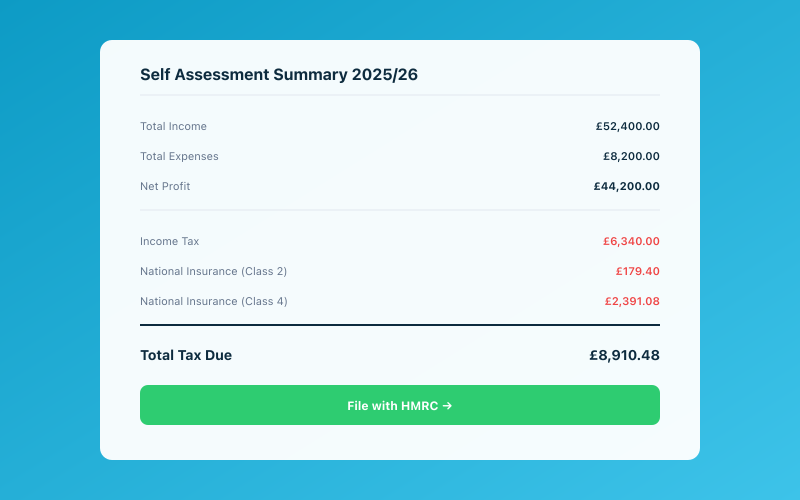 Your Accounted dashboard shows your real-time tax position
Who Qualifies?
To claim Marriage Allowance:
- You must be married or in a civil partnership.
- The transferring partner must have income below the personal allowance of £12,570 (or at least below the amount they'd need to use their full allowance).
- The receiving partner must be a basic rate taxpayer — that is, their income must be between £12,571 and £50,270.
It doesn't work if the receiving partner pays higher rate (40%) or additional rate (45%) tax, because the transferred allowance can only be set against income taxed at the basic rate.
How to Claim
You can apply for Marriage Allowance online through HMRC's website. The good news is that you can backdate your claim by up to four years, so if you've been eligible but haven't claimed, you could receive a refund of up to around £1,000.
Is It Worth It?
The annual saving of £251.40 isn't life-changing on its own, but it's free money for filling in a short online form. Over a decade, that's over £2,500 — and the backdating option means you might receive a nice lump sum straight away.
Income Splitting for Married Couples
If one partner earns significantly more than the other, there are legitimate ways to share income between you to reduce your overall tax bill. This is particularly relevant if one of you is self-employed.
Jointly Owned Property Income
If you own a rental property together, the default assumption for married couples is that income is split 50:50 for tax purposes, regardless of who actually owns what share. However, you can file a Form 17 with HMRC to declare a different split — say 90:10 — provided this reflects the actual beneficial ownership of the property.
This can be useful if one partner is a basic rate taxpayer and the other pays higher rate tax. By shifting more of the rental income to the lower earner, you reduce the overall tax charge.
Business Income
If your spouse or civil partner genuinely works in your business, you can pay them a salary or wages. This is a legitimate business expense that reduces your taxable profit, and your partner uses their own personal allowance of £12,570 against the income they receive.
The key word here is "genuinely." HMRC will challenge arrangements where a spouse is paid for work they don't actually do. The salary must reflect the role, hours, and market rate for the work performed.
Dividends from a Family Company
If you operate through a limited company, you might consider making your spouse a shareholder so they can receive dividends. This can be tax-efficient because dividends are taxed at lower rates than salary — 8.75% at the basic rate in 2025/26.
However, be aware of the settlements legislation (sometimes called the "Arctic Systems" rules), which HMRC can use to challenge income splitting through dividends where one spouse does all the work but both receive dividends. Professional advice is essential here.
Pension Contributions — A Couple's Secret Weapon
Pensions offer some of the best tax planning opportunities for married couples, especially when one partner earns more than the other.
Contributing to a Non-Earning Partner's Pension
Even if your spouse or civil partner has no earnings at all, they can still contribute up to £3,600 gross per year to a personal pension and receive basic rate tax relief. That means they put in £2,880 and the government tops it up to £3,600 — an instant 25% return, plus any investment growth is sheltered from tax.
Using Both Annual Allowances
Each individual has their own pension annual allowance of £60,000 in 2025/26. For a married couple, that's a combined £120,000 of tax-relieved pension saving per year. If either partner has unused allowances from the previous three years, they can carry those forward too, potentially making even larger contributions.
Tax Relief at the Highest Rate
If one partner is a higher rate (40%) or additional rate (45%) taxpayer, maximising their pension contributions before using the lower earner's allowance is usually the most efficient approach. The higher rate taxpayer gets more tax relief per pound contributed.
For more on pension strategies, check out our guide to pension contributions before April.
Capital Gains Tax Planning
Each person has their own Capital Gains Tax (CGT) annual exempt amount — £3,000 in 2025/26. For a married couple, that's £6,000 of tax-free gains between you.
Transferring Assets Between Spouses
Transfers of assets between married couples and civil partners are treated as being made at "no gain, no loss" for CGT purposes. This means you can transfer an asset to your spouse before they sell it, effectively using their CGT annual exempt amount as well as your own.
For example, if you hold shares with a £10,000 gain, you could transfer half to your spouse. You each then sell your portion, using your respective £3,000 annual exempt amounts to shelter £6,000 of the gain from tax. The remaining £4,000 would be taxed at your respective rates (10% for basic rate taxpayers or 20% for higher rate taxpayers on most assets).
Timing and Planning
This strategy works best when planned in advance. Transfers must be genuine — you can't simply transfer an asset on paper, have your spouse sell it, and then take the money back. Well, you can make the transfer and they can sell, but the proceeds belong to them. The transfer needs to be a real shift in ownership.
Inheritance Tax Planning
Marriage also provides significant inheritance tax (IHT) benefits:
- Spousal exemption: Transfers between spouses and civil partners are completely exempt from IHT, whether during lifetime or on death.
- Transferable nil-rate band: If the first spouse to die doesn't use their full IHT nil-rate band (currently £325,000), the unused portion can be transferred to the surviving spouse, potentially doubling their nil-rate band to £650,000.
- Residence nil-rate band: An additional £175,000 per person is available when passing a home to direct descendants, which can also be transferred between spouses, giving a combined allowance of up to £1,000,000 for a married couple.
Practical Steps to Take
Here's a quick checklist for married couples looking to save tax:
- Claim Marriage Allowance if one partner earns below £12,570 and the other is a basic rate taxpayer. Don't forget to backdate it.
- Review property ownership and consider whether a Form 17 election would reduce your combined tax bill on rental income.
- Pay your spouse fairly if they work in your business — and make sure it's properly documented.
- Maximise pension contributions for both partners, starting with whoever pays the highest rate of tax.
- Use both CGT annual exempt amounts by transferring assets before sale where appropriate.
- Plan ahead for the tax year end — many of these strategies need to be in place before 5 April to count for the current year.
If you're a sole trader, keeping track of all this alongside your day-to-day bookkeeping can be a lot. That's where Accounted comes in — it gives you a clear picture of your income and expenses throughout the year, making it much easier to plan your tax position as a couple.
When to Get Professional Advice
While Marriage Allowance and ISA planning are straightforward enough to handle yourself, some of the strategies we've covered — particularly around income splitting, dividend planning, and inheritance tax — can be complex. If your combined income is above the higher rate threshold, or if you have significant assets, it's worth speaking to a tax adviser to make sure you're making the most of every opportunity without falling foul of HMRC's anti-avoidance rules.
The effort is well worth it. A bit of planning each year can save a married couple hundreds or even thousands of pounds — money that stays in your pocket rather than going to the taxman.
Accounted helps UK sole traders stay on top of their bookkeeping and tax. Start your free 30-day trial at getaccounted.co.uk
Related reading:
- How to Pay Less Tax Legally in the UK
- How to Use Your Personal Allowance Effectively
- Tax Year-End Planning Guide
Related Reading
- How Foster Carers Are Taxed — The Qualifying Care Relief
- Tax Year End Checklist — 15 Things to Do Before 5 April
Start your free trial and let Penny handle your bookkeeping automatically.
Penny, your AI bookkeeper, tracks your tax position in real time and flags opportunities to reduce your bill. Meet Penny →
Tax & Compliance Specialists
Our tax specialists have decades of combined experience in UK sole trader and small business taxation, MTD compliance, and HMRC submissions. All content is reviewed against current HMRC guidance before publication and updated quarterly to reflect legislative changes.
Ready to try Accounted?
Join UK sole traders who are simplifying their bookkeeping and tax.
Start your 14-day free trial