The Spring Budget — What Sole Traders Need to Know
Every year, the Chancellor stands up in the House of Commons and delivers a statement that could reshape the financial landscape for millions of small business owners. The Spring Budget (or Spring Statement, depending on the year) is one of those occasions where it pays to listen — but it also pays to know which bits actually matter to you.
If you're a sole trader, you don't need to understand every line of fiscal policy. You need to know three things: what's changing, when it takes effect, and what you should do about it. This guide cuts through the political theatre and focuses on the practical implications.
Why the Spring Budget Matters for Sole Traders
The Budget is where the government sets out its spending plans and revenue-raising measures. For sole traders, this typically means changes to:
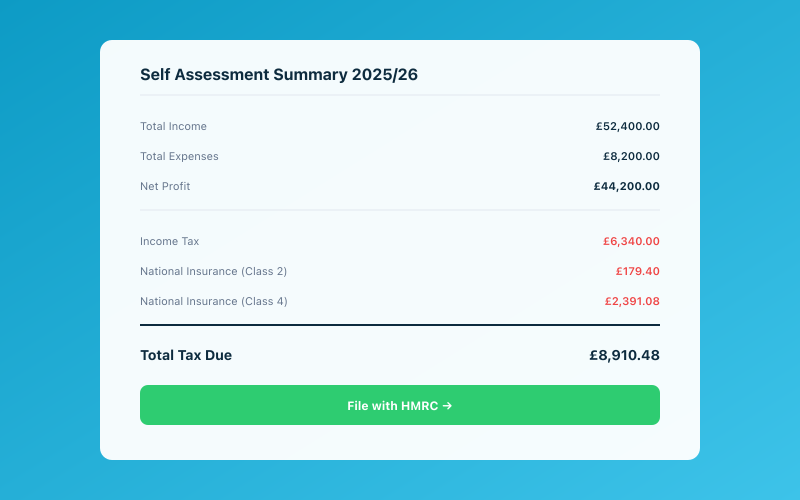 Your Accounted dashboard shows your real-time tax position
- Income tax rates and thresholds
- National Insurance contributions
- Capital allowances and reliefs
- VAT rules and thresholds
- Business rates and other levies
- Regulatory changes (like Making Tax Digital)
Not every Budget brings sweeping changes, but even small adjustments can have a meaningful impact on your bottom line. A tweak to a threshold or a change to an allowance might only shift your tax bill by a few hundred pounds, but over several years, the cumulative effect adds up.
The challenge is that Budget coverage in the media tends to focus on headline-grabbing measures — fuel duty, alcohol duty, stamp duty — rather than the details that matter to the self-employed. Which is why it helps to have a guide that's written specifically for sole traders.
Key Areas to Watch
While the specifics change from year to year, there are several areas where sole traders should always pay close attention during a Budget announcement.
Income Tax and Personal Allowance
The personal allowance has been frozen at £12,570 since 2021/22, and this freeze has been extended through to at least April 2028. Each year of frozen thresholds means more people are pulled into higher tax bands through fiscal drag — earning a bit more due to inflation, but paying proportionally more tax.
In any Budget, look for signals about whether the freeze will be extended further, shortened, or whether new bands might be introduced. Scotland already has a more graduated system with six income tax bands, and there's always speculation about whether the rest of the UK might follow suit.
For 2026/27, the rates remain:
- 0% on the first £12,570
- 20% on £12,571–£50,270
- 40% on £50,271–£125,140
- 45% above £125,140
National Insurance
National Insurance for the self-employed has been on a downward trajectory. Class 2 NICs were effectively abolished for most earners from April 2024, and Class 4 rates were cut to 6% (from 8%) on the main band.
However, employer NICs went up significantly in April 2025 — from 13.8% to 15%, with the threshold dropping from £9,100 to £5,000. If you employ staff, even one person, this has a direct impact on your costs.
Watch for any changes to self-employed NIC rates, thresholds, or further adjustments to employer NICs. The Employment Allowance (currently £10,500) is worth tracking too — it offsets employer NIC costs for small businesses.
Capital Allowances
The Annual Investment Allowance (AIA) has been permanently set at £1,000,000, which covers most sole traders' equipment purchases many times over. But there are other capital allowances worth monitoring:
- Full expensing (for companies investing in qualifying plant and machinery) was made permanent in the 2023 Autumn Statement. While this primarily benefits limited companies, it signals the direction of travel for capital investment policy.
- Business Asset Disposal Relief — the rate rose to 14% from April 2025 and is set to increase further to 18% from April 2026. If you're planning to sell your business or significant business assets, this matters.
Making Tax Digital
Making Tax Digital for Income Tax Self Assessment (MTD for ITSA) is being phased in from April 2026 for those with qualifying income over £50,000, and from April 2027 for those over £30,000. Budget announcements sometimes include updates on the timetable, thresholds, or compliance requirements.
If you earn over £50,000 from self-employment, you'll need MTD-compatible software and must submit quarterly updates to HMRC from the 2026/27 tax year onwards. If you're already using Accounted, you're well positioned — the software is designed to meet MTD requirements.
VAT
The VAT registration threshold was increased to £90,000 from April 2024 (up from £85,000). Budget announcements may include further adjustments. If your turnover is approaching the threshold, any change — up or down — could affect whether you need to register.
How to Follow the Budget Without Losing Your Mind
Budget Day generates an enormous volume of commentary, much of it contradictory, speculative, or designed to generate clicks rather than inform. Here's a sensible approach:
1. Don't try to watch it live (unless you enjoy that sort of thing). The Chancellor's speech is largely political theatre. The detail is in the documents published alongside it, which take hours or days to digest properly.
2. Wait for the dust to settle. Initial media coverage is often breathless and inaccurate. Give it 24–48 hours for the analysis to catch up with the announcements.
3. Focus on what affects you. You don't need to understand every policy change. Focus on income tax, NI, capital allowances, VAT, and any measures specifically targeting the self-employed or small businesses.
4. Check the implementation dates. Not everything announced in the Budget takes effect immediately. Some measures start in the next tax year, others are phased in over several years. Knowing when a change kicks in helps you plan.
5. Read a summary written for sole traders. General-purpose Budget roundups are often geared towards employees or homeowners. Look for analysis that's specific to your situation. We publish a Spring Budget summary after each announcement, tailored to the self-employed.
What to Do After the Budget
Once you've identified the changes that affect you, take a few practical steps.
Review your tax estimates. If rates or thresholds have changed, your projected tax bill may be different from what you expected. Update your calculations — Penny can help with this — and adjust your monthly tax set-aside if needed.
Check your pricing. If your costs are going up due to tax or NI changes, it may be time to review your rates. You don't have to pass every cost increase to your clients, but you should at least be aware of the impact on your margins.
Update your bookkeeping setup. If new categories, rates, or thresholds apply, make sure your bookkeeping software reflects them. Accounted updates automatically for major tax changes, but it's worth checking that your records align with the new rules.
Plan for any new deadlines. If MTD timelines have shifted or new reporting requirements have been introduced, note the key dates and work backwards to ensure you're ready.
Talk to your accountant (if you have one). A brief conversation after the Budget is a good investment. They can flag anything specific to your situation that you might have missed.
Common Budget Myths
"The Budget is set in stone." Not always. Measures announced in the Budget can be modified or withdrawn before they become law. The Finance Bill, which enacts Budget measures, goes through parliamentary scrutiny, and changes can and do happen.
"If it wasn't mentioned, nothing's changed." Silence on a topic usually means the current rules continue, but not always. Sometimes changes are announced outside of Budget events, through secondary legislation or HMRC guidance updates.
"The Budget only affects the next tax year." Many measures are phased in over multiple years. The personal allowance freeze, for example, was announced once but affects six consecutive tax years.
"I can ignore it if I earn under the thresholds." Even if the headline measures don't affect you directly, changes to the broader economy — interest rates, inflation targets, government spending — can influence your business environment indirectly.
Looking Ahead
The fiscal landscape for sole traders and small businesses continues to evolve. The trend towards digital record-keeping, frozen thresholds, and reduced allowances means that financial literacy and good bookkeeping have never been more important.
Whatever the Budget brings, the fundamentals remain the same: keep good records, understand your obligations, set aside money for tax, and claim everything you're entitled to. If you do those four things consistently, you'll be well placed to handle whatever the Chancellor throws at you.
Related reading:
Accounted helps UK sole traders stay on top of their bookkeeping and tax. Start your free 30-day trial at getaccounted.co.uk.
Related Reading
- Maternity Allowance for Self-Employed Women — Complete Guide
- Running a UK Business From Spain — Tax Residency Rules
Start your free trial and let Penny handle your bookkeeping automatically.
Penny, your AI bookkeeper, tracks your tax position in real time and flags opportunities to reduce your bill. Meet Penny →
Tax & Compliance Specialists
Our tax specialists have decades of combined experience in UK sole trader and small business taxation, MTD compliance, and HMRC submissions. All content is reviewed against current HMRC guidance before publication and updated quarterly to reflect legislative changes.
Ready to try Accounted?
Join UK sole traders who are simplifying their bookkeeping and tax.
Start your 14-day free trial